

Your skin is telling you something. Breakouts that won’t shift, dullness that no serum seems to fix, redness that arrives without warning. Most of us throw more products at the problem. Cleansers, retinols, vitamin C serums. And yet the real answer might be sitting much deeper than your bathroom shelf. The gut-skin axis is not a new concept, but in 2026 it has moved firmly from the fringes of functional medicine into mainstream wellness conversation, and the science behind it is genuinely compelling. Gut health and skin glow 2026 are linked in ways most people still underestimate.

What Is the Gut-Skin Axis?
The gut-skin axis describes the two-way communication between your gastrointestinal system and your skin. Both organs are involved in immune regulation, barrier protection, and the management of inflammation. When your gut microbiome is out of balance, a state known as dysbiosis, it triggers low-grade systemic inflammation that frequently surfaces on the skin. Studies have found strong associations between gut dysbiosis and conditions including acne, eczema, rosacea, and psoriasis.
Your gut houses roughly 38 trillion microbial cells. These microbes produce short-chain fatty acids, regulate cortisol responses, synthesise certain B vitamins and neurotransmitters, and directly influence the integrity of your gut lining. When that lining becomes permeable, often called leaky gut, inflammatory compounds can enter the bloodstream and travel to the skin. The result is not abstract. It shows up on your face.
The Foods That Actually Move the Needle
Diet is the fastest lever you have. Not supplements, not gadgets. What you eat shapes your microbiome composition within days, and the research backs this up consistently. The NHS acknowledges the role of diet in gut health, but the conversation in 2026 has become considerably more specific than simply eating more fibre.
Diversity is the goal. Aim for 30 different plant foods per week. That includes vegetables, fruits, legumes, wholegrains, nuts, seeds, herbs and spices. Each variety feeds different microbial species and increases the production of short-chain fatty acids like butyrate, which strengthens the gut lining and reduces inflammatory signals. Fermented foods are equally essential: natural live yoghurt, kefir (widely available in UK supermarkets including Waitrose and Ocado), kimchi, sauerkraut, and kombucha all introduce beneficial bacteria and have been shown to increase microbiome diversity in as little as ten weeks.
On the flip side, ultra-processed foods, excessive refined sugar and alcohol are the primary disruptors. They feed pro-inflammatory bacterial species, deplete microbial diversity and compromise the gut barrier. If your diet is heavy in convenience foods, your skin is likely paying for it, whether visibly or not.
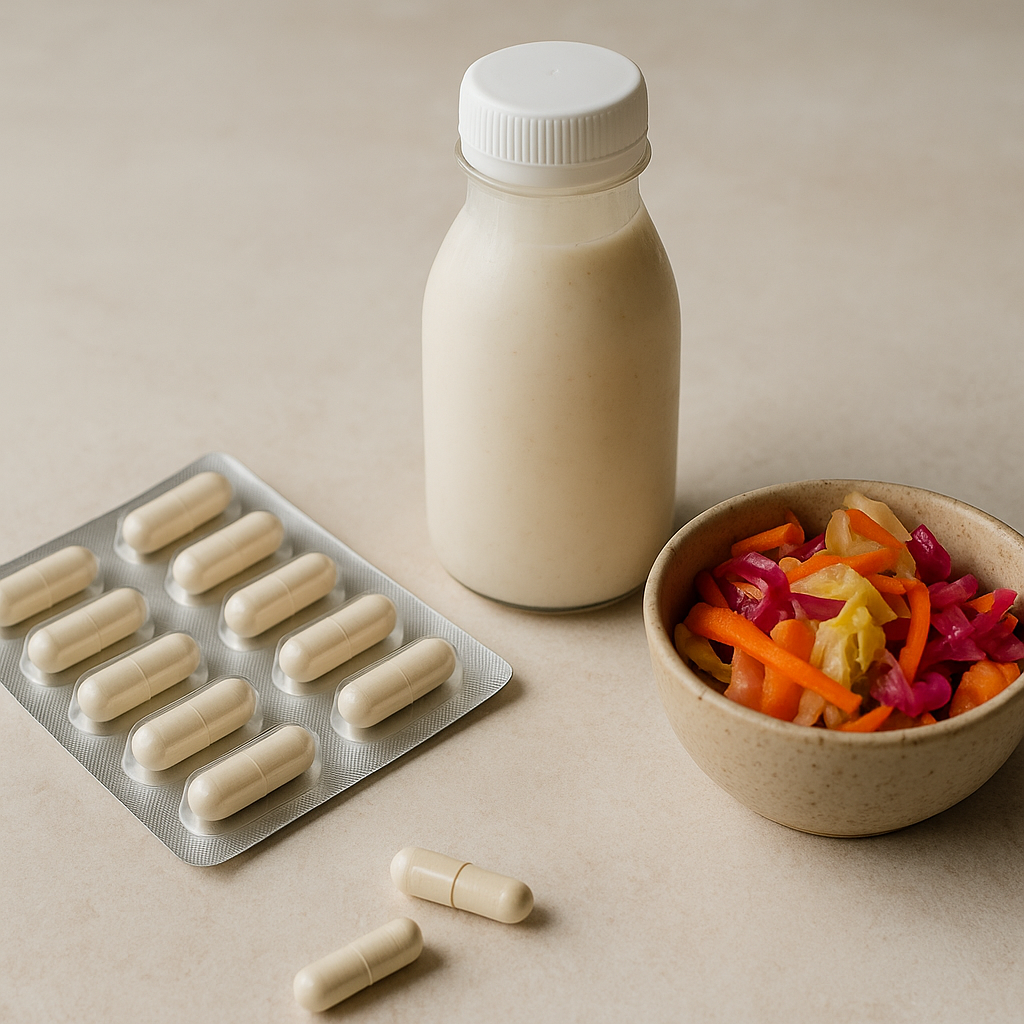
Probiotics and Supplements Trending in 2026
The supplement market around gut health and skin glow 2026 has exploded, and not all of it deserves the hype. That said, a handful of strains and compounds have genuine evidence behind them.
Lactobacillus rhamnosus GG and Lactobacillus reuteri are among the most studied strains for both gut integrity and skin inflammation. Bifidobacterium longum has been linked to reductions in skin sensitivity and reactive skin responses. UK brands including Symprove, Optibac, and Biomel have all developed targeted probiotic formulations that are widely available and third-party tested, which matters enormously in an unregulated supplement space.
Collagen peptides are generating serious attention in 2026. Whilst the body breaks down oral collagen during digestion, emerging research suggests the resulting amino acids and bioactive peptides stimulate fibroblast activity and gut lining repair simultaneously. Think of it as a two-for-one. Zinc is another supplement worth considering; it plays a direct role in skin cell turnover and also supports gut barrier function. L-glutamine, an amino acid, has become a staple in functional medicine circles for its role in rebuilding intestinal permeability.
One important caveat: the NHS guidance on vitamins and minerals is clear that most people can meet their needs through a balanced diet, and that taking high doses of supplements without professional advice can be counterproductive. If you are considering a targeted protocol, a registered nutritional therapist or gastroenterologist is the right first step.
Lifestyle Changes That Support the Gut-Skin Connection
Food and supplements are only part of the picture. Sleep, stress and movement all have a direct and measurable impact on microbiome composition.
Chronic stress raises cortisol, which disrupts the gut lining, alters microbial balance, and triggers inflammatory cytokines that make their way to the skin. This is not metaphorical. Cortisol literally degrades the proteins that keep your gut barrier intact. Managing stress through regular movement, breathwork, adequate sleep and social connection is, in this context, a legitimate skincare strategy.
Sleep quality is particularly significant. Deep sleep is when the body undertakes cellular repair, including gut epithelial renewal. Poor sleep increases intestinal permeability and elevates inflammatory markers. Consistently getting seven to eight hours changes the microbiome in measurable ways within weeks.
Exercise adds its own layer. Research from University College London and other institutions has demonstrated that regular moderate exercise increases microbial diversity independently of diet. Even 30 minutes of brisk walking five times a week produces meaningful microbiome shifts. The gut-skin axis is not a passive system. It responds to how you move, rest, and manage your nervous system.
Building a Gut-First Skincare Routine
The phrase “inside-out beauty” has been used so often it risks becoming meaningless. But for gut health and skin glow 2026, it is the most accurate framework available. Rather than layering more actives onto a compromised skin barrier, the smarter approach is to address the internal environment first.
Start with a two-week audit. Cut ultra-processed foods, add two fermented foods daily, increase your plant diversity, prioritise sleep above eight hours for a stretch, and observe what changes. Most people notice a shift in skin texture and oiliness within a fortnight. Proper hydration matters too; aim for 1.5 to 2 litres of water daily to support both gut transit and skin moisture levels.
From there, layer in a targeted probiotic, add more prebiotic foods (garlic, onions, leeks, asparagus, green bananas), and consider a collagen peptide supplement if budget allows. The changes are cumulative. They will not happen overnight, but they are far more durable than any topical product you can apply.
Your microbiome is not fixed. It is living, dynamic, and genuinely responsive to the choices you make every single day. The relationship between gut health and skin glow 2026 is one of the most exciting spaces where nutrition science and beauty culture are finally converging, and the results people are reporting speak for themselves.
Frequently Asked Questions
How long does it take for gut health improvements to show on your skin?
Most people notice initial changes in skin texture and reduced inflammation within two to four weeks of consistent dietary and lifestyle changes. More significant improvements to conditions like acne or rosacea typically take two to three months of sustained effort.
Which probiotic is best for skin glow and gut health?
Strains including Lactobacillus rhamnosus, Lactobacillus reuteri and Bifidobacterium longum have the strongest evidence for both gut integrity and skin benefits. UK brands like Symprove and Optibac offer clinically studied formulations that are a good starting point.
Can gut health affect acne and breakouts?
Yes. Dysbiosis in the gut triggers systemic inflammation and can disrupt hormonal pathways that directly influence sebum production and skin cell turnover. Improving gut microbiome diversity through diet and probiotics has been shown to reduce acne severity in multiple studies.
What foods should I eat to improve gut health and skin clarity?
Prioritise fermented foods such as kefir, kimchi, and live yoghurt alongside a diverse range of plant foods including legumes, wholegrains, and leafy vegetables. Reducing ultra-processed foods, refined sugar, and alcohol will also significantly improve both gut and skin health.
Is leaky gut a real condition and does it affect the skin?
Intestinal permeability, commonly called leaky gut, is a recognised phenomenon in gastroenterology research where the gut lining becomes compromised, allowing inflammatory compounds into the bloodstream. This process is associated with skin conditions including eczema, acne, and rosacea, and is a key mechanism in the gut-skin axis.
Leave a Reply