

Pattern clashing has moved from the catwalk fringe to the ordinary wardrobe. If you own a striped Breton, a floral midi and a check coat, you already have the raw material. The skill is knowing how to mix prints and patterns so the outfit looks decided rather than accidental, and three simple rules do most of the work.
I’m not going to pretend there’s one official verdict from British fashion weeks or the high street. What I can say is that layered, mismatched print has been a steady presence on UK shop floors and in stylists’ advice for a while now, and autumn’s heavier fabrics make it easier to try. Here is a straight comparison of the three pairings people reach for most.

The three rules that stop it looking chaotic
Every successful print mix leans on at least one of these: a shared colour, a difference in scale, or a calm anchor piece. You don’t need all three. One is enough, two is safe.
Shared colour. Pick one shade that appears in both prints, say rust in a floral and rust in a check. The eye reads it as a set.
Different scale. Pair a large print with a small one. Two prints of equal size fight. A wide floral beside a pinstripe doesn’t.
An anchor. Add a plain layer, such as a black roll neck or a camel coat, to give the eye somewhere to rest.
Which print pairing works best? A comparison
Stripes with florals are the easiest pairing, checks with abstract prints are the boldest, and florals with checks sit in the middle. The table below sets them side by side.
| Pairing | Difficulty | Best for | Key trick |
|---|---|---|---|
| Stripes with florals | Easy | First-timers, workwear, weekends | Keep the stripe narrow and the floral large |
| Florals with checks | Medium | Autumn layering, knitwear and coats | Match one colour across both |
| Checks with abstract | Hard | Confident dressers, evenings | Keep the checks muted, let the abstract lead |
Stripes with florals: the safe start
A stripe behaves almost like a neutral because it is regular and graphic. That is why a navy Breton under a floral shirt-dress or slip skirt works so reliably. Choose a stripe in a colour already present in the floral, and keep it narrow. Wide bands next to a big bloom turn into a fight.
This is the pairing I’d tell anyone to try first. It suits an office that dislikes shouting, and it costs nothing if you already own both pieces.
Florals with checks: the autumn workhorse
Checks are the British default for cooler months, which makes them the natural partner for a floral that has survived summer. Try a small-scale dogtooth or gingham jacket over a dark ditsy floral dress. The floral gives softness, the check gives structure.
Tights and boots in a single dark colour tie it together. If your wardrobe leans towards cooler tones, working out your personal colour season helps you pick the shared shade without guessing.
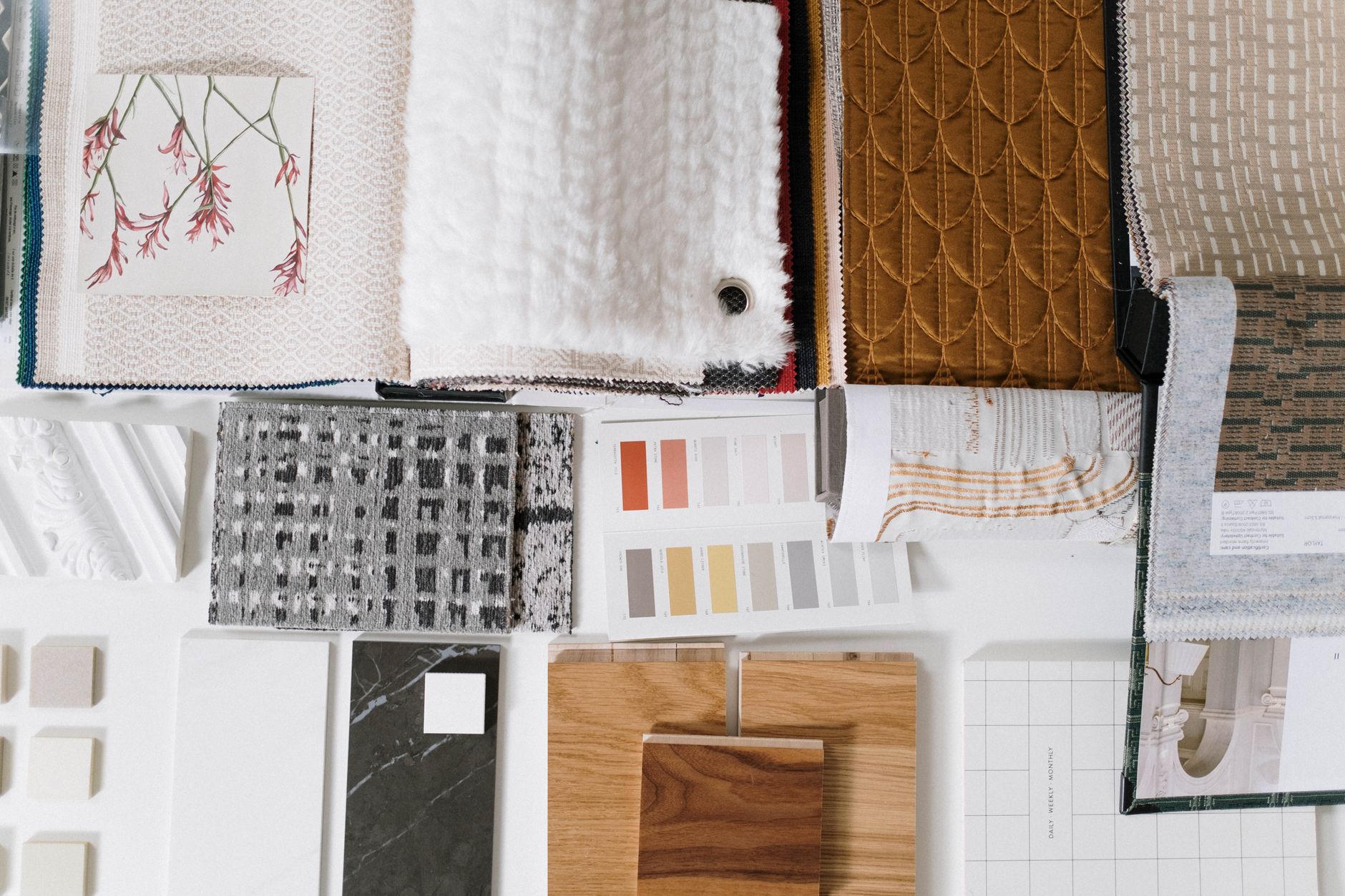
Checks with abstract: the bold move
This is the hardest pairing because neither print is tidy. A brushstroke or marbled abstract has no repeat to lean on, so the check must stay quiet: a tonal grey or camel check trouser with a vivid abstract shirt, for example. Reverse it and the outfit gets loud fast.
If you like it, wear it for evenings or events, not for a Monday meeting. Keep shoes, bag and outerwear plain.
Who should pick which pairing?
- New to mixing: stripes with florals.
- Building an autumn wardrobe: florals with checks, using coats and knitwear.
- Already confident: checks with abstract, with a strict colour limit.
Small prints are also easier to travel with, since they hide creases and combine freely. If you are packing a case, a pair of compatible prints plus neutrals goes a long way, as our fashion-forward packing list shows.
Print mixing for the whole room
The same logic applies at home. A striped cushion on a floral chair, with a plain wall behind, works for identical reasons. If you’re dressing windows too, patterned fabric looks calmer against simple fittings, and a service like Vesta Blinds and Shutters Mansfield is worth a look when you want a plain, tailored window treatment to let a busy sofa or curtain pattern take centre stage.
Practical tests before you leave the house
- Squint at the outfit in a mirror. If it blurs into one shape of colour, the prints are working together.
- Take a phone photo. Cameras exaggerate clashes you’ve stopped seeing.
- Remove one item. If the outfit improves, you went one print too far.
Start with the stripe and the floral you already own, add one plain layer, and wear it out this weekend before buying anything new.
Frequently Asked Questions
Can you wear two different patterns together?
Yes. Vary the scale of the two prints and tie them together with a shared colour. A narrow stripe with a large floral is the most forgiving starting point, and a plain third layer keeps it calm.
What patterns go well together?
Stripes with florals, florals with checks and gingham with leopard are the pairings most often worn. They work best when one print is small and the other large, and when a colour repeats across both.
How many patterns can you wear in one outfit?
Two is the sensible limit for most people. A third can work if it is tiny, such as a spotted scarf, or tonal. If the outfit starts to feel busy, take one piece off.
Do you need to match colours when mixing prints?
Not exactly, but one shared shade helps a lot. If the prints use different palettes, choose ones with similar depth, so a muted floral sits with a muted check, not a neon stripe.
Is mixing prints suitable for work?
It can be. Choose small, low-contrast prints in a tight palette, such as a pinstripe blazer over a ditsy blouse. Save the bolder abstract and check combinations for weekends or evenings.
Leave a Reply