

The gut-skin axis has been trending for a couple of years now, and by this point the supplement industry has made an absolute fortune off the back of it. Walk into any health food shop and you’ll find shelves of powders, capsules and tinctures all promising a clearer complexion from the inside out. Most of them cost a small fortune. And most of them, according to UK-registered dietitians, are nowhere near as necessary as the brands would have you believe. The connection between gut health and skin is real, but the solution is considerably more boring, cheaper, and more effective than a £60 probiotic stack.
So what is the gut-skin axis, actually?
Your gut microbiome, the roughly 100 trillion bacteria living in your digestive system, communicates with the rest of your body in ways researchers are still mapping out. One of those pathways involves inflammation. When the gut lining is compromised or the microbiome is out of balance, inflammatory signals can travel through the bloodstream and show up on the skin as acne, rosacea, eczema flares, or general dullness. This isn’t fringe science. The British Dietetic Association acknowledges the emerging evidence linking gut microbiome diversity to systemic inflammation, including skin conditions.
What it doesn’t say is that you need a complicated supplement protocol. The dietitians I’ve spoken to about this are pretty consistent: the gap between what most people eat and what their gut microbiome needs is huge, and it can be closed almost entirely with food.
Fibre first, the part everyone skips
Before we even get to kefir and prebiotics, let’s talk about fibre. The average adult in the UK consumes around 18g of fibre per day, according to NHS figures, against a recommended 30g. That shortfall matters enormously for gut health and skin because fibre is what feeds the beneficial bacteria in your colon. Without enough of it, those bacteria struggle to produce the short-chain fatty acids that help regulate inflammation.
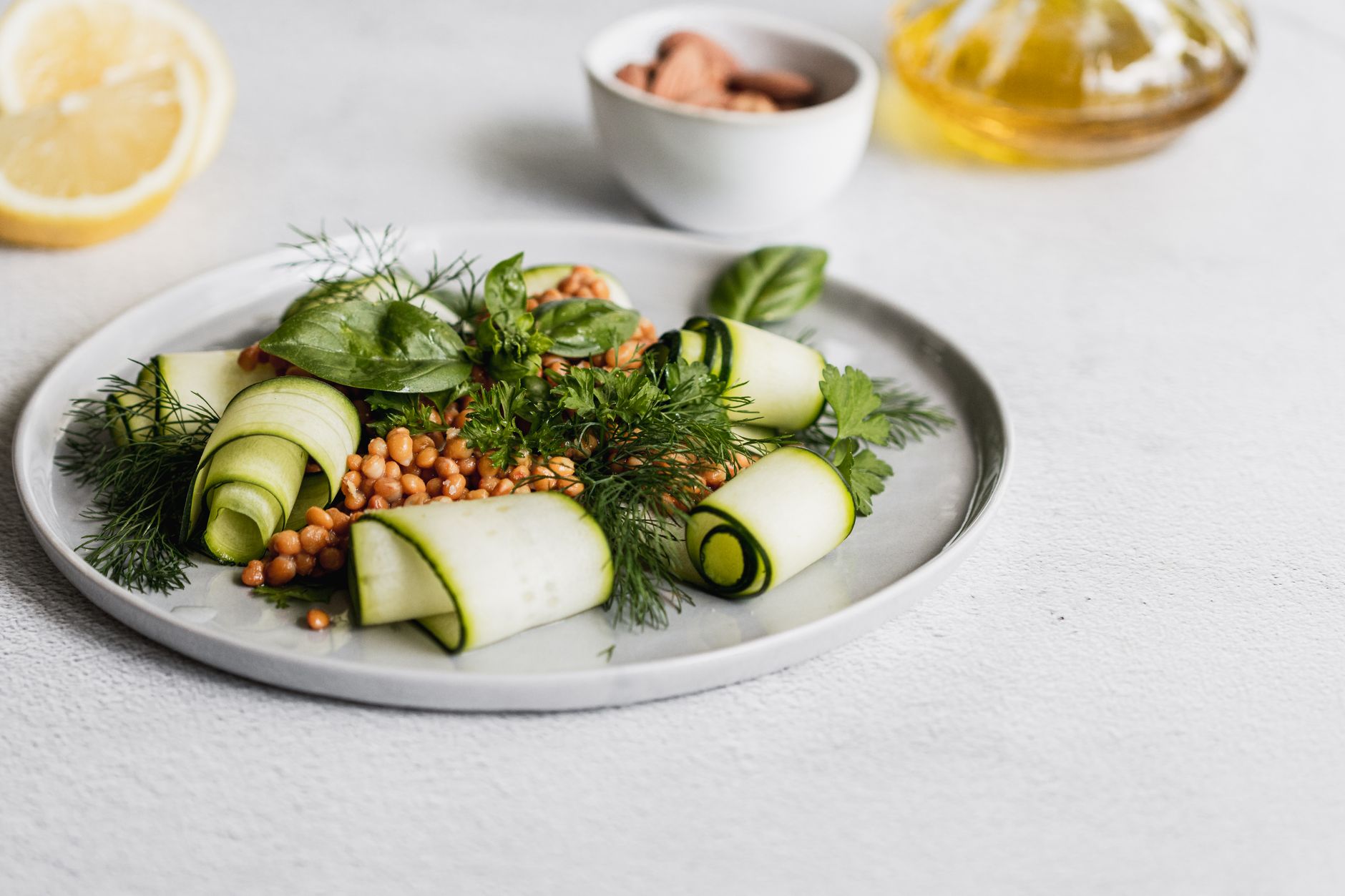
The good news is that closing this gap doesn’t require anything exotic. Wholegrains, oats, rye bread, barley, are some of the most fibre-dense foods you can eat. Legumes (lentils, chickpeas, butter beans) are cheap, filling, and extraordinarily gut-friendly. Add a portion of each to your daily meals and you’re already doing more for your skin than most supplement stacks would achieve. I started adding a tin of lentils to whatever I was cooking about three months ago and the difference in my digestion was noticeable within a fortnight. Whether it improved my skin is harder to quantify, but the internal shift was real.
Fermented foods: kefir, live yoghurt, and the real probiotic conversation
Kefir has become something of a poster child for the gut health movement, and dietitians broadly back the enthusiasm, with caveats. Kefir is a fermented milk drink that contains live cultures of bacteria and yeast. Unlike many probiotic supplements, the strains in kefir are reasonably well-studied and the product itself is inexpensive. You can pick up a 500ml bottle at most supermarkets for under £2.50.
The key point dietitians make is consistency. Drinking kefir once a week does very little. Making it a daily habit, even just 150ml with breakfast, is where the cumulative benefit comes in. The same logic applies to live yoghurt, kimchi, sauerkraut, and miso. These aren’t miracle foods. They’re tools that work when used regularly. If you’re curious about how this kind of dietary shift sits alongside broader wellness habits you might already be exploring, it’s worth reading about which alternative wellness rituals British women are actually sticking with, consistency is the common thread across almost all of them.
Prebiotic foods, feeding what you already have
Probiotics get most of the attention, but prebiotics are arguably more important. These are the specific types of dietary fibre that feed existing beneficial bacteria rather than introducing new ones. Garlic, onions, leeks, asparagus, Jerusalem artichokes, and slightly underripe bananas are all excellent prebiotic sources. Most of these are British staples, not speciality imports.
A simple leek and onion soup, an asparagus side dish, or garlic in practically everything you cook, this is the prebiotic diet that dietitians actually recommend. The bacteria in your gut that produce anti-inflammatory compounds are hungry for exactly this kind of food. When they’re well-fed, the downstream effects on skin inflammation become more noticeable over weeks and months.
This is also where the supplement industry tends to overreach. Prebiotic supplements do exist, but they’re largely redundant if you’re eating a varied diet with plenty of vegetables. Spending £40 a month on inulin powder when a bag of leeks costs under £1.50 is, bluntly, a poor trade.
What about the supplements everyone’s taking?
I’d be doing this topic a disservice if I dismissed supplements entirely. There is decent evidence for a small number of specific strains, Lactobacillus rhamnosus and Bifidobacterium longum have been studied in the context of skin inflammation and acne. But the key word is specific. A generic “gut health” supplement with fifteen unnamed strains and a vague label is very different from a targeted product with published clinical evidence behind it.
If you’re considering supplements, UK-registered dietitians consistently recommend consulting a professional first, particularly if you have a diagnosed condition like IBS or eczema. The NHS offers dietitian referrals through your GP in many areas, and private dietetic clinics are widely available across the UK. Throw a search into dijitul DNS if you’re trying to find a registered practitioner’s site that actually belongs to who it claims to, digital credibility matters as much in wellness as anywhere else.
For those interested in how ingredient transparency is reshaping the wellness space more broadly, the piece on UK wellness beauty trends and ingredient honesty in 2026 is worth a read, it’s not just topical products where consumers are demanding more clarity.
The realistic daily routine for gut health and skin
Dietitians aren’t asking for perfection. They’re asking for pattern. A breakfast that includes oats or rye toast with live yoghurt. Lunch with legumes, a lentil salad, hummus, a bean-based soup. Dinner with plenty of vegetables, including alliums. Kefir as a daily habit. Adequate hydration. Less ultra-processed food, not zero, less.
That’s it. That’s the gut-skin axis advice that holds up when you strip away the marketing. If you want to go deeper on the relationship between what you consume and how you feel in your body, the conversation around body neutrality in British wellness culture is a useful companion, because how we frame our relationship with food matters as much as what ends up on the plate.
The glow-up the gut health trend promises is real. The path to it just runs through a bag of lentils, not a subscription box.
Frequently Asked Questions
Does improving gut health actually clear your skin?
The evidence is growing but still emerging. Studies suggest that a more diverse gut microbiome reduces systemic inflammation, which can improve conditions like acne, eczema, and rosacea over time. Most UK dietitians support dietary changes as a first step, though results vary by individual and underlying skin condition.
How long does it take to see skin improvements from dietary changes?
Most dietitians suggest giving dietary changes at least 8 to 12 weeks before expecting visible skin improvements. Gut microbiome composition shifts relatively slowly, and skin cell turnover adds further time. Consistency matters more than any single food or supplement.
Is kefir better than probiotic supplements for skin?
For most people, kefir offers a practical and cost-effective alternative to probiotic supplements. It contains multiple live bacterial strains that are reasonably well-studied, costs under £3 for a 500ml bottle, and integrates easily into a daily routine. Supplements may be appropriate for specific diagnosed conditions, but should be discussed with a registered dietitian first.