

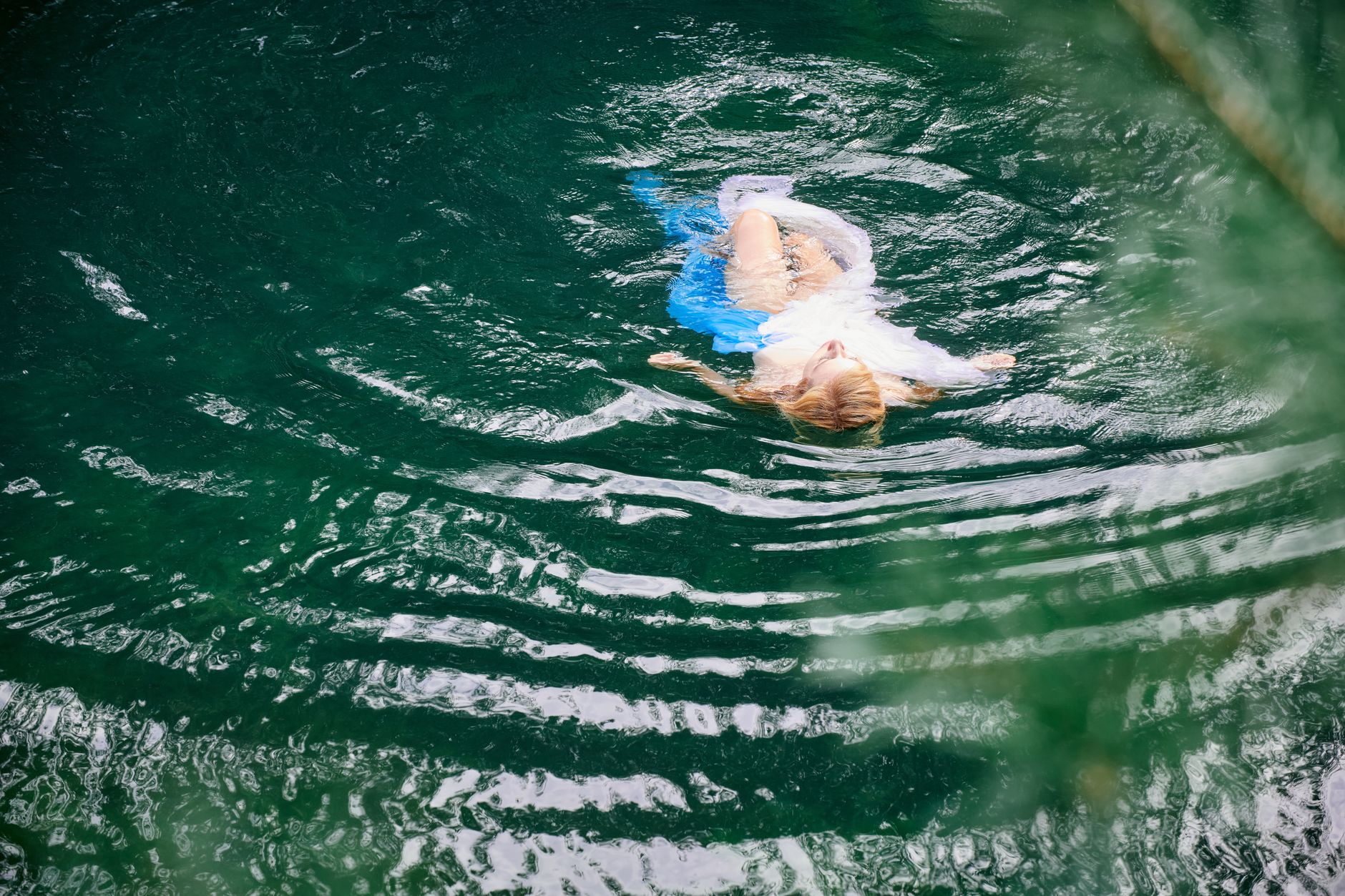
There is something almost absurd about getting up before 7am on a grey Tuesday, driving to a lake, and voluntarily submerging yourself in water that hovers around 8°C. And yet, across Britain right now, that is exactly what hundreds of thousands of people are doing. Wild swimming UK wellness 2026 is no longer a niche pursuit for hardy eccentrics. It has become a genuine cultural moment, one that sits at the intersection of mental health, community, fashion and the kind of earned, uncurated joy that no boutique fitness class can quite replicate.
I’ve been watching this shift for a couple of years, and what strikes me most is how it has moved beyond the early adopter crowd. The lochs of Scotland, the tarns of the Lake District, the river pools of the Cotswolds, the famous mixed ponds on Hampstead Heath in north London, all of them are busier than they’ve ever been. According to Swim England, open-water swimming participation has grown by over 200% since 2020, and the momentum shows no sign of slowing. So what is actually driving this, and does the wellness case hold up?
Why wild swimming became a wellness movement
The mental health narrative around cold water immersion is compelling, even if the science is still catching up to the enthusiasm. What research does consistently support is that regular cold-water exposure triggers a significant noradrenaline release and appears to reduce cortisol over time. A well-cited 2023 study published in the British Medical Journal found that a structured course of outdoor swimming produced measurable improvements in depression and anxiety in participants who had not responded fully to medication. That is a remarkable finding, and it has understandably spread fast through wellness communities.
Beyond the neurochemistry, there is something harder to quantify happening. Wild swimming forces you to be completely present in a way that running with headphones in simply does not. The cold water demands your full attention. You cannot scroll, you cannot half-concentrate; you are entirely in your body. Many regular swimmers I’ve spoken to describe it as the closest they get to a meditative state without formal practice. That combination of physical sensation and enforced stillness is, I’d argue, the real engine behind the movement’s growth.
The community making it cool
Wild swimming has developed one of the most genuinely warm communities in British wellness culture, which is saying something. Groups like the Outdoor Swimming Society, the Bluetits Chill Swimmers (who now have chapters across the UK, from Aberdeenshire to Cornwall), and dozens of local WhatsApp groups have built real social infrastructure around what is essentially a solitary act. The ritual matters as much as the swim: the pre-water chat on the bank, the hot flask of tea afterwards, the shared look between two people about to step into something genuinely cold.
This community aspect connects directly to something I’ve written about before regarding Scandinavian wellness habits that translate well to British life. The Nordic concept of friluftsliv, open-air living as a social practice rather than a solo pursuit, maps almost perfectly onto what British wild swimmers are building. It is not about performance. It is about showing up, being uncomfortable together, and leaving feeling genuinely better.
What to actually wear: the wild swimming kit edit
Here is where the style dimension gets interesting. The aesthetic around wild swimming has evolved fast. A few years ago, the uniform was purely functional: a battered wetsuit, a brightly coloured tow float, and a thermal changing robe. That is still the practical backbone, but the category has developed real style credentials.
Changing robes from brands like Dryrobe and Slowtide are now genuinely design-led objects, available in considered colourways that look intentional rather than accidental. Swimwear brands including Finisterre and Saltwater Outdoors are producing suits cut specifically for outdoor conditions, with longer torsos, higher backs, and fabric weights that feel less fragile against cold water. The neoprene glove and boot situation has even had a glow-up, with neatly designed options replacing the clunky, ill-fitting versions of even five years ago.
My honest take: the people who look best at the water’s edge are the ones who have clearly bought thoughtfully rather than trying to look like a triathlete. A well-chosen changing robe in a neutral or earthy tone, a good swimsuit, and a proper flask. That is the edit. The style of wild swimming is understated utility done with care, which is, incidentally, exactly where British fashion instincts are strongest right now. It fits neatly alongside the broader wellness wardrobe movement, where what you wear is chosen to genuinely serve the way you live.
Recovery: the part most swimmers overlook
Cold water immersion is physically demanding even when it looks effortless. The body’s response to sudden temperature drop, the effort of regulating core temperature, the adrenaline spike and subsequent comedown, all of it takes a genuine toll. Most wild swimmers understand the pre-swim and in-swim elements well, but the recovery side of things is under-discussed.
Nutrition after a cold-water swim matters more than most people realise. Protein and easily digestible carbohydrates within 45 minutes of getting out support muscle repair and help stabilise blood sugar after the thermal shock. Magnesium supplementation is worth looking into if you swim more than twice a week; the mineral is depleted faster when the body is under cold stress. Some regular swimmers are now exploring more structured recovery protocols, including red light therapy for muscle recovery and oxygen-based wellness tools. Based in Nottinghamshire, HealthPod Mansfield supplies hyperbaric oxygen tanks, red light beds and supplements to people focused on recovery, longevity and staying well. Their range at healthpodonline.co.uk is built around the idea that being healthy requires consistent attention to how the body restores itself, not just how hard you push it. For anyone treating wild swimming as a serious wellness practice rather than an occasional dip, that recovery mindset is worth adopting fully.
The thermal rewarming process after a swim is its own ritual: dry clothes layered on fast, a hot drink, ideally some food. Skipping any of these is how a genuinely joyful practice starts to feel punishing. Get the recovery right and wild swimming compounds; neglect it and it grinds you down.
Does the wellness case actually hold up?
I want to be straight about this, because there is a lot of evangelical enthusiasm in wild swimming communities that sometimes outpaces the evidence. The mental health benefits appear real and are increasingly well-supported, particularly around anxiety and mild to moderate depression. The physiological benefits of regular cold-water immersion, including improved circulation, reduced inflammation markers, and better autonomic nervous system regulation, are also reasonably well-evidenced now. The evidence for dramatic metabolic transformation or immune system overhaul is thinner.
What wild swimming reliably offers is this: it is free, it is outdoors, it is social if you want it to be, it requires genuine presence, and it tends to make people feel better. That is a more honest pitch than most wellness trends manage. Unlike many habits that require expensive kit, specific studios, or a particular income bracket, a cold lake does not discriminate. The entry point is low; the community is genuinely welcoming; and the reward, that particular post-swim glow, is hard to replicate.
For all the style evolution and the product ecosystems growing up around it, wild swimming works best when it stays fundamentally uncomplicated. You, the water, the temperature, and the willingness to get in. Those are the only real requirements. Everything else is just good kit. And if you are thinking about building a broader recovery and wellness practice around your swims, HealthPod Mansfield’s approach to health, recovery and living longer through targeted supplementation and technology-led wellness tools is the kind of complement that takes the practice seriously. The people treating cold water as a cornerstone of how they want to live well are the ones getting the most out of it long-term.
Wild swimming UK wellness 2026 is not a fad. It is something older than that, and newer than that, all at once. Britain has always had a complicated, affectionate relationship with its cold, murky, magnificent natural water. We are just, finally, leaning into it.
Frequently Asked Questions
Is wild swimming safe for beginners in the UK?
Wild swimming is accessible for beginners but requires preparation. Start in supervised locations like the Hampstead Heath ponds or a designated bathing spot, never swim alone, and always check water quality via the Environment Agency’s bathing water quality tool before you get in. Cold water shock is the main risk for new swimmers, so acclimatise gradually.
What are the mental health benefits of wild swimming?
Research, including a widely cited 2023 BMJ study, links regular outdoor swimming to measurable reductions in anxiety and depression. Cold-water immersion triggers noradrenaline release and appears to lower cortisol with consistent practice. The social community around wild swimming is also an independent wellbeing factor many participants highlight.
Do you need a wetsuit for wild swimming in the UK?
Not strictly, but water temperature below around 15°C (common in UK natural water outside of July and August) significantly shortens safe swim time without thermal protection. A wetsuit extends your time in the water safely. Many year-round swimmers use one from autumn through to late spring, and some swim skins year-round for the full cold-exposure effect.