

Korean street style has moved well beyond a niche interest. What started as a cult obsession on fashion forums and K-drama fan pages has quietly become the most significant force reshaping Western wardrobes right now. From the sloped shoulders of oversized blazers to layered textures that look effortless yet clearly deliberate, K-fashion has a visual confidence that most Western trends simply cannot match at the moment. If your outfits have felt a little stale, Seoul’s streets are where you should be looking for a reset.
What Makes Korean Street Style So Influential Right Now
The appeal is not just aesthetic. Korean street style operates on a set of principles that feel genuinely modern: proportion play, texture mixing, gender-fluid silhouettes and a refusal to separate casual from elevated. Where a lot of Western fashion still draws hard lines between sportswear and office wear, K-fashion treats the whole wardrobe as one continuous conversation. That fluidity resonates with how people actually live and dress in 2026, where the boundaries between work, leisure and social life are more blurred than ever.
Seoul’s fashion districts, particularly Hongdae and Seongsu, function as open-air laboratories. What appears on those streets one season tends to arrive in London, Paris and New York within months. The speed of that cultural transfer has only accelerated, driven by short-form video and a generation of consumers who shop globally without thinking twice about it.
The Key Korean Street Style Trends to Know
Oversized Silhouettes Done with Precision
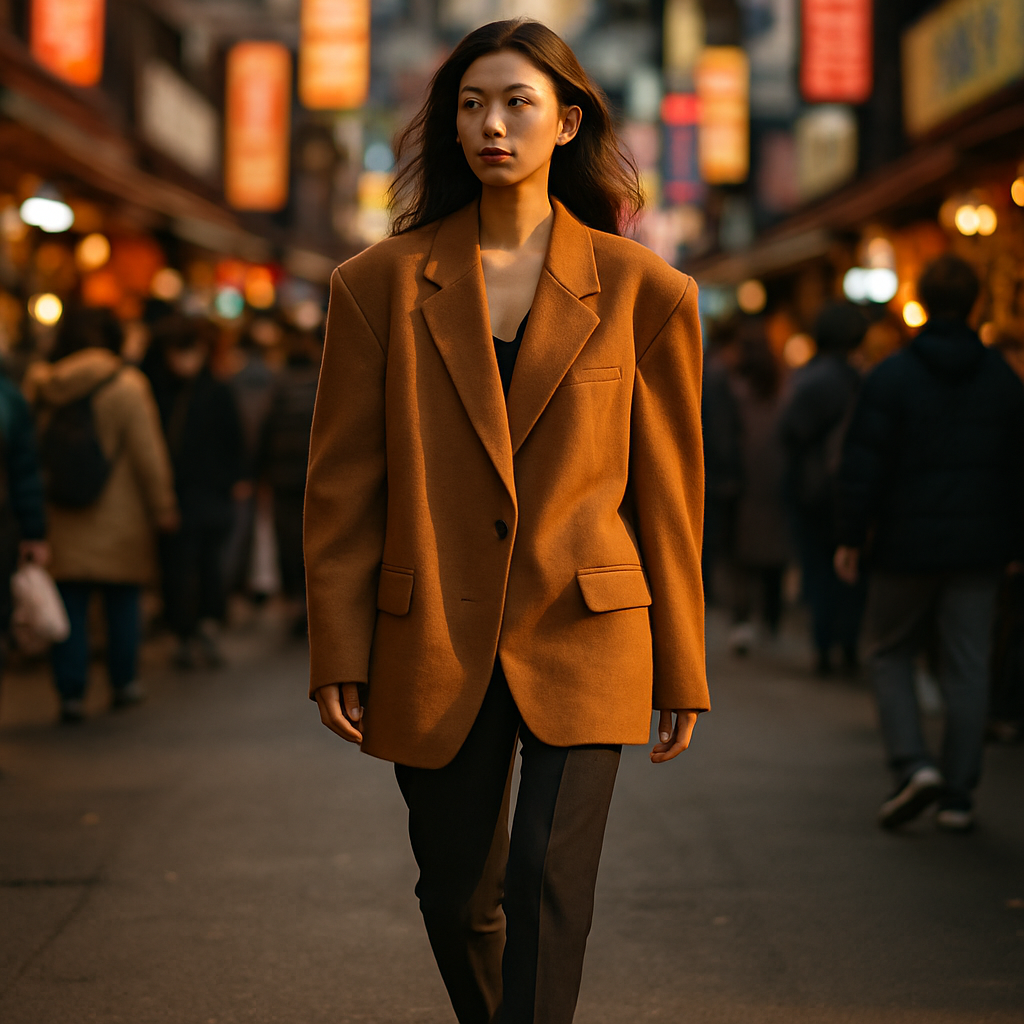
Oversized is not new, but the Korean approach to it is different. The key is deliberate proportion. A drastically wide blazer is worn with slim, tapered trousers or wide-leg denim that balances the volume rather than doubling it. Shoulders drop low, sleeves pool slightly over the hands and the overall shape is structured rather than sloppy. Brands like Ader Error and IISE have been doing this for years; mainstream Western labels are only now catching up to the specificity of the fit.
To pull this off without looking like you borrowed someone else’s clothes, anchor one oversized piece against something fitted. A boxy knit over straight-cut trousers, belted at nothing, worn with a clean minimalist boot. That restraint is everything.
Layered Textures and the Art of Looking Undone
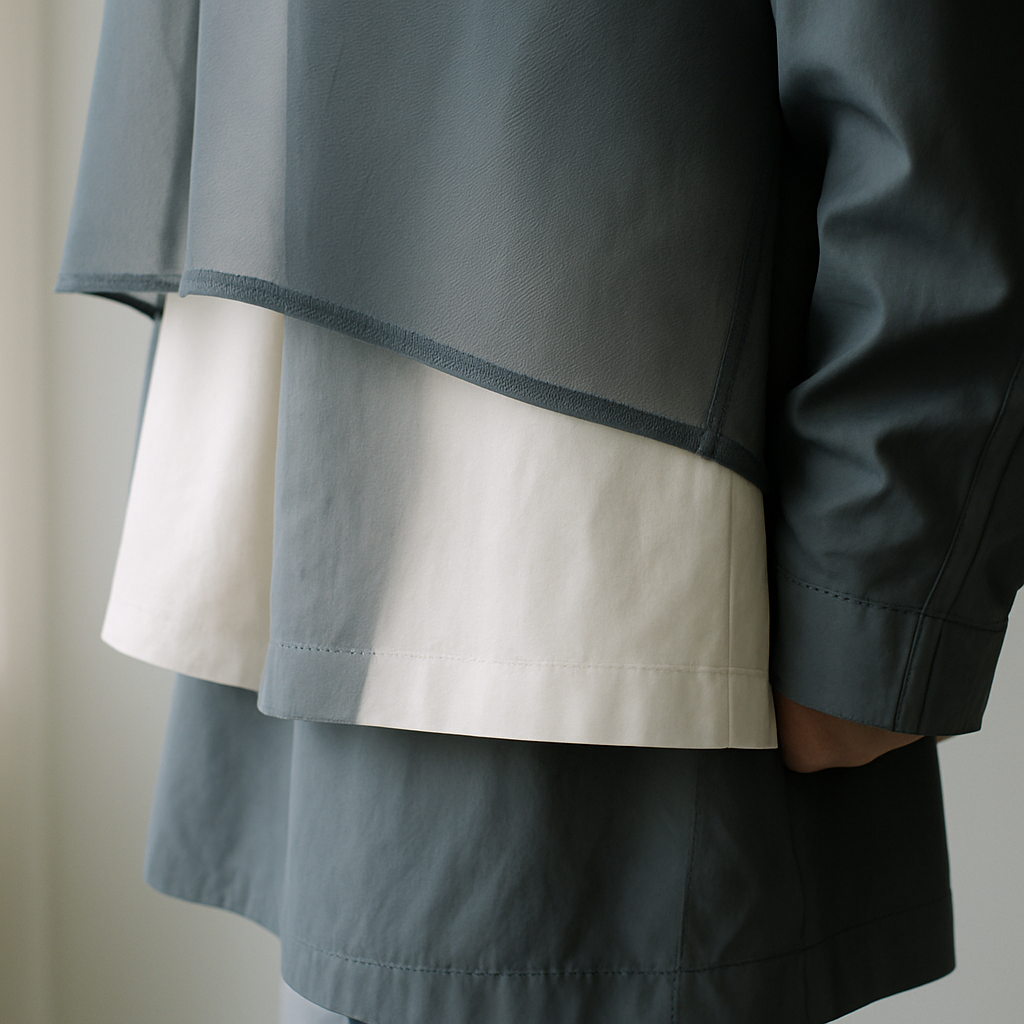
Layering in Korean street style is not about warmth. It is about building visual complexity. Think a sheer mesh long-sleeve under a short-sleeve graphic tee, over a longer hemline shirt that peeks out below. Or a nylon utility vest over a relaxed linen shirt in a contrasting tone. The textures clash on purpose: smooth against matte, lightweight against structured. The result looks like it was thrown together, but every layer was chosen with intention.
This approach also works brilliantly in transitional dressing, which is why it has become so practical for UK wardrobes where the weather is consistently unpredictable. You can add or remove a layer and the outfit still holds together because the relationship between the pieces was considered from the start.
Monochrome Tonal Dressing
Korea’s version of monochrome is not the stark all-black look familiar in Western minimalism. It leans into tone-on-tone combinations within a single colour family: warm beige with caramel and sand, or slate grey layered across charcoal and off-white. The precision is in finding pieces that share a hue but differ in texture or fabric weight, creating depth without colour contrast. It photographs extraordinarily well, which partly explains why it dominates social content, but it also just looks incredibly put-together in real life.
Sport-Luxe with a Korean Edit
Korean street style has fully absorbed the global sport-luxe direction but filtered it through a cleaner, more restrained lens. You will see technical fabrics and trail-running aesthetics paired with tailored coats or structured bags. Trainers from brands like New Balance and Salomon sit alongside wide-leg trousers and sheer blouses without any sense of contradiction. The sportswear element reads as a considered choice rather than an afterthought, which is the entire point.
How to Incorporate K-Fashion Into Your Everyday Wardrobe
The most common mistake when approaching Korean street style from the outside is trying to replicate entire looks. That usually ends in outfits that feel costumey rather than genuine. A better strategy is to extract principles and apply them to what you already own. Start with proportion: challenge yourself to wear one piece significantly bigger or smaller than you normally would and build the rest of the outfit around balancing it. Then experiment with texture layering using pieces you already have before investing in new ones.
Shopping K-fashion brands directly is increasingly straightforward. Musinsa, Korea’s dominant fashion platform, now ships internationally, and plenty of K-fashion labels have opened stockists in the UK. If you are styling a new wardrobe corner at home to photograph outfits, the clean backdrops that work best for this kind of editorial look, whether that is whitewashed walls or window light filtered through faux wood venetian blinds, make a genuine difference to how the clothes read on camera.
Korean street style rewards commitment. The looks that land hardest are the ones where every element, from the outermost layer to the sock detail, has been thought about. It is a more considered approach to dressing than most Western casual fashion asks of its audience. But that is exactly why it stands apart, and exactly why it is not going anywhere.
Frequently Asked Questions
What is Korean street style?
Korean street style refers to the fashion trends and aesthetic movements that originate from South Korea’s urban youth culture, particularly in districts like Hongdae and Seongsu in Seoul. It is characterised by deliberate proportions, layered textures, gender-fluid silhouettes and a blending of casual and elevated pieces. It has become one of the most globally influential fashion movements over the past several years.
Which Korean fashion brands should I know about?
Key Korean brands making waves globally include Ader Error, IISE, Carlyn, Mardi Mercredi and Wooyoungmi. For more accessible entry points, Korean fast-fashion platforms like Musinsa stock hundreds of independent Korean labels and now ship to the UK. These brands tend to lead the trends that eventually filter into mainstream Western retail.
How do I style oversized Korean fashion without looking sloppy?
The trick is to balance volume deliberately rather than letting it accumulate. Pair one dramatically oversized piece, such as a wide-shouldered blazer or boxy knit, with something slim or tailored underneath. Korean street style relies on contrast in proportion, so one piece should dominate while the rest of the outfit acts as a clean, considered frame for it.
Is K-fashion affordable for Western shoppers?
It varies considerably. Independent Korean labels can be competitively priced compared to equivalent European or American brands, especially when purchased directly through platforms like Musinsa. Higher-end Korean designer pieces are on par with Western luxury pricing. The key is that K-fashion rewards investment in fewer, better-considered pieces rather than a high-volume approach to buying.
How is Korean street style different from Japanese street style?
Both are hugely influential but operate differently. Japanese street style tends toward more extreme or avant-garde expression, with movements like Harajuku pushing boundaries of convention. Korean street style is generally more wearable and commercially accessible, with a stronger emphasis on clean silhouettes, tonal precision and sport-luxe crossovers. K-fashion also moves faster in terms of trend cycles due to its deep connection with K-drama and K-pop culture.
Leave a Reply