

There’s a shift happening on British necks, wrists and earlobes right now, and it’s not subtle. The jewellery drawer that once held tangled H&M chains and a few forgotten Pandora charms is getting a serious overhaul. In its place: gold vermeil pendants, sterling silver stacking rings and heavyweight hoops that won’t turn green by Thursday. Demi-fine jewellery UK brands 2026 are having a proper moment, and I’d argue this isn’t a passing trend so much as a collective recalibration of what we’re willing to spend and on what.
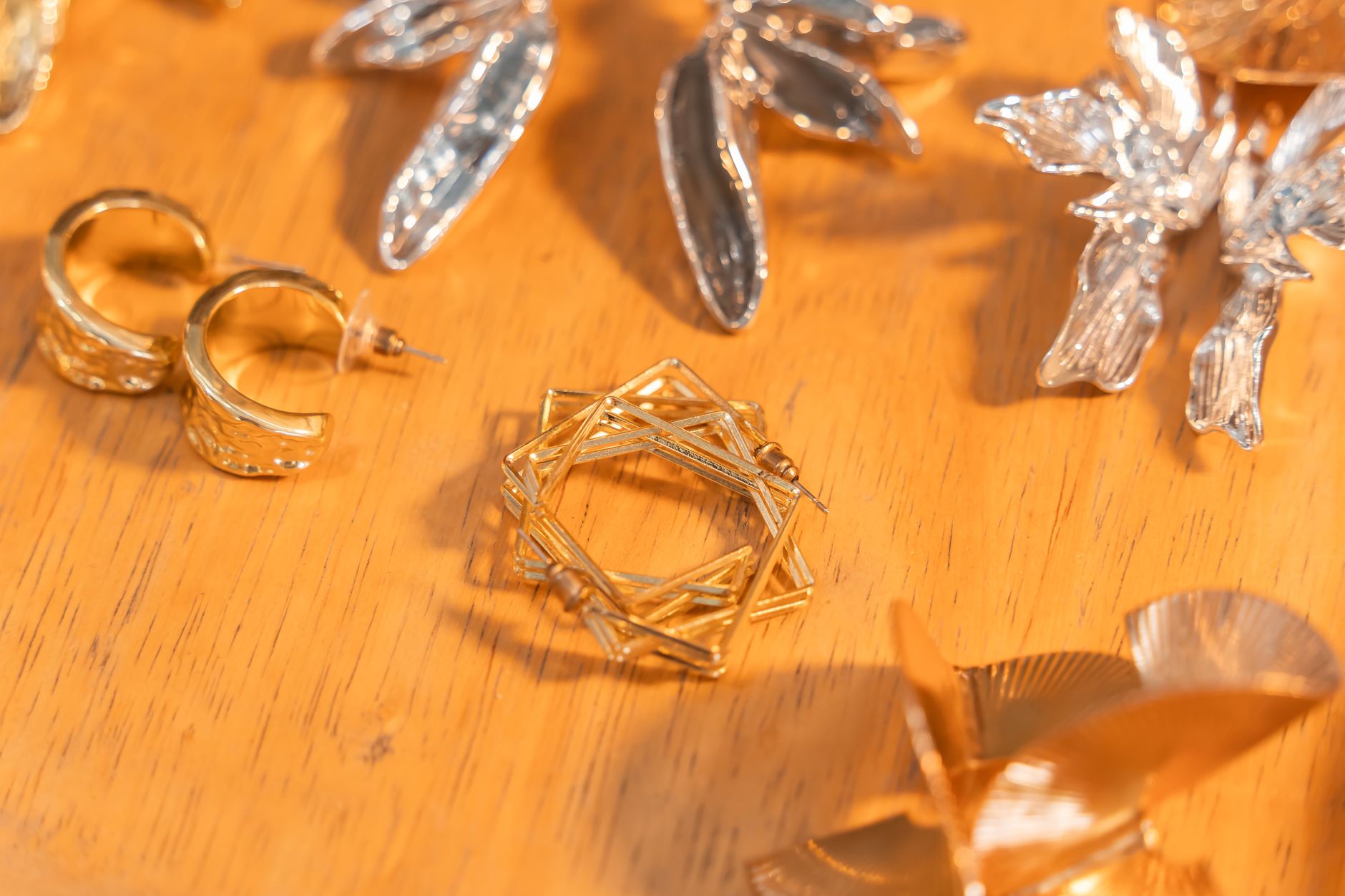
The sweet spot demi-fine occupies is genuinely useful. Too expensive to feel throwaway, too accessible to require a bank manager’s blessing. We’re talking pieces priced roughly between £50 and £500, made from solid sterling silver or gold vermeil (at minimum 2.5 microns of 18ct gold plated over silver), and built to actually last. It sits neatly between the £8 fast-fashion chain that oxidises overnight and the £3,000 solid gold piece that lives in a safe. For most British women, that middle ground is exactly where they want to be.
What separates demi-fine from everything else
Quality markers matter here, and it’s worth knowing what you’re actually looking at before spending £200 on a necklace. Gold vermeil specifically requires a sterling silver base (not brass, not copper) with gold plating of at least 2.5 microns. That’s the legal standard in the UK. Anything plated over base metal is just gold-plated jewellery, a completely different product with a much shorter lifespan. The hallmark is your friend: look for 925 (sterling silver) stamped on the piece, and check whether brands are transparent about their plating thickness.
I’ve tested pieces at both ends of this spectrum and the difference is visceral. A well-made vermeil piece from a reputable maker holds its colour through daily wear, sweat, and the odd splash of perfume for a year or more. A brass-base knockoff? Six weeks, if you’re lucky. The BBC’s consumer coverage has touched on this repeatedly as shoppers grow wiser about where their money actually goes in the jewellery market.
The British labels actually worth your money
A handful of UK-founded brands have built genuine reputations in this space. Astrid & Miyu, based in London, has become almost synonymous with demi-fine stacking culture here, and for good reason. Their ear curation studio model changed how British women think about piercings and layering. Missoma is another name that keeps coming up for good reason: their recycled sterling silver and responsibly sourced vermeil pieces are well-made and styled with enough restraint to work across seasons.
Beyond the well-known names, smaller independents are producing some of the most interesting work. Daisy London keeps things light and wearable. Monica Vinader (originally Norfolk-based) bridges demi-fine and fine with personalisation options that make pieces feel genuinely personal. Then there are the newer makers operating on tighter runs: Charlotte Penman Jewellery, Lily Flo, and a wave of Etsy-adjacent designers whose sterling silver work punches well above its price point.
The independent maker space is particularly strong right now. Buying from a British designer-maker often means a closer relationship between the wearer and the object, clearer sourcing information, and frequently better craftsmanship than a brand operating at commercial scale. I’d always recommend checking whether a maker is registered with the Goldsmiths’ Company Assay Office and whether their pieces carry UK hallmarks, that’s the baseline trust signal in this country.
How to build a stack that actually works
Stacking has its own logic. The mistake most people make is buying individual pieces without thinking about how they relate to each other. A few principles that actually work in practice:
Start with one anchor piece, something slightly chunkier or more distinctive that everything else orbits. For rings, that might be a wide sterling band or a single stone piece. For necklaces, a longer pendant at a fixed chain length gives you something to layer shorter, finer chains against. Earrings are where you can take more risks: combining a small flat stud with a curved ear cuff or a thin hoop gives texture without chaos.
Mix metals deliberately. The old rule about matching gold and silver is genuinely outdated. The caveat is proportion: if you’re mixing, let one metal dominate and use the other as an accent. Yellow gold vermeil with one or two cooler silver pieces reads intentional. A 50/50 split tends to look unresolved.
Think about longevity from the start. A piece that works with jeans, works with a silk slip dress, and holds its own under a winter coat is a piece you’ll actually wear. If it only functions in one context, it won’t earn its shelf space. This is the same logic I apply to building a wardrobe around pieces with real versatility, jewellery is no different.
Care and longevity: how to make pieces last
Even well-made vermeil needs some care. It’s not precious metal all the way through, and treating it like solid gold will wear through the plating faster than necessary. The practical rules: take pieces off before swimming (chlorine is particularly brutal on plating), put your jewellery on after applying perfume and body lotion rather than before, and store pieces individually to prevent scratching. A small zip-lock bag or a compartmentalised tray is fine.
Sterling silver tarnishes. That’s not a quality failure, it’s just chemistry. A silver polishing cloth is a £5 investment that removes tarnish in thirty seconds and extends the life of a piece by years. I keep one in the drawer with my jewellery and it gets used constantly.
The broader pattern here connects to how British women are thinking about consumption more generally. Buying fewer things that are genuinely better made, that carry some meaning, and that hold their appearance over time is an extension of the same thinking driving the comfort-led luxury approach to dressing that’s been gathering pace through 2026. Jewellery is following the same arc.
What I find most interesting is how demi-fine jewellery UK brands 2026 have managed to make quality accessible without making it feel compromised. The pieces look considered, the materials are legit, and the price points mean you’re not committing to something you’ll feel anxious about wearing every day. That’s the whole point. Jewellery that’s too precious to wear daily isn’t doing its job. And right now, British women seem to agree. The data backs it: according to the ONS, UK household spending on personal accessories has grown steadily, with jewellery and accessories among the categories seeing sustained growth as fast fashion falls out of favour.
If you’re recalibrating your own jewellery situation this year, I’d start with one or two well-made sterling silver pieces from a reputable UK maker, learn the hallmarking system, and build slowly from there. The stack will take shape. And unlike the tangled drawer of fast-fashion chains, this one will actually be worth keeping.
Frequently Asked Questions
What is demi-fine jewellery and how is it different from fine jewellery?
Demi-fine jewellery is made from solid sterling silver or gold vermeil (gold plated over sterling silver) rather than solid precious metals like 18ct or 22ct gold. It sits between costume jewellery and fine jewellery in both price and quality, typically ranging from £50 to £500. Fine jewellery uses solid precious metal throughout and is significantly more expensive.
What is gold vermeil and is it worth buying?
Gold vermeil is sterling silver (marked 925) coated with a layer of gold that must be at least 2.5 microns thick under UK standards. It’s worth buying if the base metal is confirmed as sterling silver and the plating is substantial, this distinguishes it from cheaper gold-plated brass, which wears through quickly. With proper care, quality vermeil can look good for a year or more of daily wear.
Which UK jewellery brands make the best demi-fine pieces?
Missoma, Astrid & Miyu, Monica Vinader, and Daisy London are among the most consistently well-regarded UK demi-fine brands. Independent British designer-makers registered with the Goldsmiths’ Company Assay Office are also worth exploring for more distinctive pieces at comparable price points.
How do I stop my sterling silver jewellery from tarnishing?
Tarnish on sterling silver is a normal chemical reaction, not a sign of poor quality. Store pieces individually to prevent scratching, keep them away from perfume, lotions, and chlorine water, and use a silver polishing cloth regularly to remove tarnish in seconds. Proper storage in a dry environment significantly slows the process.
How much should I spend on a demi-fine jewellery stack?
You don’t need to buy everything at once. Starting with one or two anchor pieces in the £80 to £150 range from a reputable UK brand gives you a solid foundation to build from. A complete everyday stack of four to six pieces from quality demi-fine brands typically sits between £200 and £600 total, bought gradually over time.
Leave a Reply