

There is a facial tool for everything now. Jade rollers, rose quartz gua sha stones, stainless steel depuffing spoons, microcurrent wands, LED masks that make you look like a low-budget sci-fi villain. The UK market for at-home facial devices hit an estimated £320 million in 2025, and shows no sign of slowing down. I’ve tried an embarrassing number of these things myself, and honestly, the results have ranged from genuinely useful to ‘I paid £85 for a cold rock’. So I put the question directly to facialists and aesthetic practitioners working in the UK: what from this explosion of facial tools and lymphatic drainage techniques is actually worth your time and money?
The short answer is that some of it works, some of it is neutral, and a small portion is borderline ridiculous. The longer answer is below.
Why lymphatic drainage became the wellness moment of the decade
Lymphatic drainage facials went from a niche spa treatment to an Instagram staple somewhere around 2023, and the momentum hasn’t stopped. The logic behind it is real: the lymphatic system carries waste products and excess fluid away from tissues, and manual stimulation can help move that fluid more efficiently. Trained facialists have performed lymphatic drainage manually for years, using specific light, rhythmic strokes along the neck and face to encourage drainage towards the lymph nodes.
The problem is that translating this into a two-minute gua sha video filmed in a ring-lit bathroom loses most of the nuance. Lisa Harris, a London-based facialist with fifteen years of experience who works from a Marylebone clinic, puts it plainly: “The direction matters enormously. Most people doing lymphatic drainage at home are dragging tools upward towards the ears, which feels intuitive but can actually work against drainage. You want gentle, downward strokes towards the neck first, to open the pathways.” She’s seen clients come in convinced they’ve been doing daily lymphatic massage, only to be doing something closer to nothing.
That said, done correctly, at-home lymphatic work does reduce morning puffiness. The NHS acknowledges that manual lymphatic drainage has clinical applications, particularly post-surgery and for conditions like lymphoedema. For general depuffing, the technique is low-risk when learnt properly, and that is the key phrase: learnt properly, not copied from a thirty-second Reel.
Gua sha: tool or trend?
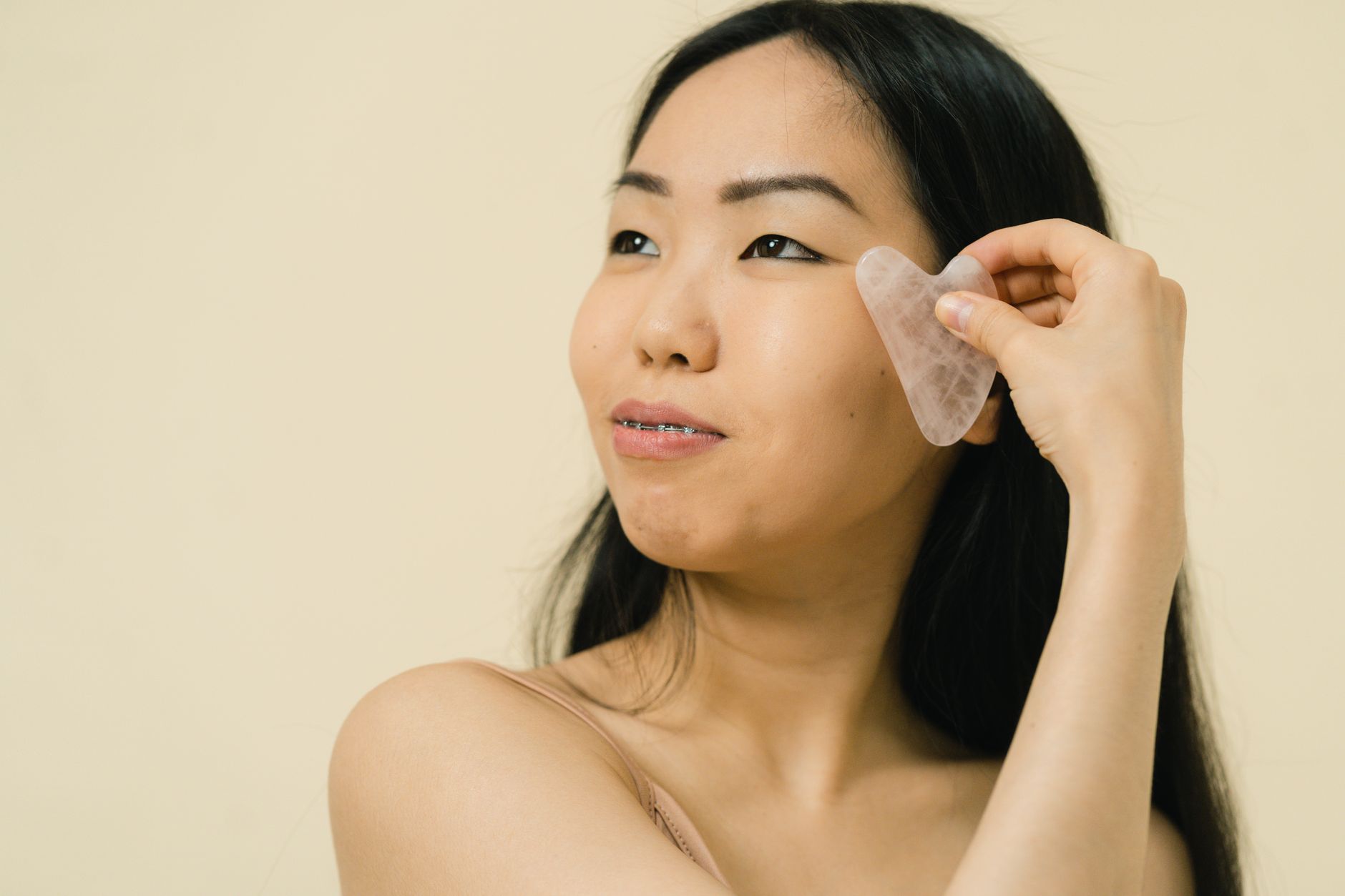
Gua sha stones get an unexpectedly warm reception from most practitioners I spoke to, with significant caveats. The technique, rooted in traditional Chinese medicine, involves scraping the skin with a smooth-edged tool to stimulate circulation and encourage lymphatic movement. Used with a proper facial oil and light pressure, it can temporarily sculpt and depuff, and with consistent daily use over weeks, some clients notice improved skin texture from the increased circulation.
What it cannot do, and this bears repeating, is lift, tighten, or structurally change bone and muscle. “Social media has created completely unrealistic expectations,” says aesthetics practitioner Priya Mehta, who runs a clinic in Manchester. “People see a ‘before and after’ that’s really just a different camera angle and better lighting, and they believe their £12 stone is doing clinical work. It isn’t.” The gua sha tool is a low-cost, low-risk addition to a skincare routine. Frame it that way and it earns its place on your bathroom shelf.
Where the real investment pays off: microcurrent and LED
Microcurrent devices are where the conversation gets more interesting. Tools like the NuFace (widely available in the UK through Selfridges and Space NK) deliver small electrical currents that stimulate facial muscles, improving muscle tone over time. There is actual peer-reviewed research behind microcurrent technology, and unlike gua sha, the mechanism is measurable. The catch is commitment: you need to use these devices consistently, several times per week, for at least six to eight weeks before seeing meaningful change. Most people quit after a fortnight.
LED light therapy masks have also graduated from gimmick to genuine skincare tool. Red light (around 630-660 nanometres) has solid evidence behind it for collagen stimulation, and blue light for acne-causing bacteria. Brands like CurrentBody, a UK company, have built a serious following with their LED mask devices, and independent clinical data backs the core claims. Priya Mehta is a fan: “I recommend LED masks to clients who want to maintain results between professional treatments. They won’t replace a clinic visit, but as a maintenance tool they’re legitimate.”
The caveat here is price. A decent LED mask costs between £200 and £400. Cheap alternatives with lower irradiance levels are probably not delivering the wavelengths at sufficient intensity to make a difference. This is one area where buying cheap genuinely means buying twice.
What you can skip entirely
Facial rollers. Not because they’re harmful, but because they are functionally identical to using your fingers with a facial oil, just colder and slightly heavier. If you enjoy the ritual of rolling, keep doing it. But don’t expect anything a good manual massage wouldn’t deliver. The same goes for most vibrating facial wands at the lower end of the market: the vibration frequency is typically too low to do anything beyond making the experience feel more luxurious.
Suction tools marketed as ‘pore vacuums’ concern several practitioners more actively. Used incorrectly, they can cause bruising or broken capillaries, particularly on sensitive skin. Lisa Harris is direct: “I see the damage from these regularly. People use them far too aggressively because they want to see visible results. If you have rosacea, broken veins, or thin skin, please avoid them entirely.”
How to build an at-home facial routine that actually delivers
The practitioners I spoke to broadly agreed on a sensible hierarchy. A good double cleanse, a targeted serum with ingredients that have real evidence behind them (retinoids, vitamin C, niacinamide), and consistent SPF use will outperform any tool in your kit. Once that foundation is solid, layering in a daily gua sha practice done correctly, and LED therapy two or three times per week if budget allows, makes genuine sense.
For lymphatic drainage specifically, investing in one proper tutorial from a trained facialist, even a video consultation, will serve you better than copying technique from social media. The NHS’s find-a-health-service tool can help locate registered practitioners if you want a professional lymphatic drainage treatment to understand the correct technique before practising at home.
The broader wellness picture matters here too. If you’re interested in how stress and lifestyle feed into skin health, the conversation between cortisol and skin clarity is worth reading up on. What goes into your body is inseparable from how your skin looks on the outside, and if you’re chasing a glow purely through tools, you may be missing the bigger levers. It’s also worth thinking about the products you’re pairing these tools with: as explored in the shift towards ingredient-led skincare on British shelves, the actives in your routine matter more than the gadget you apply them with.
And if the wellness content you’re consuming is making you feel worse about yourself rather than better, that’s worth interrogating. The ASA’s tightening grip on digitally altered images is a step towards more honest marketing, but the before-and-after content flooding social feeds still sets benchmarks that no tool, however expensive, can realistically meet.
Buy the gua sha stone. Learn to use it properly. Be honest with yourself about what it can and cannot do. That combination of realism and genuine consistency will always beat a drawer full of unopened devices.
Frequently Asked Questions
Does at-home lymphatic drainage facial massage actually work?
Yes, but technique is everything. Gentle, downward strokes towards the lymph nodes in the neck can reduce puffiness and improve circulation. The common mistake is dragging tools upward towards the ears, which works against proper drainage. Learning correct direction from a trained facialist before practising at home makes a significant difference to results.
What facial tools are actually worth buying in the UK?
Microcurrent devices like NuFace and LED light therapy masks from brands like CurrentBody have the strongest evidence behind them. Gua sha tools are low-cost and useful for circulation and depuffing when used correctly. Jade rollers and cheap vibrating wands offer minimal benefit beyond the ritual of use itself.
How much does a professional lymphatic drainage facial cost in the UK?
Prices vary significantly by location and practitioner. In London, expect to pay between £80 and £180 for a professional lymphatic drainage facial. Outside the capital, treatments typically range from £50 to £120. Many facialists now offer video consultations at lower rates to teach correct at-home technique.