

British weather has never been subtle. It rains when you’ve left the umbrella at home, drizzles through your lunch break, and occasionally delivers a full downpour fifteen minutes into a weekend walk you specifically planned around a clear forecast. I’ve lost count of the mornings I’ve stood at the door in something I felt genuinely good about, then buried the whole look under a shapeless rain jacket because the sky had other ideas. Stylish waterproof layering for UK women is not a luxury. It’s a survival skill.
The good news is that the gap between ‘stays dry’ and ‘looks polished’ has never been smaller. The brands getting it right, and the pieces worth actually spending money on, are more accessible than they were five years ago. Here’s how to build a rain-ready wardrobe that doesn’t make you look like you’re about to navigate a festival car park.
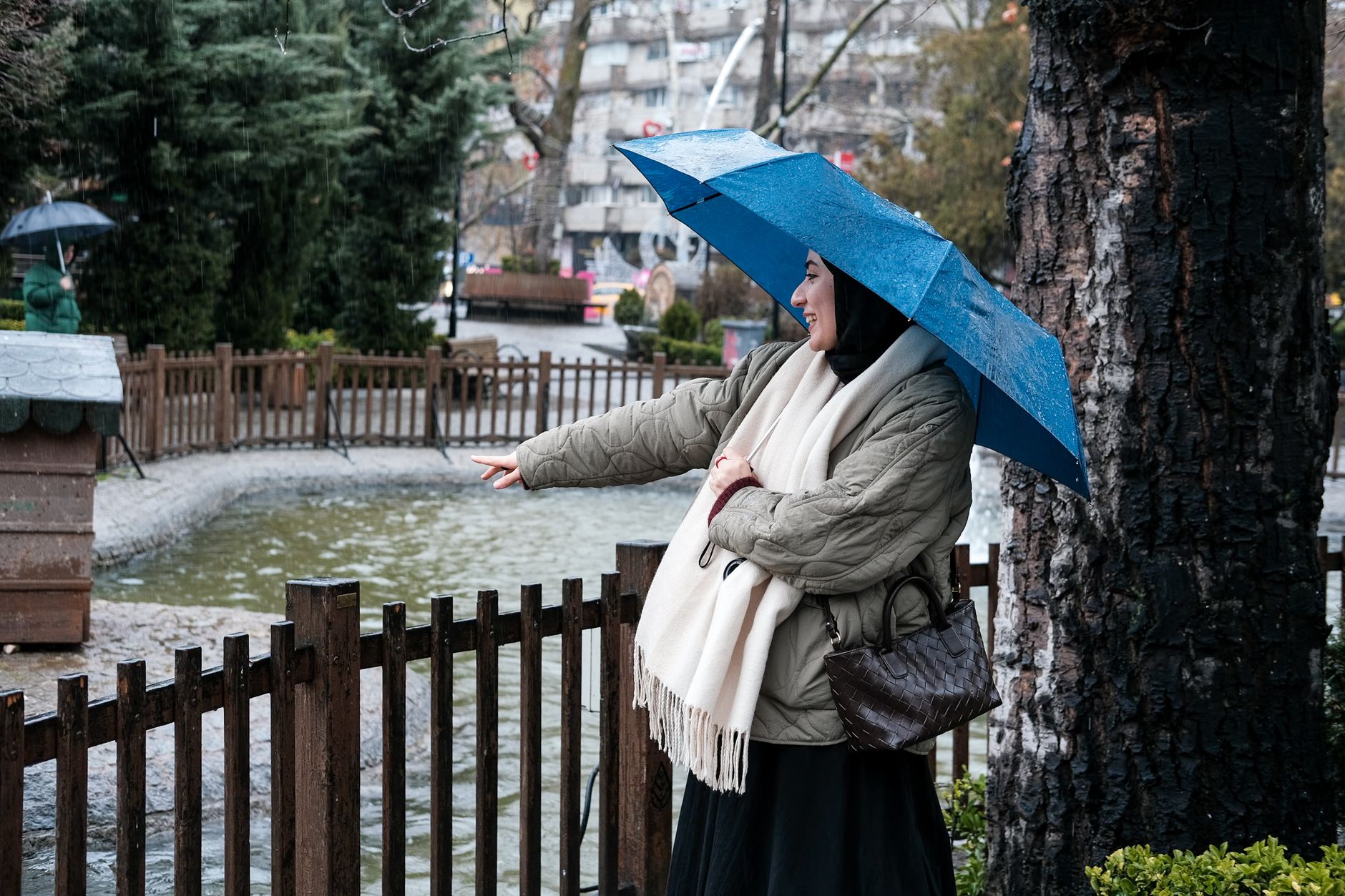
Why the classic cagoule fails British women (and what to reach for instead)
The cagoule problem is real. Packable nylons and synthetic shells serve a purpose on a fell walk, but they crinkle, they cling, they drown a silhouette. The solution isn’t to tough out the rain in a tailored coat and accept damp shoulders. The solution is understanding what the best outerwear actually does structurally.
Waxed cotton is the obvious starting point. Barbour has been making the case for it since 1894, and the Beadnell jacket in particular has become something of a quiet classic for women who want weather protection with a proper shape. It sits at the hip, has a flattering seam through the waist, and works with everything from wide-leg trousers to midi skirts. The wax finish means it sheds water without a single synthetic rustle. It needs re-waxing every couple of seasons, which sounds like a chore but takes about twenty minutes and keeps the jacket performing for decades. That’s a very different value equation to a fast-fashion mac you’ll replace in eighteen months.
Beyond Barbour, Rains (the Danish brand with a growing UK presence) produces longer, structured silhouettes in a rubberised finish that look genuinely directional. Their W Jacket in particular photographs beautifully and holds a shape on the body rather than collapsing into a bin-liner effect. It’s available through ASOS and John Lewis, which makes it easy to try in person.
Technical macs that actually look like proper clothes
The technical mac has had a serious glow-up. Where once ‘waterproof’ translated to ‘shiny and awkward’, brands like Arket, & Other Stories, and Cos have spent the last few years making lightweight macs in bonded fabrics and treated wovens that drape rather than stand away from the body. Arket’s trench-adjacent macs in particular use a DWR (durable water repellent) coating over a wool-blend shell, which means you get the visual warmth of a proper coat with meaningful weather resistance.
The key with technical macs is fit. A boxy oversized shape in a waterproof fabric can tip quickly into shapeless. I’d always size to the shoulder and let the rest of the fit do what it wants, rather than going a size up ‘for layers underneath’. You can wear a heavy-knit underneath a correctly-fitted mac far more comfortably than you think. The layers compress.
Treated knits deserve more attention than they get in this conversation. Several brands, including Norse Projects and Finisterre (the Cornish outdoor label with a strong ethical story), now produce wool-blend knits with a natural lanolin treatment or a light DWR finish that make them genuinely resistant to light rain. They’re not going to handle a downpour on Dartmoor, but for the everyday British drizzle? More than capable. They also layer beautifully under a waxed cotton or mac without adding bulk at the collar. The countryside dressing movement has pushed this category forward significantly, and you can see the influence filtering into mainstream high street ranges too.
How to layer without losing your shape
There’s a formula here that works consistently. Start with a fitted base, something with a bit of structure: a ribbed poloneck, a fitted turtleneck in merino, a long-sleeve top with a bit of weight to it. Over that, a treated or wool-blend midlayer. Over that, the waterproof outer. Three layers, each with a distinct job, none of them fighting for space on the body.
The mistake most people make is adding bulk at the wrong point. A chunky cable knit under a waxed Barbour reads as shapeless from the outside. A fine-gauge merino under the same jacket keeps the outer layer sitting correctly and you still feel the warmth. The merino does the insulating work without the visual noise.
Trousers matter here too. A wide-leg or straight-cut trouser in a medium-weight fabric holds its shape in the rain in a way that skinny or lightweight cuts simply don’t. Céline-adjacent wide-leg trousers in a wool blend paired with a technical mac is a look that’ll take you from a Saturday morning market to a proper lunch without a single compromise. Add a low-heeled ankle boot in leather or a treated suede, and the whole outfit reads intentional rather than emergency-assembled.
This connects to a broader principle I think about a lot in the context of the quiet luxury approach to dressing: the most considered outfits are built around pieces that do several things well, not one thing brilliantly. A waxed jacket that’s also beautiful. A treated knit that’s also incredibly comfortable. Rain resistance shouldn’t be a compromise category.
Accessories that earn their place in wet weather
Footwear is the real test of a rain-ready outfit. According to the Met Office, the UK averages around 1,154mm of rainfall per year, and that’s spread across a depressing number of days. Your shoes matter. Treated leather holds up well with regular conditioning. Glossed or patent leather is genuinely waterproof at surface level. Rubber-soled ankle boots from brands like Grenson or Trickers have enough craft behind them to read as elegant while performing in genuinely bad weather.
Bags are simpler: waxed canvas or coated leather. Filson’s waxed canvas totes are not cheap, but they genuinely do not care about rain. Strathberry makes coated leather options that sit more firmly in the fashion space. Either approach keeps your bag functional without reaching for a plastic pouch.
Hats divide people, but a structured wool fedora or a bucket hat in a waxed cotton does more weather work than you’d expect while keeping the look coherent. Avoid anything with a plastic brim. It immediately cheapens everything around it.
Building the core pieces: where to start if you’re starting from scratch
If I were building this wardrobe from zero, I’d prioritise in this order. First, a waxed cotton or DWR-treated outer layer in a neutral, probably olive or navy, at a price point that allows for quality. The Barbour Beadnell sits around £299; the Rains W Jacket around £130. Both are worth the spend. Second, two or three fine-gauge merino pieces that layer invisibly under outerwear. Uniqlo’s merino range is still one of the best value options on the UK high street for this. Third, at least one pair of proper weatherproof boots. Everything else adapts.
The broader point is that dressing for British weather shouldn’t mean dressing defensively. The best pieces in this space, the ones that genuinely work, have been thought through by designers who understand that function and aesthetic are not opposites. They’re the same brief. You can read more about how that principle applies to building a wardrobe across other settings in this guide to capsule packing for slow travel. The logic translates directly: intentional pieces, chosen for what they actually do, never look accidental.
The drizzle isn’t going anywhere. You might as well look good in it.
Frequently Asked Questions
What is the best waterproof fabric for stylish everyday wear in the UK?
Waxed cotton is the most polished-looking option for everyday UK weather. It sheds light to moderate rain effectively, ages beautifully, and maintains a structured silhouette. For lighter outerwear, look for DWR-treated woven fabrics from brands like Arket or Cos, which offer water resistance without the weight or shine of synthetic shells.
Can you wear stylish waterproof layers to the office or smart-casual events?
Yes, particularly with the right base and footwear. A well-fitted waxed cotton jacket or structured technical mac over tailored trousers and a merino poloneck reads as deliberately stylish rather than functional. The key is fit at the shoulder and a clean silhouette underneath. Avoid anything with visible zip pulls or exposed seam tape for smarter occasions.
How do I stop waterproof layers from looking bulky?
Use fine-gauge knits as your midlayer rather than chunky ones. Merino wool insulates well without adding visual bulk, which keeps the outer layer sitting correctly on the body. Sizing your waterproof jacket to fit properly at the shoulder, rather than going oversized, also makes a significant difference to how the overall silhouette reads.
Which UK high street brands do good stylish waterproof outerwear for women?
Barbour, Arket, Cos, and & Other Stories all offer genuinely wearable waterproof options at different price points. Rains is available through John Lewis and ASOS and produces some of the most directional waterproof silhouettes currently on the market. Finisterre is worth seeking out for treated knits and ethical outdoor pieces with real aesthetic credentials.