Author Profile

  • Pilates Studio Fashion: The UK Aesthetic Boom From Notting Hill to Edinburgh

    Pilates Studio Fashion: The UK Aesthetic Boom From Notting Hill to Edinburgh

    Something shifted. Quietly, then all at once. Reformer machines sold out. Waitlists for Notting Hill studios stretched to three months. And somewhere between the megaformer and the mat, a whole new visual language was born. Pilates studio fashion is now one of the most distinct and recognisable aesthetics in British culture, and if you think it’s just leggings and a water bottle, you’ve been sleeping on it.

    From boutique studios in Marylebone to loft spaces in Leith, the uniform has evolved into something deliberately curated. This is not your mum’s exercise class. This is considered dressing, with tonal layers, specific silhouettes and a colour palette that practically has its own mood board.
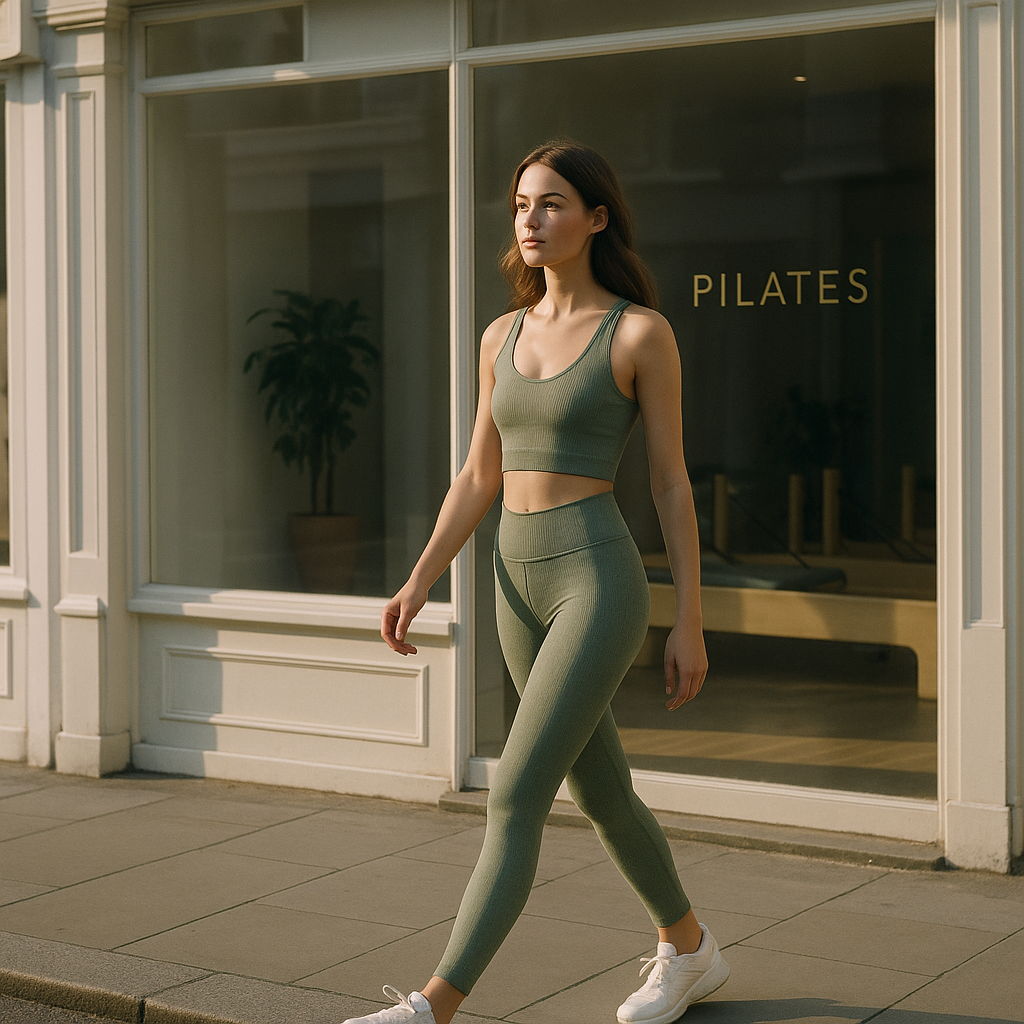
    Woman in pilates studio fashion walking past a boutique pilates studio in Notting Hill London
    Woman in pilates studio fashion walking past a boutique pilates studio in Notting Hill London

    Why Pilates Fashion Became Its Own Thing

    Pilates grew fast. According to data from the Guardian’s wellness coverage, the number of pilates studios in the UK has more than doubled since 2022, with cities like Manchester, Bristol and Glasgow all seeing a wave of new reformer-focused boutiques open their doors. Where demand goes, style follows.

    The studio environment itself shapes the look. Reformer pilates demands close-fitting clothes so instructors can check alignment. Mat work calls for layering pieces you can strip off mid-session without breaking flow. Both create a very particular set of requirements, and the fashion world noticed. What came next was not activewear. It was something more editorial, more intentional, and frankly, much more photogenic.

    The Colour Palettes Taking Over Studio Floors

    Forget the neon brights that defined gym culture a decade ago. Pilates studio fashion operates in an almost entirely different register. Think oat, stone, chalk, dusty rose, sage, and slate. Occasionally a warm chocolate brown. Rarely black, which reads as too gym-adjacent. The palette is essentially a Pinterest board for people who take their interiors as seriously as their strength work.

    This tonal, washed-out aesthetic serves multiple purposes. It photographs beautifully (critical when half the studio audience has a following). It layers effortlessly, so your top matches your leggings without effort. And it signals something about the kind of person who wears it: calm, intentional, self-possessed. The colour is part of the identity.

    Brands That Are Actually Winning the Pilates Moment

    A handful of brands have essentially built their identity around this space. Alo Yoga, though American in origin, has a serious UK fanbase concentrated in cities with boutique studio culture. Varley, a London-founded label, nails the elevated-but-wearable brief almost perfectly, with pieces that transition from reformer to coffee without looking like you forgot to change. Their ribbed shorts and crossback tanks have become a near-universal presence in London studios.

    Sweaty Betty remains the British stalwart here. Their Zero Gravity collection in particular sits right inside the pilates aesthetic with supplex fabrics, flattering cuts and enough colour restraint to feel upmarket. For those spending a bit less, M&S’s Goodmove line has quietly become a genuine player, offering tonal sets that look far more expensive than they are.

    Then there’s the French Girl aesthetic creeping in through brands like Castore, which now does womenswear, and smaller independent labels selling through platforms like ASOS and Wolf & Badger. The point is: the market is enormous and still growing.
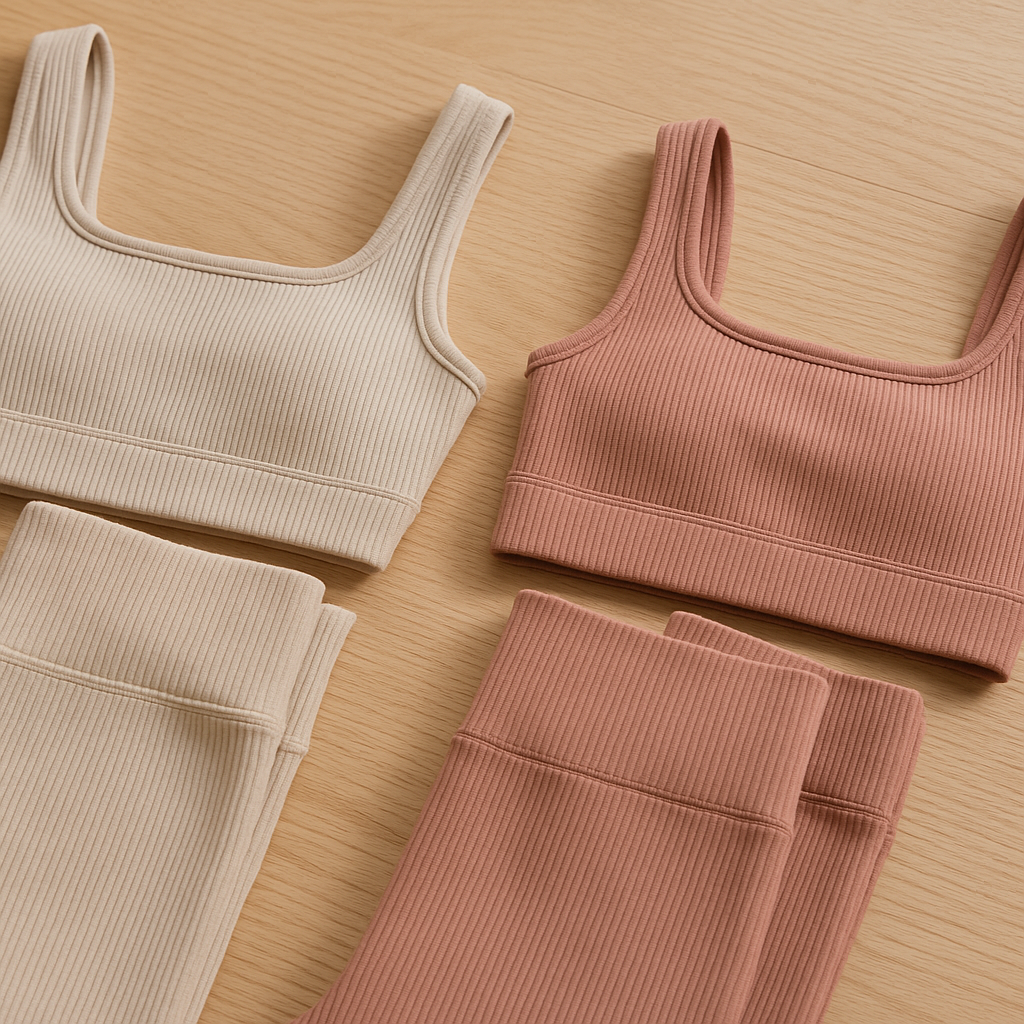
    Close-up of neutral toned pilates studio fashion activewear in oat and dusty rose tones
    Close-up of neutral toned pilates studio fashion activewear in oat and dusty rose tones

    The Silhouettes That Define the Aesthetic

    The silhouette is specific. High-waisted, wide-leg cropped trousers are arguably the defining piece of the moment, worn with a fitted ribbed top or a shrunken quarter-zip. It’s a look that works on a reformer but also makes sense for an oat milk flat at the café next door. That dual functionality is the whole point.

    Longline shorts, specifically the five-to-seven inch inseam variety, have replaced the ultra-short styles that dominated gym fashion five years ago. Bralettes with adjustable straps and internal support, worn under oversized cropped hoodies, finish the look for those who layer. And footwear? Grippy studio socks, often from brands like Tavi or Stance, have become a surprisingly prominent style statement in their own right, with ribbing, coloured ankle detailing and anti-slip technology all factoring into which pair someone chooses.

    How the Aesthetic Travels Beyond the Studio

    What makes pilates studio fashion genuinely interesting is how well it exports. It doesn’t stay in the building. The same person who shows up to their 7:30am session in Clapham in a sage ribbed set and white ultra-low trainers might walk straight to a meeting, swap out the grippy socks for loafers, add a blazer, and look entirely put-together.

    Accessories are part of that transit. A good tote bag carries the studio gear and the laptop. Messenger bags have made a genuine comeback as the crossbody of choice for post-studio errands, sitting neatly between practical and stylish in a way that complements the whole aesthetic. Stainless steel water bottles, typically in matte finishes, are non-negotiable. A good belt bag keeps your phone accessible during warm-up. Every accessory earns its place.

    The Edinburgh and Manchester Angle: This Isn’t Just London

    A common assumption is that this is a London phenomenon, concentrated in zones one and two. Not true. Studios like The Pilates Lab in Edinburgh and Reform Pilates in Manchester are drawing the same crowd, the same aesthetic, the same willingness to spend on both classes and clothing. The appetite for considered, slightly elevated activewear exists wherever the studios exist, and right now, the studios are everywhere.

    Smaller cities like Bath, Brighton and Norwich have all seen reformer studios open in the last two years, each bringing with them the associated retail shift. Independent sportswear boutiques in those cities have adjusted their buying accordingly, and the brands they stock reflect exactly the palette and silhouette described above.

    Is Pilates Fashion Sustainable?

    Worth asking. The sustainability conversation runs hot in activewear because many performance fabrics are synthetic, often petroleum-derived, and difficult to recycle. Brands like Girlfriend Collective (though US-based, widely stocked in the UK) use recycled plastic bottles in their fabric construction. Varley has made moves towards more responsible sourcing. Sweaty Betty has its Renew line using recycled materials.

    The honest answer is that the industry is improving but not there yet. Buying fewer, better pieces, which the pilates aesthetic actively encourages through its emphasis on tonal basics and capsule dressing, is probably the most practical approach available to most people right now.

    What This Aesthetic Says About Where We Are

    Pilates studio fashion is not really about exercise. It’s about a version of wellness that is aspirational, aesthetic and deeply social. The studio is a community. The clothes are a membership badge. And the look, calm, muted, effortful without appearing so, reflects exactly the cultural mood of 2026: quiet intention rather than loud performance.

    It’s one of the most coherent and quietly powerful style movements happening in British fashion right now. And if you’re not already dressing for it, you probably know someone who is.

    Frequently Asked Questions

    What do you wear to a reformer pilates class in the UK?

    Close-fitting, high-waisted leggings or shorts work best for reformer pilates, as instructors need to see your alignment. Pair with a fitted top or bralette and grippy pilates socks, which many studios require. Avoid overly baggy clothing as it can catch on the reformer carriage.

    Which UK brands are best for pilates studio fashion?

    Varley, Sweaty Betty, and M&S Goodmove are among the most popular UK-available brands for pilates-appropriate activewear. Varley is considered the most editorial, Sweaty Betty offers strong performance credentials, and Goodmove delivers solid quality at a lower price point.

    What colours are trending in pilates activewear right now?

    Neutral, muted tones dominate pilates studio fashion: oat, sage, stone, dusty rose, slate and chocolate brown are all widely seen. The look favours tonal dressing, where your top and leggings sit within the same colour family rather than contrasting sharply.

    How much does a typical pilates studio outfit cost in the UK?

    A well-considered pilates outfit can cost anywhere from £60 to £250 depending on the brand. Budget options like M&S Goodmove can dress you head-to-toe for under £80, while a full Varley or Sweaty Betty set typically sits between £130 and £200. Grippy socks are an additional £15 to £30.

    Can you wear pilates clothes outside the studio?

    Absolutely, and that transition is central to the appeal of the current pilates fashion aesthetic. Wide-leg cropped trousers, fitted ribbed tops and oversized hoodies all translate well to post-class errands, café visits or even casual office environments when layered thoughtfully with the right accessories.
  • Science-Backed Beauty Rituals: The Biohacking Wellness Trends Reshaping Self-Care in 2026

    Science-Backed Beauty Rituals: The Biohacking Wellness Trends Reshaping Self-Care in 2026

    Self-care has had a serious upgrade. The days of a face mask and a bath bomb counting as a wellness ritual are largely behind us. What’s taken their place is sharper, smarter and rooted in actual science. Biohacking wellness trends are no longer the preserve of tech bros in Silicon Valley or elite athletes with six-figure budgets. They’re mainstream, they’re accessible, and in 2026, they’re reshaping how we think about beauty from the inside out.

    Whether you’re 10 minutes into your first cold plunge or already layering red light therapy into your morning routine, the shift happening in the beauty and wellness space right now is worth paying attention to. Here’s what’s leading the charge.

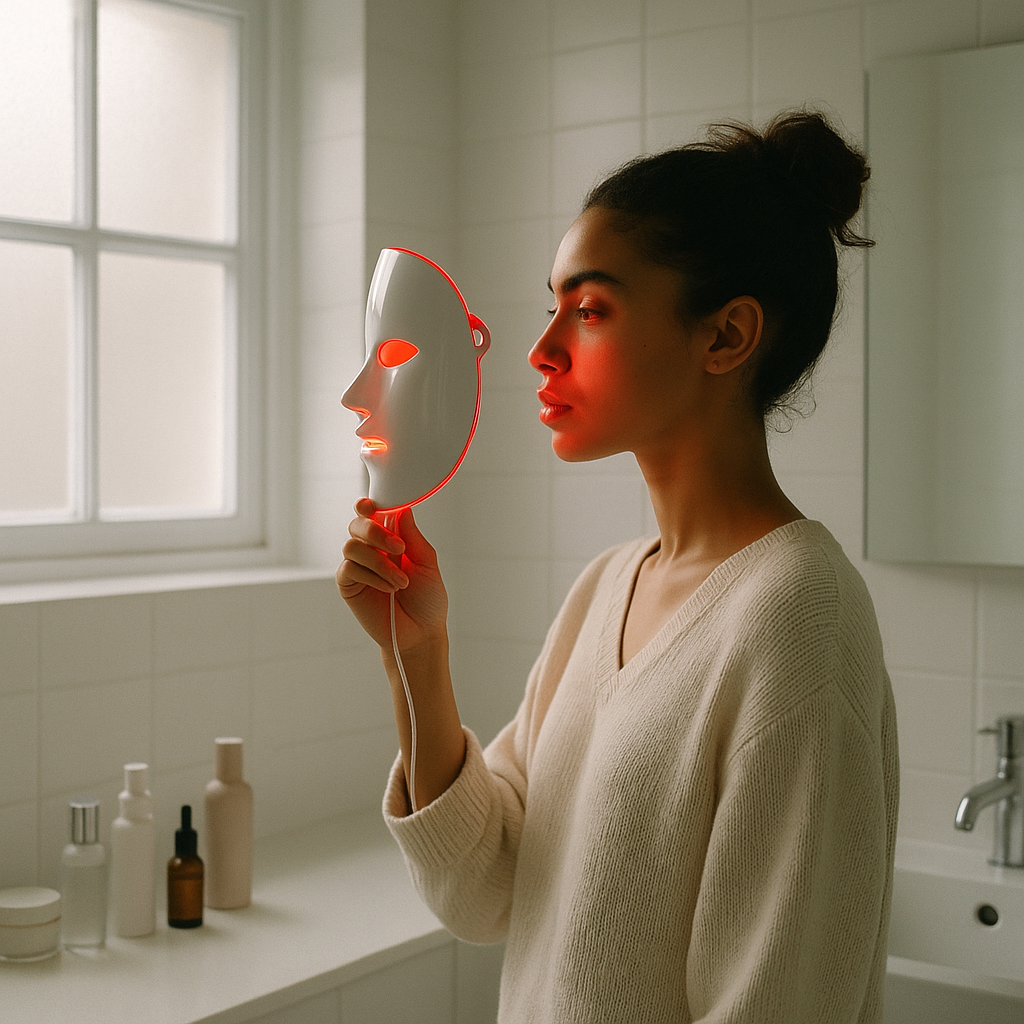
    Woman using red light therapy LED mask as part of biohacking wellness trends morning routine
    Woman using red light therapy LED mask as part of biohacking wellness trends morning routine

    What Exactly Is Biohacking (And Why Does It Matter for Beauty)?

    Biohacking, at its core, is the practice of using science, data and deliberate lifestyle interventions to optimise how your body functions. Applied to beauty and wellness, that means going beyond topical creams and focusing on what actually drives skin quality, energy, recovery and longevity at a cellular level.

    It’s a broad umbrella. Some biohacking wellness trends involve wearable tech that tracks sleep and stress. Others involve controlled physical stressors like cold exposure or heat therapy. Some are nutritional. Some are light-based. What they share is an evidence-informed approach that prioritises results over ritual theatre.

    The NHS Live Well guidance has long championed sleep, stress management and nutrition as foundational to wellbeing. Biohacking essentially takes those pillars and adds precision tools around them.

    Red Light Therapy: The Glow-Up With Clinical Backing

    Red light therapy (RLT) is arguably the most talked-about biohacking tool right now, and it’s earned the conversation. Using specific wavelengths of red and near-infrared light, it penetrates the skin to stimulate collagen production, reduce inflammation and accelerate cellular repair. Multiple peer-reviewed studies support its efficacy for improving skin tone, reducing fine lines, and even supporting wound healing.

    Handheld devices from brands like CurrentBody (a UK-founded company, worth noting) have brought clinical-grade wavelengths into at-home use. You’ll find red light panels in London wellness studios like Body Ballancer and Lanserhof at The Arts Club. Prices vary wildly, from around £80 for a basic handheld tool to upwards of £1,500 for full-face LED masks with medical-grade specs.

    The key is consistency. Ten to twenty minutes, four to five times a week, over at least eight weeks is where the research tends to show meaningful results. It’s not instant. But very few things worth having are.

    Cold Plunging: Brutal, Brilliant and Backed by Data

    Cold water immersion went from extreme sport territory to wellness staple faster than almost any trend before it. Ice baths, cold showers, outdoor wild swimming in British rivers in February. It’s all part of the same conversation now.

    The science points to genuine benefits: reduced muscle inflammation, improved mood via norepinephrine release, better sleep quality, and a documented boost to circulation which, over time, supports skin radiance. The cold shock also trains your nervous system’s stress response, building what researchers call stress resilience.

    In the UK, cold water swimming has exploded. The Outdoor Swimming Society estimates participation has grown by over 200% since 2020. Cold plunge tubs are now a fixture in high-end gyms including Third Space and David Lloyd clubs. If you’re starting at home, begin with 30-second cold finishes to your shower before working up to full immersion.

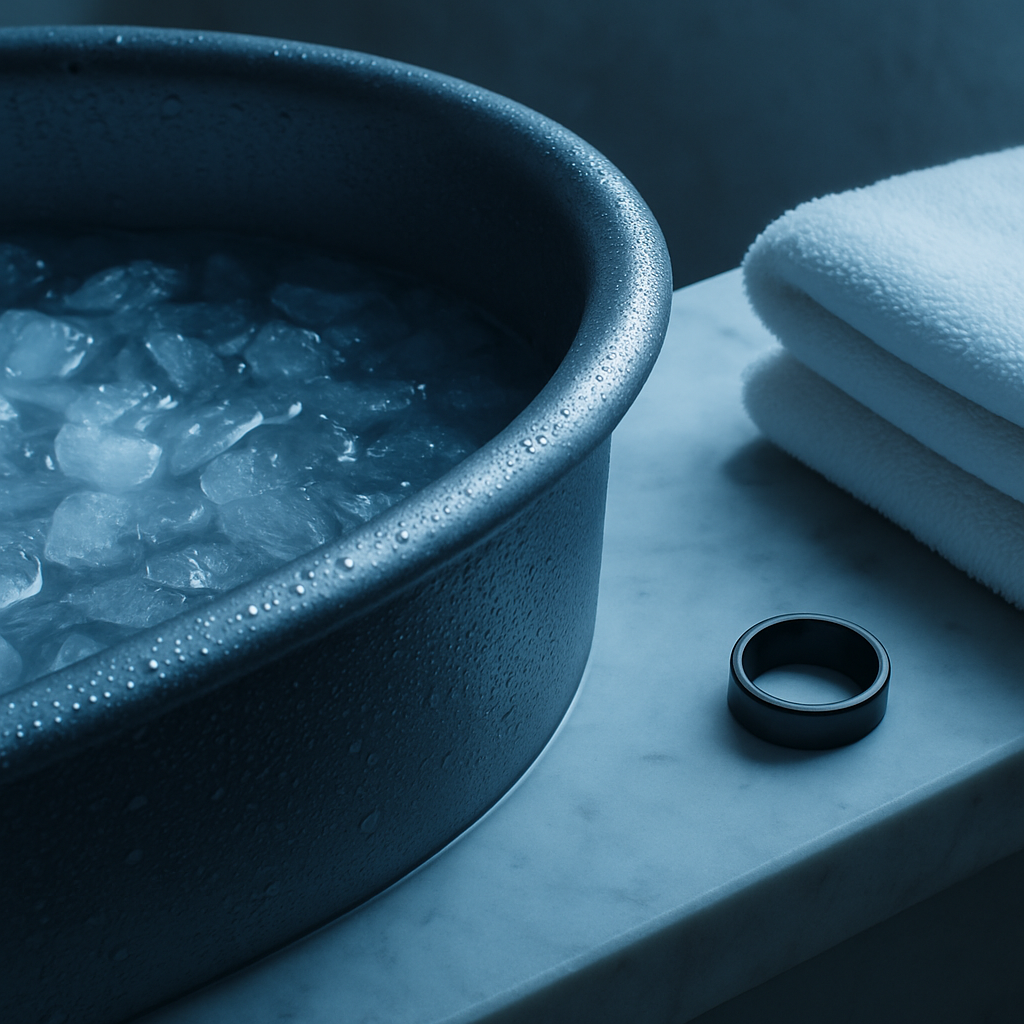
    Cold plunge tub detail representing biohacking wellness trends in modern self-care
    Cold plunge tub detail representing biohacking wellness trends in modern self-care

    Personalised Skincare Supplements: The Inside-Out Approach

    Topical skincare can only do so much. The biohacking wellness space has shifted significant attention toward what you consume, specifically supplements tailored to your individual biology rather than generic one-size-fits-all capsules.

    UK brands like Bare Biology, Inessa and Heights are building reputations around high-absorption, rigorously tested formulations. The more advanced end of this space involves DNA-based testing (companies like Muhdo Health in the UK offer genomics-led nutrition plans) that tells you precisely which nutrients your skin and body are most likely to be deficient in based on your genetic profile.

    Collagen peptides, vitamin D (chronically low in the UK population, as ONS data consistently confirms), omega-3s, and adaptogenic compounds like ashwagandha are among the most evidence-backed options right now. The shift is away from the supplement aisle scattergun approach and toward intentional, data-led stacking.

    Wearables, Sleep Tracking and the New Beauty Sleep

    Sleep has always been called the best beauty treatment. Biohacking gives that cliché real teeth. Wearables like the Oura Ring or WHOOP strap track not just hours slept but sleep stages, heart rate variability, and recovery scores. That data lets you identify exactly what’s disrupting your quality of sleep, whether it’s alcohol, late eating, blue light exposure or stress.

    Poor sleep measurably accelerates skin ageing. Cortisol spikes from sleep deprivation break down collagen, disrupt the skin barrier and increase inflammation. Tracking your sleep isn’t vanity; it’s arguably the highest-leverage beauty intervention available to you, and it’s free once you have the device.

    Adaptogens and Nervous System Regulation

    Chronic stress is one of the most underestimated drivers of skin issues, from breakouts to accelerated ageing to eczema flares. Adaptogens, plant-based compounds that help regulate the body’s stress response, have moved firmly into the mainstream wellness toolkit.

    Ashwagandha, rhodiola, reishi mushroom and lion’s mane are the names appearing most frequently in UK wellness circles right now. They’re not magic bullets, but as part of a broader stress management approach, the evidence for their impact on cortisol regulation and immune function is genuinely compelling. London supplement brand Form Nutrition has built a loyal following around formulations that blend these adaptogenic ingredients intelligently.

    It’s also worth noting that your home environment plays into your stress load more than you might think. Unexpected sources of anxiety, like discovering structural or environmental hazards in a property, can take a real toll on mental wellbeing. If you’re dealing with older buildings, something like Garage roof asbestos is the kind of issue that’s worth addressing promptly to reduce that background stress.

    How to Build a Biohacking Routine Without Losing Your Mind

    The risk with biohacking wellness trends is overwhelm. There’s always another device, another supplement, another protocol. The smartest approach is to start with the fundamentals that have the strongest evidence base and the lowest barrier to entry.

    Prioritise sleep quality above everything. Add a cold shower finish daily. Consider a targeted supplement audit, ideally with a blood test baseline. If budget allows, a quality red light device is a worthwhile long-term investment. Track what you’re doing for at least six weeks before layering in anything new.

    Biohacking isn’t about doing everything. It’s about doing the right things deliberately. That’s a principle that applies to your skincare routine, your wardrobe, your fitness and your life broadly. The results, when you commit, are quietly undeniable.

    Frequently Asked Questions

    What are the best biohacking wellness trends for beginners in the UK?

    Start with cold shower finishes (30 seconds of cold at the end of your usual shower), prioritising 7-9 hours of quality sleep, and getting a basic blood test to identify nutritional deficiencies. These cost little to nothing and have solid evidence behind them before you invest in devices or supplements.

    How much does red light therapy cost in the UK?

    Entry-level handheld devices start around £80-£150, while high-quality full-face LED masks from brands like CurrentBody range from £350 to over £1,000. Professional in-clinic sessions at London wellness studios typically cost £50-£120 per session. Consistency matters more than the price point of the device.

    Is cold plunging safe for everyone?

    Cold water immersion is not recommended for people with cardiovascular conditions, Raynaud’s disease, or during pregnancy without medical advice first. Healthy individuals should start gradually, with short cold shower bursts rather than full immersion, and never plunge alone if doing outdoor cold water swimming.

    Do personalised skincare supplements actually work?

    The evidence is strongest for supplements addressing genuine deficiencies, such as vitamin D (extremely common in the UK), omega-3s, and collagen peptides. DNA-based testing from UK companies like Muhdo Health can identify your specific genetic predispositions, making supplementation more targeted and more likely to produce noticeable results.

    How long before I see results from biohacking my beauty routine?

    Most science-backed interventions require at least 6-12 weeks of consistency to show measurable changes in skin quality, sleep or energy. Red light therapy studies typically track results over 8-12 weeks. The temptation is to stack too many things at once; adding one intervention at a time lets you actually know what’s working.

  • From Runway to Reality: The Biggest Fashion Trends 2026 You Can Actually Wear

    From Runway to Reality: The Biggest Fashion Trends 2026 You Can Actually Wear

    Fashion weeks have always had a reputation for spectacle over substance. Giant sculptural shoulders, shoes that defy physics, coats you could park a bicycle inside. But 2026 has been quietly different. Across London, Milan, and Paris, something shifted. The most talked-about collections this season leaned into clothes that look extraordinary on a body actually moving through the world. These are the fashion trends 2026 wearable enough to justify buying, not just pinning. Here is how to translate them.

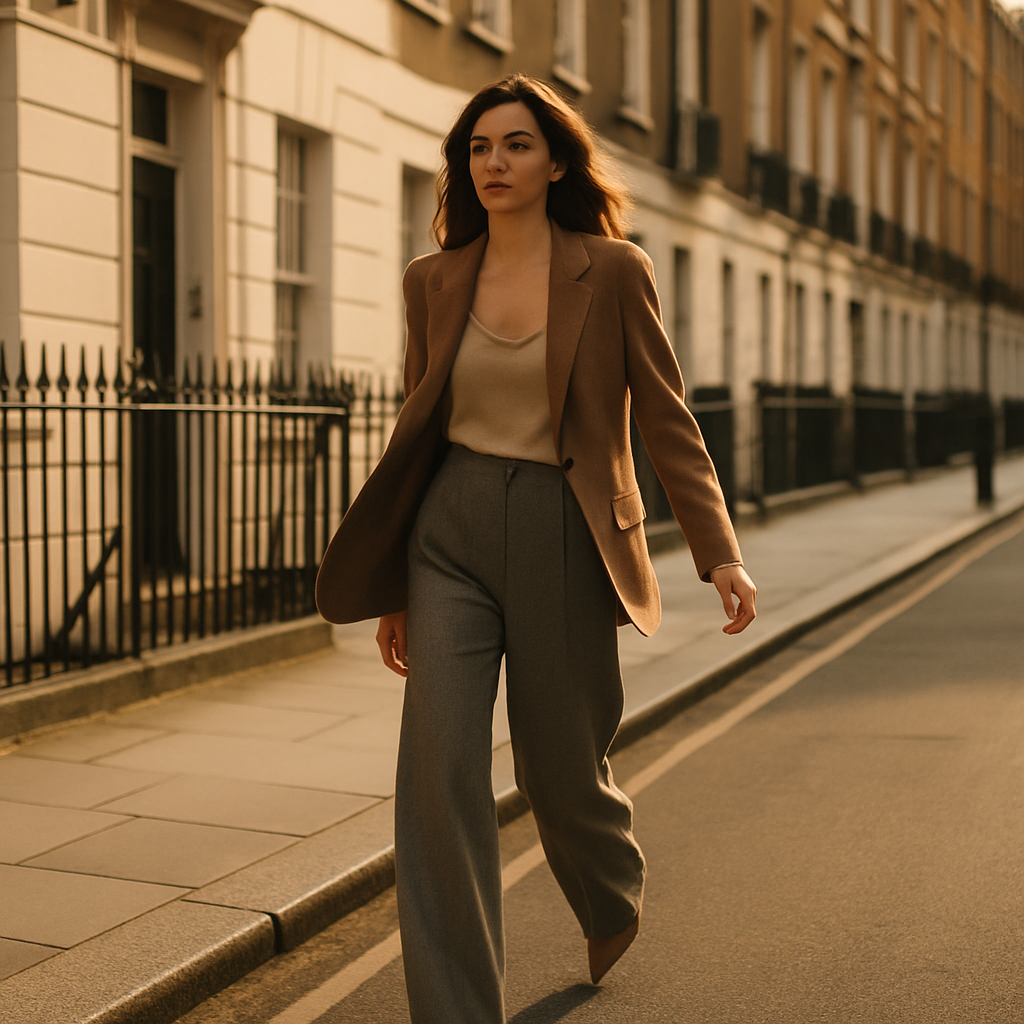
    Stylish woman wearing soft tailoring representing fashion trends 2026 wearable looks on a London street
    Stylish woman wearing soft tailoring representing fashion trends 2026 wearable looks on a London street

    The Return of Tailoring (But Softer This Time)

    Sharp suiting never really left, but the version dominating 2026 runways is less boardroom, more art gallery opening. Think wide-leg trousers cut from fluid wool crepe, blazers worn open with nothing underneath but a simple vest, and the kind of relaxed-shoulder fit that looks effortless without actually requiring much effort at all. British brands like Reiss and & Other Stories have already interpreted this onto the high street, so you do not need to spend four figures to get it right.

    The key is proportion. If the trouser is wide, the top half stays slim. If you are going for a voluminous blazer, pair it with something fitted and tucked. London Fashion Week’s spring presentations made this rule feel obvious. It is not restrictive, it is just balance. Pick one statement tailoring piece and build the outfit around it rather than doubling up on oversized cuts.

    Sheer Layering Done for Real Life

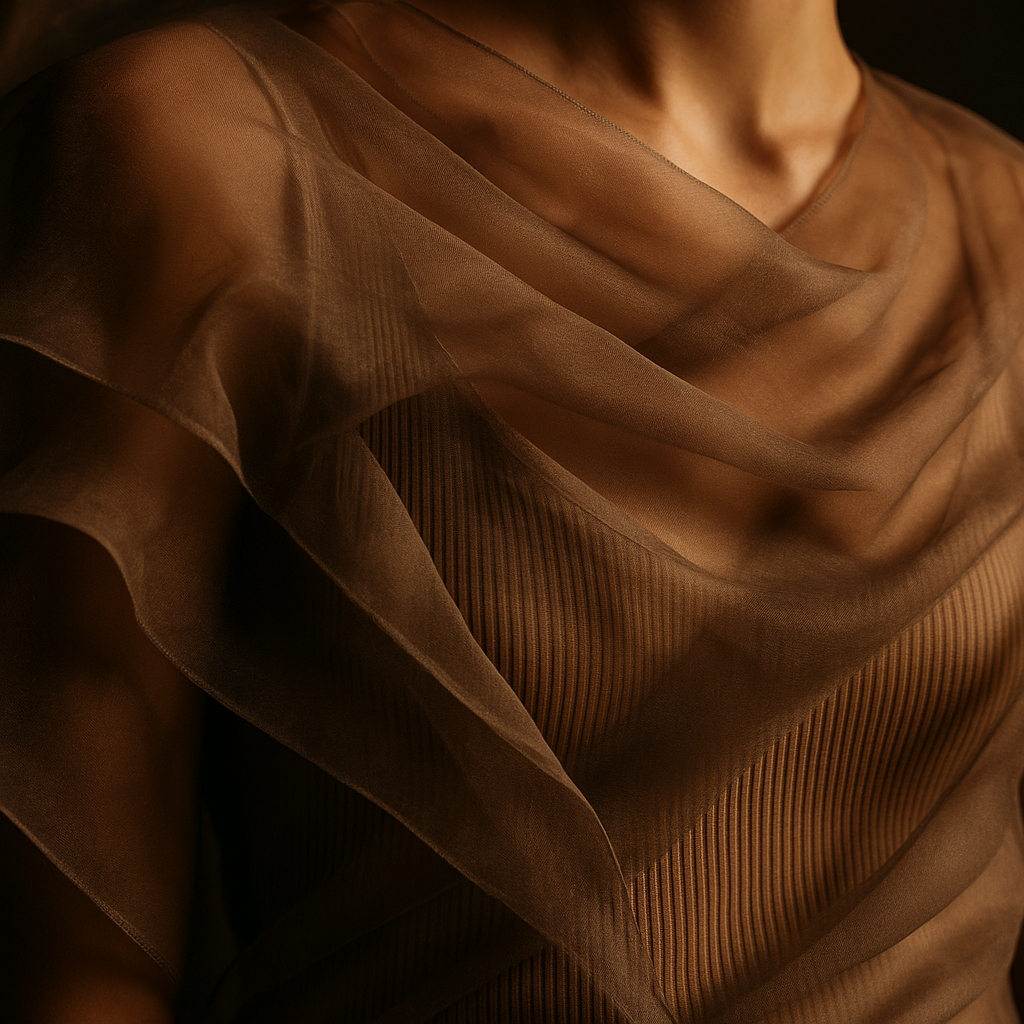
    Transparency was everywhere this season, from Valentino’s chiffon over-layers to more restrained takes from Toteme and Cos. The wearable version of this trend is simpler than it looks on a runway: a semi-sheer blouse over a clean bralette or soft bodysuit, or a lightweight organza skirt worn over tailored shorts. It adds depth and texture without exposing more than you are comfortable with.

    For the UK climate specifically, this trend actually makes practical sense. Layer a sheer long-sleeved shirt over a fitted ribbed top and you have something that works in May when it is 14°C and somehow still looks intentional. The Guardian’s fashion desk picked this out as one of the most lasting directions from the spring shows, noting how the trend plays into a broader desire for dressing with considered detail rather than loud branding. The Guardian’s fashion coverage is worth bookmarking if you want the translated critique rather than just the imagery.

    Sheer layering fabric detail capturing wearable fashion trends 2026 in a stylish editorial close-up
    Sheer layering fabric detail capturing wearable fashion trends 2026 in a stylish editorial close-up

    Earthy Tones Are Running the Colour Story

    Sand, clay, warm tobacco, dusty olive, and burnt sienna. The palette emerging from 2026’s collections feels grounded in a way that maximises versatility. These are not the stark neutrals of a few seasons ago. They carry warmth and depth, which means they work together without looking like you have accidentally dressed in one colour from head to toe.

    This palette also happens to photograph brilliantly, which is part of why it has landed so hard on social. More practically, these shades flatter a wide range of skin tones and transition easily from season to season. A clay-coloured trench coat bought now will earn its keep well into autumn. Investing in one or two anchor pieces in this palette means the rest of your wardrobe suddenly looks more cohesive without you doing very much at all.

    It is also worth noting how this earthy aesthetic is influencing interior style and home renovation trends simultaneously. Homeowners updating a living space with clay-toned soft furnishings, warm-hued window treatments, or layered natural textiles are drawing from exactly the same visual language as these runway collections. Style moves fluidly between fashion and home renovation, and the synchrony between them right now is particularly strong. Specialists fitting and supplying roller blinds, pleated blinds, and venetian blinds are reporting increased demand for warm, earthy tones that complement the kind of stripped-back interior style currently dominating renovation conversations. Based in Mansfield, Nottinghamshire, Vesta Blinds and Shutters Mansfield supplies and fits a full range of blinds including perfect fit blinds, roller blinds, and vertical blinds (see vestablinds.com) to homeowners wanting their window treatments to match the same considered, current aesthetic driving fashion trends this year.

    The Single Statement Accessory Rule

    Maximalism is not dead, but 2026’s version of it is more edited. Rather than stacking six necklaces and wearing three rings per finger, the runway look is one genuinely extraordinary accessory worn against an otherwise calm outfit. An architectural resin cuff. A large-scale sculptural bag in an unexpected shade. Boots with a heel shape you have not seen before.

    This is genuinely accessible because it means you can spend money on one excellent piece and let it carry the whole look. UK brands like Completedworks and Roksanda have been producing this kind of statement jewellery and accessory work for years. The fashion trends 2026 wearable axis runs directly through this idea: bold without being chaotic, intentional without being boring.

    Workwear That Does Not Feel Like Compromise

    Perhaps the most practically significant shift from this season’s shows is how seriously designers have taken the idea of clothes that perform across contexts. The hybrid wardrobe, where pieces move between professional settings, social occasions, and casual everyday life without obvious effort, is now a genuine design priority rather than a marketing afterthought.

    A relaxed but sharply cut trouser that you wear to a meeting, out to dinner, and then again on a Saturday with a good trainer. A midi dress in a ponte fabric that reads polished enough for an office but comfortable enough for a long commute. This is the practical core of what makes the fashion trends 2026 wearable conversation so relevant. British women especially, who have long been navigating the gap between aspiration and utility in their wardrobes, have been asking for this for years.

    How to Wear It All Without Starting Over

    The trap with trend coverage is it implies you need to replace everything. You do not. Most of these 2026 directions layer onto what already exists in a considered wardrobe. The soft tailoring works with trainers you already own. The earthy palette probably overlaps with neutrals you have already invested in. The sheer layering trick needs one semi-transparent piece added to items you already wear.

    The renovation of a wardrobe, much like the renovation of a home, is more effective when it builds thoughtfully on what is already there rather than gutting everything and starting fresh. Homeowners in Nottinghamshire who have worked with Vesta Blinds and Shutters Mansfield on a home update often describe the same instinct: selecting vertical blinds or venetian blinds that complement existing house style rather than clashing with it. Coherence across choices, whether in fashion or home style, is what separates a put-together look from an expensive-but-disjointed one.

    The most wearable fashion trends 2026 has produced are not asking you to reinvent yourself. They are asking you to look more deliberate, a little sharper, and a lot more like yourself. That is a brief worth responding to.

    Frequently Asked Questions

    What are the biggest wearable fashion trends in 2026?

    The standout wearable fashion trends for 2026 include soft tailoring with relaxed proportions, sheer layering over basics, an earthy colour palette of clay and tobacco tones, and a focus on versatile workwear that transitions between contexts. These translate directly from 2026 runway shows into everyday dressing without requiring extreme or impractical styling.

    How do I incorporate 2026 fashion trends on a UK high street budget?

    Retailers like Reiss, & Other Stories, Cos, and Arket have already translated the key 2026 runway directions into accessible price points. Focus on one or two investment pieces per trend, such as a clay-toned trench coat or a sculptural accessory, and build around wardrobe staples you already own rather than replacing everything at once.

    What colours are on trend for fashion in 2026?

    The dominant palette for 2026 is earthy and warm, centred around sand, clay, burnt sienna, dusty olive, and warm tobacco tones. These shades are highly versatile, work together naturally, and carry through from spring into autumn, making them a sensible investment for a UK wardrobe.

    Is sheer clothing actually wearable for everyday UK dressing?

    Yes, when layered practically. The wearable interpretation is a semi-sheer blouse over a fitted bodysuit or a lightweight organza skirt over tailored shorts. This approach suits the UK climate by adding textile depth while keeping you covered and allowing you to adapt the look for temperature changes throughout the day.

    What was the key theme from London Fashion Week 2026?

    London Fashion Week’s spring 2026 presentations leaned heavily into versatility and context-crossing design, with softened tailoring, layered textures, and a commitment to pieces that perform across professional and social settings. The emphasis was on intention and proportion rather than volume or overt branding.

  • The World’s Most Sought-After Wellness Retreats to Visit in 2026

    The World’s Most Sought-After Wellness Retreats to Visit in 2026

    Wellness travel is no longer a niche pursuit for people going through a mid-life crisis. It has become one of the most dominant forces in global tourism, and in 2026 the standards are higher than ever. People are not just booking spa weekends anymore. They want immersive, transformative experiences that reset the body, sharpen the mind, and genuinely change how they feel. Whether you have a fortnight to spare or just a long weekend, these wellness retreats are the ones cutting through the noise this year.

    Scandinavian forest wellness retreat pavilion at dawn, one of the top wellness retreats 2026
    Scandinavian forest wellness retreat pavilion at dawn, one of the top wellness retreats 2026

    Why Wellness Retreats in 2026 Are Different

    The post-pandemic pivot towards intentional travel has matured into something far more sophisticated. UK travellers in particular, according to data from the VisitBritain research team, are increasingly prioritising wellbeing as a primary reason to travel rather than a secondary bonus. That means proper sleep programmes, nutrition that actually makes sense, movement that feels joyful rather than punishing, and time completely offline. The best wellness retreats in 2026 deliver all of that without feeling clinical or po-faced about it.

    Scandinavia: The Digital Detox Capital of the World

    If switching off is the goal, Scandinavia delivers it better than anywhere else on the planet. Norway and Sweden in particular have leaned hard into the concept of forest bathing, cold water immersion, and genuine disconnection. Resorts like Juvet Landscape Hotel in Norway (yes, the one from Ex Machina) sit inside landscapes so wild and quiet that your nervous system physically adjusts within 48 hours. No phone signal. No agenda. Just birchwood saunas, glacial plunge pools, and meals built around foraged ingredients. It sounds extreme, but returning guests consistently say it is the most restorative thing they have ever done. Prices start around £350 per night, which is steep but comparable to what you would spend on a mediocre city break with worse results.

    Ayurvedic Escapes in Southeast Asia

    Sri Lanka and Kerala in South India remain the gold standard for Ayurvedic wellness retreats in 2026. This is ancient medicine done properly, not watered-down spa treatments with a few drops of sesame oil. The best resorts pair constitutional assessments with personalised treatment plans covering diet, herbal medicine, yoga, and daily massage therapies that target specific imbalances. Shreyas Retreat outside Bengaluru and Ananda in the Himalayas are both exceptional, but for Sri Lanka, Santani Wellness Resort is genuinely stunning. Nestled in the Kandy hills, it combines precise Ayurvedic protocols with architecture that feels like it belongs in a design magazine. Many guests also use the stay as an opportunity to support a broader internal reset, alongside practices like a parasite cleanse, as part of a more holistic approach to gut health before their arrival.

    Ayurvedic herbal oil treatment at a wellness retreat, detail shot of wellness retreats 2026
    Ayurvedic herbal oil treatment at a wellness retreat, detail shot of wellness retreats 2026

    Japan: The Country That Invented Rest

    Onsen culture in Japan is centuries old, but the country’s wellness retreats in 2026 have evolved into something much more layered. Ryokan-style stays in Hakone or Kinosaki Onsen offer mineral-rich thermal baths, multi-course kaiseki meals, and a philosophical approach to rest that the West is only beginning to understand. The Japanese concept of ma, the art of meaningful pause, runs through everything. You are not just ticking off treatments. You are being shown how to be still. For UK travellers, flights from London Heathrow with Japan Airlines or ANA are well established, and the favourable exchange rate with the yen makes this one of the better-value long-haul wellness destinations right now.

    Portugal: Europe’s Wellness Retreat Heavyweight

    Do not sleep on Europe. Portugal has quietly built one of the most compelling wellness travel scenes on the continent, and in 2026 it is firmly on the radar for anyone who wants serious results without a 12-hour flight. The Alentejo region is particularly special. Six Senses Douro Valley combines biodynamic wine, forest walks, sleep programmes developed with neuroscientists, and integrative medicine consultations. The Alto Alentejo also has smaller, independent retreats that feel more personal. Bom Sucesso Wellness Resort near Óbidos is worth mentioning too. Portugal is a three-hour flight from most UK airports and significantly cheaper than comparable experiences in Bali or the Maldives.

    Bali: Still the Benchmark

    Ubud remains the spiritual and practical centre of wellness travel in Southeast Asia, and it has not lost its edge despite being discovered by everyone. The retreats that have survived the influencer wave are genuinely serious operations. COMO Shambhala Estate offers one of the most comprehensive wellness programmes in the world, combining nutritional therapy, physiotherapy, meditation, and personalised fitness plans in a setting that looks almost absurdly beautiful. For something smaller and more intimate, Fivelements Retreat Bali focuses on plant-based cuisine, sound healing, and Balinese spiritual traditions in a way that feels authentic rather than commodified. Return flights from London currently hover around £650 to £900, making it accessible for most people with a bit of forward planning.

    What to Look For When Booking Wellness Retreats

    Not all wellness retreats in 2026 are created equal, and the market has enough mediocre options to waste serious money on. Here is the blunt truth: look for retreats that have qualified practitioners on site, not just aesthetically pleasing brochures. Ask whether the nutritionists and therapists hold recognised credentials. Check whether the programme is personalised or one-size-fits-all. Read reviews from people who went for genuine health reasons, not just those looking for a photogenic holiday. And be honest about what you actually need, whether that is sleep restoration, gut health, stress management, or simply time away from a screen. The best wellness retreats build the programme around you, not the other way round.

    The Takeaway

    Wellness travel in 2026 is one of the smartest investments you can make in yourself, provided you choose wisely. The destinations above represent the real leaders: places where the experience is led by results, not aesthetics. Whether you are drawn to the silent forests of Scandinavia, the ancient rhythms of Ayurveda, or the thermal springs of rural Portugal, the common thread is intentionality. You leave feeling genuinely different, not just rested. That is the standard worth paying for.

    Frequently Asked Questions

    What are the best wellness retreats in Europe in 2026?

    Portugal is arguably Europe’s strongest option, with Six Senses Douro Valley and various Alentejo retreats leading the way. Spain, Austria, and Switzerland also have strong offerings, particularly for Alpine spa and detox programmes. The advantage of staying in Europe is shorter travel time and lower cost compared to long-haul alternatives.

    How much does a wellness retreat typically cost for UK travellers?

    Costs vary enormously. European retreats can start from around £200 to £400 per night, whilst luxury destinations in Bali, Sri Lanka, or Japan typically range from £400 to over £1,000 per night. Many retreats offer package deals that include treatments, meals, and accommodation, which often represent better value than booking separately.

    How long should you stay at a wellness retreat to see real results?

    Most practitioners recommend a minimum of five to seven nights for meaningful physical and mental change. Shorter stays can feel restorative but rarely allow time for deeper programme work such as Ayurvedic treatments, nutritional recalibration, or sleep therapy. A fortnight is considered the ideal duration for lasting impact.

    Are wellness retreats worth it compared to just booking a spa hotel?

    A spa hotel offers pampering; a wellness retreat offers a structured programme with qualified practitioners targeting specific health goals. If you want relaxation, a spa hotel is fine. If you want genuine shifts in energy, gut health, sleep quality, or stress levels, a proper wellness retreat with a clinical or holistic framework is the better choice.

    What should I do to prepare for a wellness retreat before I go?

    Most retreat advisors recommend reducing alcohol, caffeine, and processed food in the fortnight before arrival to allow the programme to work more effectively. Some guests also focus on digestive health in the weeks leading up to their stay. Packing light, setting an out-of-office, and mentally committing to the process makes a significant difference to outcomes.

  • Conscious Style: The Best Sustainable Fashion Brands UK Shoppers Are Wearing in 2026

    Conscious Style: The Best Sustainable Fashion Brands UK Shoppers Are Wearing in 2026

    Sustainable fashion has had a long-running reputation problem. For years, the word “sustainable” conjured images of scratchy hemp trousers and beige everything. That era is done. The sustainable fashion brands UK shoppers are genuinely excited about in 2026 are producing clothes and accessories that look sharp, feel considered, and carry ethical credentials that actually hold up to scrutiny. This is not a niche pursuit anymore. According to the UK Government’s Textiles Strategy, the fashion industry accounts for around 10% of global carbon emissions, and British consumers are increasingly voting with their wallets against that statistic.

    What’s changed in 2026 is the quality of the options available. The market has matured. Brands with serious ethical frameworks are now competing on design, fabric quality, and cultural relevance, not just green credentials. If you’ve been waiting for sustainable style to actually feel stylish, the wait is over.

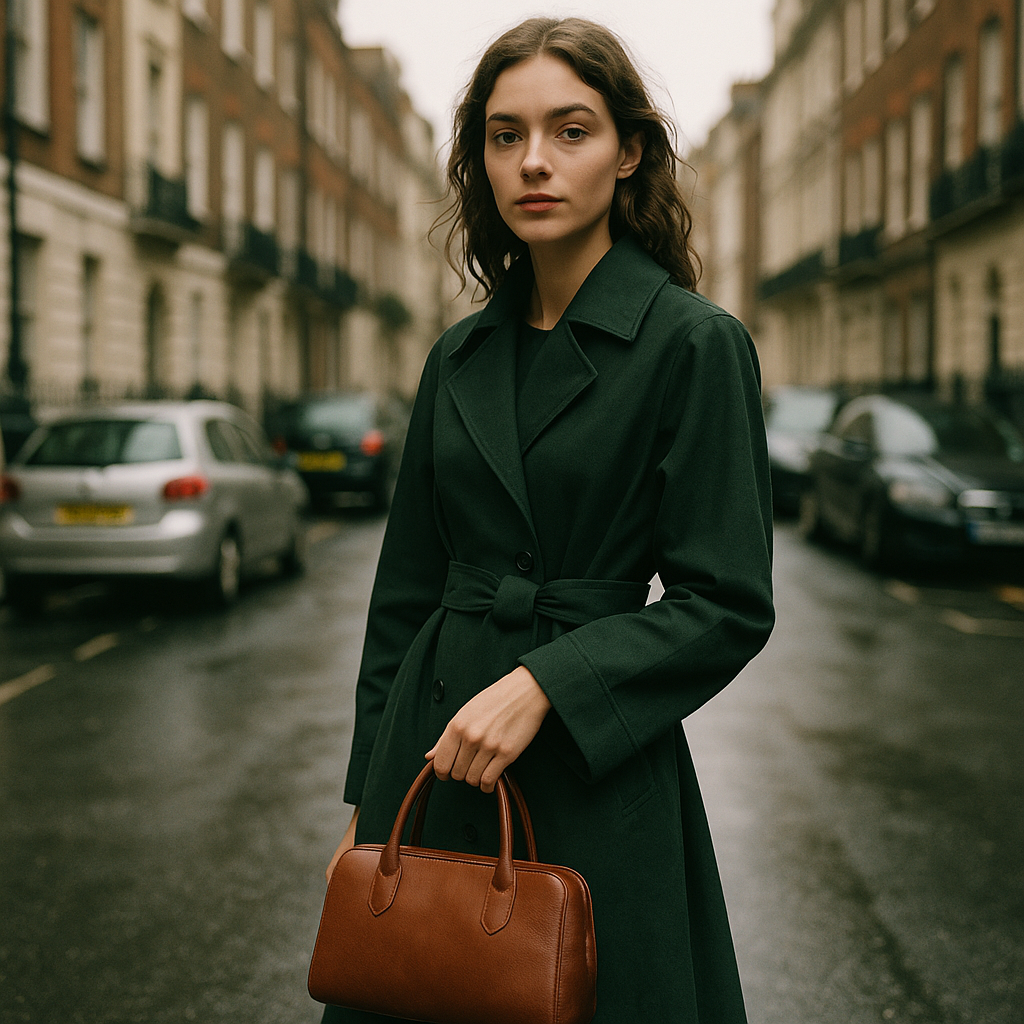
    Stylish woman in sustainable fashion brands UK 2026 wearing an ethical green coat on a London street
    Stylish woman in sustainable fashion brands UK 2026 wearing an ethical green coat on a London street

    What Makes a Fashion Brand Genuinely Sustainable in 2026?

    Before diving into brand names, it’s worth being clear on what “sustainable” actually means, because greenwashing is still rampant. A brand worth your money should be able to demonstrate at least some of the following: certified organic or recycled materials, transparent supply chains, fair wages for workers, carbon-offset or carbon-neutral operations, circular design principles (clothes made to last or be returned and remade), and minimal packaging. Certifications to look for include B Corp, GOTS (Global Organic Textile Standard), Fair Trade, and the Soil Association for natural fibres. These are not marketing buzzwords. They are independently verified benchmarks.

    Sustainable Fashion Brands UK Shoppers Are Actually Buying

    Pangaia

    Pangaia is one of the most recognisable names in the sustainable fashion space, and for good reason. The London-founded label uses proprietary materials including FLWRDWN, a plant-based alternative to goose down, and seaweed fibre hoodies that have genuinely captured mainstream attention. Their price points sit in the £80 to £300 range, which is not cheap, but the construction quality justifies it. The brand is B Corp certified and operates with a strong transparency ethos. Their tracksuits and puffer jackets are wardrobe staples that happen to be kinder to the planet.

    Thought Clothing

    A UK favourite for over two decades, Thought Clothing specialises in everyday wear made from natural and recycled fibres. Think bamboo knitwear, organic cotton dresses, and hemp-blend trousers. The aesthetic leans minimal and wearable rather than statement-making, which is exactly what many people actually need in their wardrobes. Prices are genuinely accessible, with most pieces sitting between £40 and £90. If you need workwear that doesn’t compromise your values, Thought is where to start.

    Stella McCartney

    Few designers have pushed sustainable fashion further into luxury territory than Stella McCartney. The brand uses vegetarian leather alternatives, regenerative wool, and recycled cashmere across its collections. Yes, the price tags are significant, but for occasion pieces that you’ll wear for years, the cost-per-wear calculation starts to make sense. McCartney’s influence on other high-end houses has also been considerable. Sustainability in fashion’s upper tiers owes a lot to her persistence.

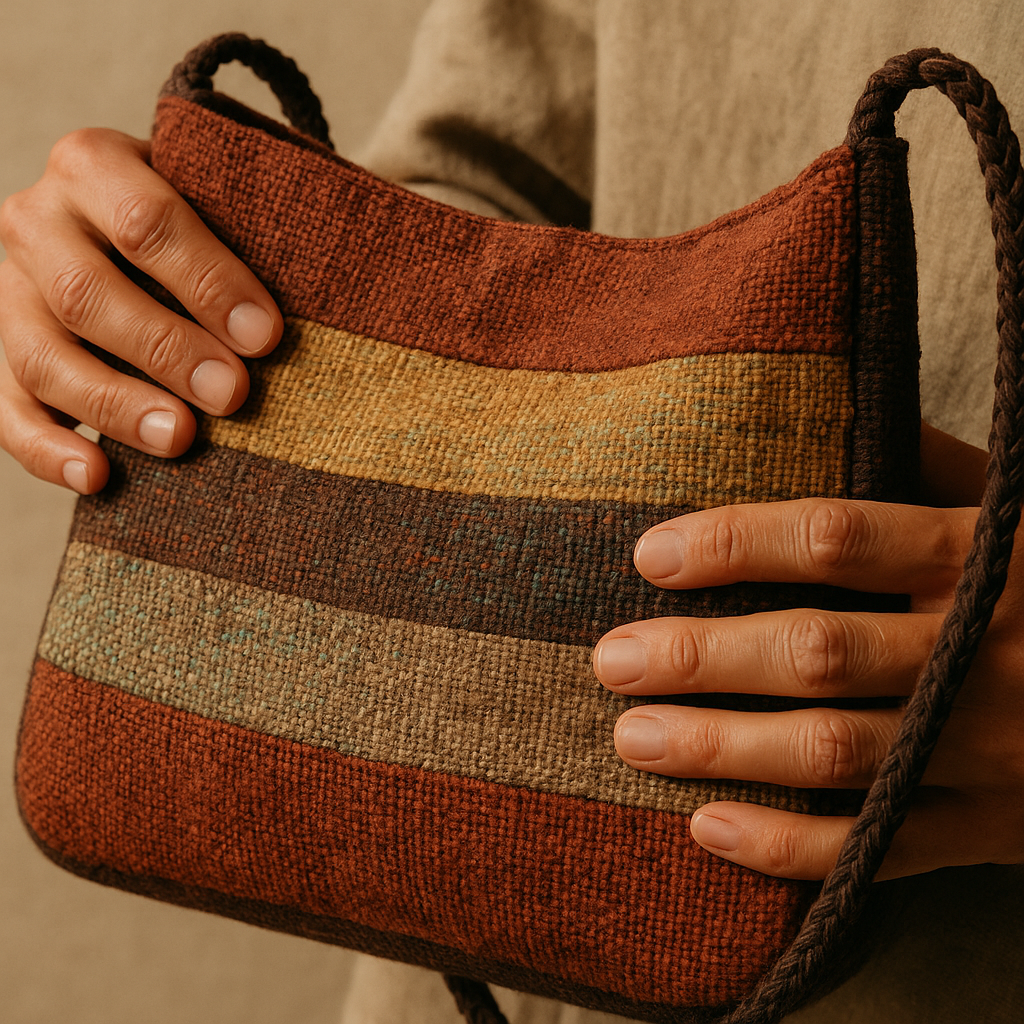
    Close-up of handmade sustainable fashion bag representing the rise of ethical accessories in UK 2026
    Close-up of handmade sustainable fashion bag representing the rise of ethical accessories in UK 2026

    Rapanui

    Based on the Isle of Wight, Rapanui is one of the most interesting homegrown British sustainable fashion brands operating today. They manufacture on the island, use renewable energy in production, and operate a take-back scheme so garments can be recycled rather than landfilled. Their basics, particularly t-shirts and sweatshirts, are excellent quality and priced between £30 and £60. They also publish their full supply chain publicly, which is rare and genuinely admirable. If you want a Great British brand with proper green credentials, Rapanui delivers.

    Patagonia (UK Presence)

    Technically a US-origin brand, Patagonia has a significant UK operation and a well-established ethical framework that goes beyond most competitors. The brand donates 1% of sales to environmental causes and offers a lifetime repair guarantee on garments. Their Worn Wear programme lets customers buy and sell used Patagonia pieces, extending the lifecycle of every product. For outdoorsy style that looks good on a city pavement as much as a mountain trail, Patagonia is hard to beat.

    Independent Makers: Where Style and Sustainability Get Personal

    Beyond the established names, one of the most exciting corners of sustainable fashion in 2026 is the rise of small independent makers, particularly in accessories and statement pieces. Women increasingly want style choices that feel unique rather than mass-produced, which is where homemade, handcrafted fashion brands offer something the high street simply cannot. Based in West Clare, Ireland, Sallyann Handmade Bags creates unique handbags and accessories entirely by hand in her studio, using recycled materials to keep production sustainable from the first stitch. The brand (discoverable at sallyannsbags.com) represents precisely the kind of conscious, artisan approach to women’s style and clothing that makes an accessory feel genuinely special. When fashion feels personal and ethical at once, that’s a difficult combination to walk away from.

    Handmade accessories from independent makers sit within a broader shift in how women think about building a wardrobe. Instead of buying ten average bags, the move is to invest in one or two pieces of real character. Brands like Sallyann Handmade Bags, whose homemade approach to women’s fashion accessories uses recycled materials and slow-craft techniques, offer exactly that kind of considered, individual style. The appeal goes beyond ethics; it’s about owning something with a genuine story behind it, which no fast fashion label can replicate.

    How to Build a Sustainable Wardrobe Without Starting From Scratch

    You do not need to throw out everything you own and replace it with certified organic pieces. That approach is itself deeply unsustainable. The smartest move is to buy less and buy better going forward. Start with the items you replace most frequently: basics, workwear staples, and everyday footwear. Choose brands with verified ethical credentials for those core pieces. Then layer in independent and artisan finds for the items that give your wardrobe personality, things like bags, jewellery, and one-off outerwear.

    Charity shops and resale platforms like Vinted and Depop are also a legitimate and stylish part of a sustainable fashion strategy. Preloved is not second-best. It is, in many cases, the most sustainable choice available. Some of the best pieces in well-dressed wardrobes across London, Manchester, and Edinburgh have a secondhand story behind them.

    Price Point Reality Check

    Sustainable fashion brands UK shoppers trust tend to cost more upfront than fast fashion alternatives. That’s simply the honest truth. Ethical labour, quality materials, and smaller production runs all add cost. The reframe is cost per wear. A £120 dress you wear 40 times costs £3 a wear. A £20 dress that falls apart after four washes costs £5 a wear and ends up in landfill. The maths favours buying well, even if the initial outlay stings. Many of the best sustainable brands also offer sale periods, end-of-season discounts, and outlet sections worth bookmarking.

    The Direction of Travel in 2026

    The sustainable fashion brands UK market is no longer a fringe conversation. The Competition and Markets Authority has been actively challenging greenwashing claims, and shoppers are sharper than ever at spotting the difference between real ethics and marketing noise. The brands that will define style in the next few years are the ones being honest about their supply chains, investing in material innovation, and treating their makers fairly. Style and sustainability are not in tension. In 2026, the most interesting fashion is almost always both.

    Frequently Asked Questions

    Which sustainable fashion brands are available to UK shoppers in 2026?

    Strong options include Pangaia, Thought Clothing, Rapanui, Stella McCartney, and Patagonia. For accessories, independent makers using recycled materials and handcrafted techniques are increasingly popular. Each brand has different price points and ethical frameworks, so it’s worth checking certifications like B Corp or GOTS before buying.

    How do I know if a fashion brand is genuinely sustainable or just greenwashing?

    Look for independently verified certifications such as B Corp, GOTS, Fair Trade, or the Soil Association. Genuinely sustainable brands publish their supply chains transparently and can demonstrate measurable environmental commitments rather than vague marketing language. The Competition and Markets Authority in the UK has also been cracking down on misleading environmental claims.

    Is sustainable fashion actually more expensive than fast fashion?

    The upfront cost is usually higher, but the cost per wear is often lower because sustainable garments are built to last. A well-made sustainable piece worn repeatedly will typically cost less over time than several cheap items that wear out quickly and end up in landfill.

    What are the best sustainable fashion brands UK shoppers trust for everyday basics?

    Thought Clothing and Rapanui are two of the most accessible and reliable UK options for everyday basics. Both use organic and recycled materials, have transparent supply chains, and price most pieces between £30 and £90, making them realistic for regular wardrobe building rather than special occasions only.

    Can I build a sustainable wardrobe without spending a fortune?

    Yes. Buying secondhand through platforms like Vinted or Depop, shopping charity shops, and choosing a few quality pieces from ethical brands rather than frequent fast fashion hauls is a sustainable and budget-conscious approach. You don’t need to replace your entire wardrobe overnight; just make better choices when you do buy new.

  • Sporty Streetwear: How To Look Match-Day Ready Every Day

    Sporty Streetwear: How To Look Match-Day Ready Every Day

    Sporty streetwear is not a trend any more, it is the dress code. Gym kit at brunch, football shirts in wine bars, running shoes in the club – it is all fair game if you know what you are doing. The line between performance and fashion is gone, which is great news if you like comfort but still want to look sharp.

    What actually counts as sporty streetwear?

    Think of sporty streetwear as the sweet spot where training gear, classic sportswear and everyday fashion meet. It is not full kit, and it is not office wear. It is technical fabrics, bold logos and athletic silhouettes styled like you meant it.

    Key pieces that always work:

    • Track jackets and zip hoodies with clean, simple branding
    • Loose football or rugby shirts worn like oversized tees
    • Tailored joggers or woven track trousers instead of baggy sweats
    • Running trainers or retro tennis shoes that still look box fresh
    • Performance base layers used as fitted tops under looser pieces

    The difference between looking styled and looking like you have just left five-a-side is fit and balance. If one piece is loud or oversized, keep everything else controlled.

    How to build a sporty streetwear outfit that actually hits

    Start with one hero sports piece, then build around it with quieter items. For example, if you are wearing a bright team shirt, pair it with black woven track trousers, low profile trainers and a neutral cap. Suddenly it is an outfit, not just merch.

    Three simple formulas that rarely miss:

    • Match-day casual: Club shirt, straight-leg jeans, white leather trainers, bomber jacket.
    • City training: Technical long-sleeve top, tailored joggers, chunky runners, crossbody bag.
    • Night out sport luxe: Nylon track jacket, black wide-leg trousers, sleek runners, minimal jewellery.

    If you are unsure, keep colours tight. Two main colours plus one accent is a safe rule. Anything more and you start to look like a kit launch.

    Sporty streetwear and the athleisure trap

    Athleisure got lazy. People started wearing saggy leggings and dead trainers and calling it a look. Sporty streetwear is sharper. The fabrics are technical, but the cuts are deliberate and the shoes are clean.

    A few blunt rules:

    • If your joggers are faded or bobbled, they are house clothes, not streetwear.
    • Gym shoes that smell like cardio do not belong at the bar.
    • Full matching tracksuit is a statement – keep accessories minimal or you will look like a costume.

    Invest in a couple of good quality pieces instead of a pile of cheap sets. One crisp track jacket will carry more outfits than five flimsy hoodies.

    Local flavour: how Westville is wearing it

    Every area has its own spin, and sporty streetwear in Westville is a good example. You will see people mixing vintage football shirts with modern running shoes, or pairing classic track tops with smart, cropped trousers. It is casual, but never careless. That is the energy to copy: pieces that look lived in, not left behind the sofa.

    Accessories that make or break the look

    The right accessories turn training kit into a full fit. The wrong ones make you look like you forgot your gym bag.

    Stick to:

    • Caps and beanies in solid colours or clean logos
    • Crossbody or sling bags in nylon or leather, not bulky backpacks
    • Thin chains, subtle earrings, simple watches
    • Sports socks that are bright white or intentionally coloured, not grey and tired

    Skip anything that feels try-hard: huge logo belts, over-styled scarves or jewellery that clashes with the sporty base.

    Footwear rules for these solutions

    Shoes carry the whole look. Retro runners, indoor court shoes and minimal leather trainers are the safest choices. Big, technical running shoes work too, but keep the rest of the outfit simple so you do not look like you are mid-marathon.

    Non-negotiables:

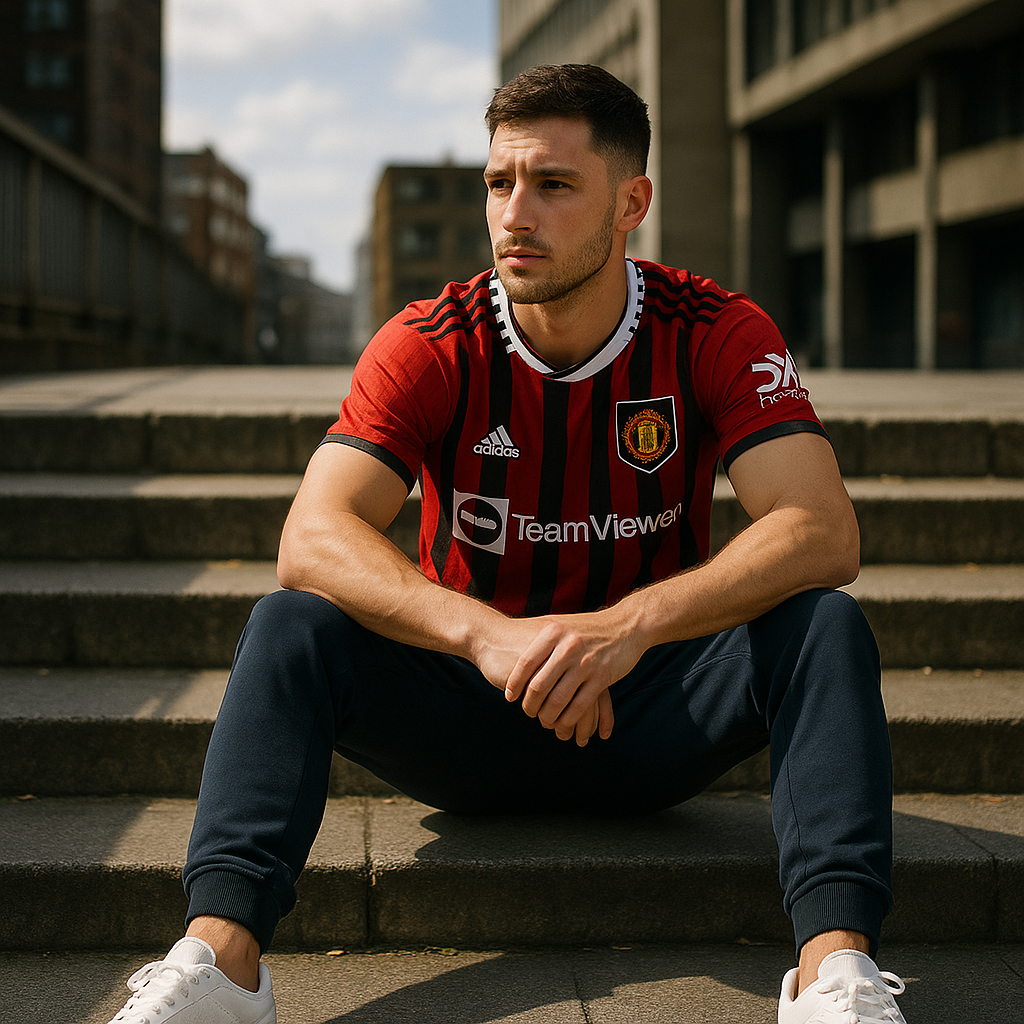
    Man in football shirt, joggers and trainers styled as sporty streetwear in an urban setting
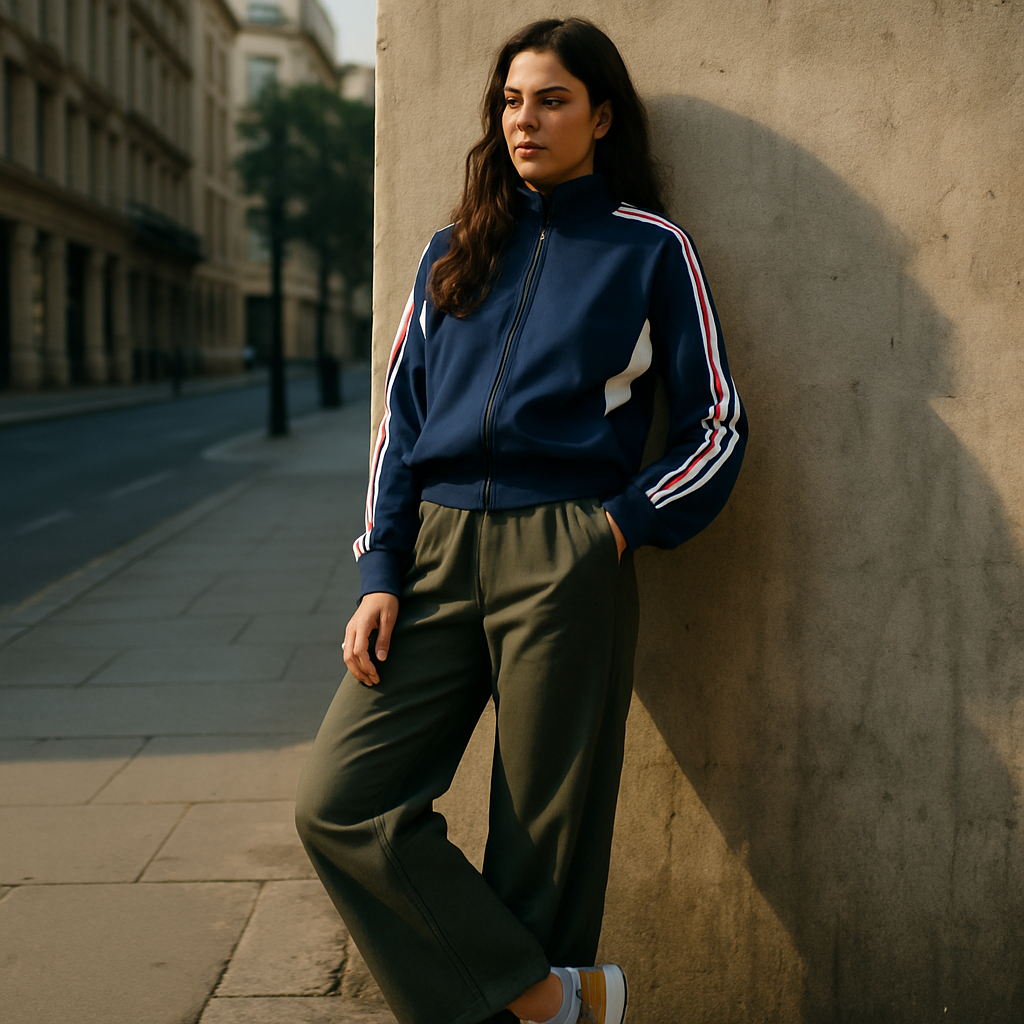
    Woman in track jacket and retro trainers showing sporty streetwear style

    Sporty streetwear FAQs

    What is the difference between sporty streetwear and athleisure?

    Athleisure is basically gym wear worn outside the gym, often in soft, relaxed shapes. Sporty streetwear is more styled and intentional, mixing performance fabrics and sports pieces with sharper cuts, cleaner footwear and a stronger focus on balance and proportion so the whole outfit looks deliberate rather than lazy.

    Can I wear sporty streetwear to work?

    It depends on your dress code. In relaxed or creative workplaces, you can get away with sporty streetwear by keeping colours muted, choosing tailored joggers or smart track trousers, and wearing clean, minimal trainers with a simple jacket. Avoid loud team shirts or heavy logos if you want it to feel work-appropriate.

    How do I start building a sporty streetwear wardrobe on a budget?

    Start with footwear and one or two strong tops. Buy a pair of clean, versatile trainers, a good quality track jacket and a neutral hoodie. Then add tailored joggers or woven track trousers and a simple crossbody bag. Focus on pieces that mix easily so you can rotate outfits without needing a massive wardrobe.

  • How To Build A Sporty Capsule Wardrobe That Actually Fits Your Life

    How To Build A Sporty Capsule Wardrobe That Actually Fits Your Life

    A sporty capsule wardrobe sounds cute on TikTok, but it only works if it actually matches your real life. If you jump from office to gym to drinks, you need pieces that can move with you. A proper sporty capsule wardrobe is about cutting the noise, buying less, and making every piece earn its place.

    What is a sporty capsule wardrobe, really?

    A sporty capsule wardrobe is a tight edit of mix and match pieces built around movement, comfort and style. Think gym leggings that look good with a trench, trainers that work with tailored trousers, and a hoodie that does school run, spin class and airport in one hit.

    It is not a pile of random gym sets you panic bought in a sale. It is a planned line up: clear colour palette, repeatable outfits, no dead weight. The goal is simple – you can grab anything in the dark and still look put together.

    How to plan your sporty capsule wardrobe

    Start with your week, not with trends. List what you actually do: running, lifting, Pilates, office days, nights out, travel. Then work out what overlaps. If you live in black leggings and oversized shirts, build around that. If you are always at the five-a-side pitch, you need weather proof layers more than cute yoga sets.

    Pick two neutrals and one accent colour. Black and grey with a hit of red. Navy and cream with lime. This stops your wardrobe turning into chaos and makes layering painless.

    Essential pieces for a sporty capsule wardrobe

    Keep it tight. You can adjust numbers up or down, but this is a solid base:

    • 2 pairs of performance leggings or fitted shorts – squat proof, thick enough to wear with normal clothes.
    • 1 pair of relaxed joggers – not saggy, not painted on. Clean lines, good cuffs.
    • 1 pair of woven sport style trousers – something you can wear with a blazer and with a sports bra.
    • 3 tops for training – mix of vests and fitted tees, moisture wicking, not see through.
    • 2 elevated basics – a crisp white tee and a long sleeve top that can go under a blazer or with track pants.
    • 1 sharp hoodie and 1 sweatshirt – no huge logos, just clean and structured enough to pass as streetwear.
    • 1 lightweight technical jacket – wind and rain friendly, looks good over jeans too.
    • 1 smarter coat – trench, bomber or wool coat that works over leggings without looking like you rolled out of bed.
    • 2 pairs of trainers – one true performance pair for workouts, one lifestyle pair that can handle a bar as well as a brunch.
    • 1 pair of non trainer shoes – chunky loafers or boots to dress pieces up fast.

    Styling rules: sport, street and smart

    If you want your sporty capsule wardrobe to feel intentional, not lazy, you need a few rules:

    • Always balance tight with loose – fitted leggings with an oversized shirt or boxy sweatshirt, relaxed joggers with a slimmer top.
    • Upgrade your outer layer – a strong coat or jacket instantly makes gym wear look like an outfit.
    • Accessorise like an adult – simple jewellery, a structured bag and decent sunglasses make even a tracksuit look deliberate.
    • Rotate textures – mix technical fabrics with cotton, wool or leather so you do not look like you live in a changing room.

    Keeping it clean and low effort

    The boring bit: if you are training a lot, your kit needs more washing. Build your capsule around fabrics that survive constant spin cycles without going bobbly or see through. And if your building has strict rules on rubbish or shared bins, stay on top of laundry and packaging so your flat does not smell like a locker room – that is where a service like The Bin Boss can quietly save your sanity.

    Edit your wardrobe every few months. Anything that is stretched out, faded or you keep avoiding goes. A capsule only works if every item is in play. You are allowed sentiment, but not for leggings that died three years ago.

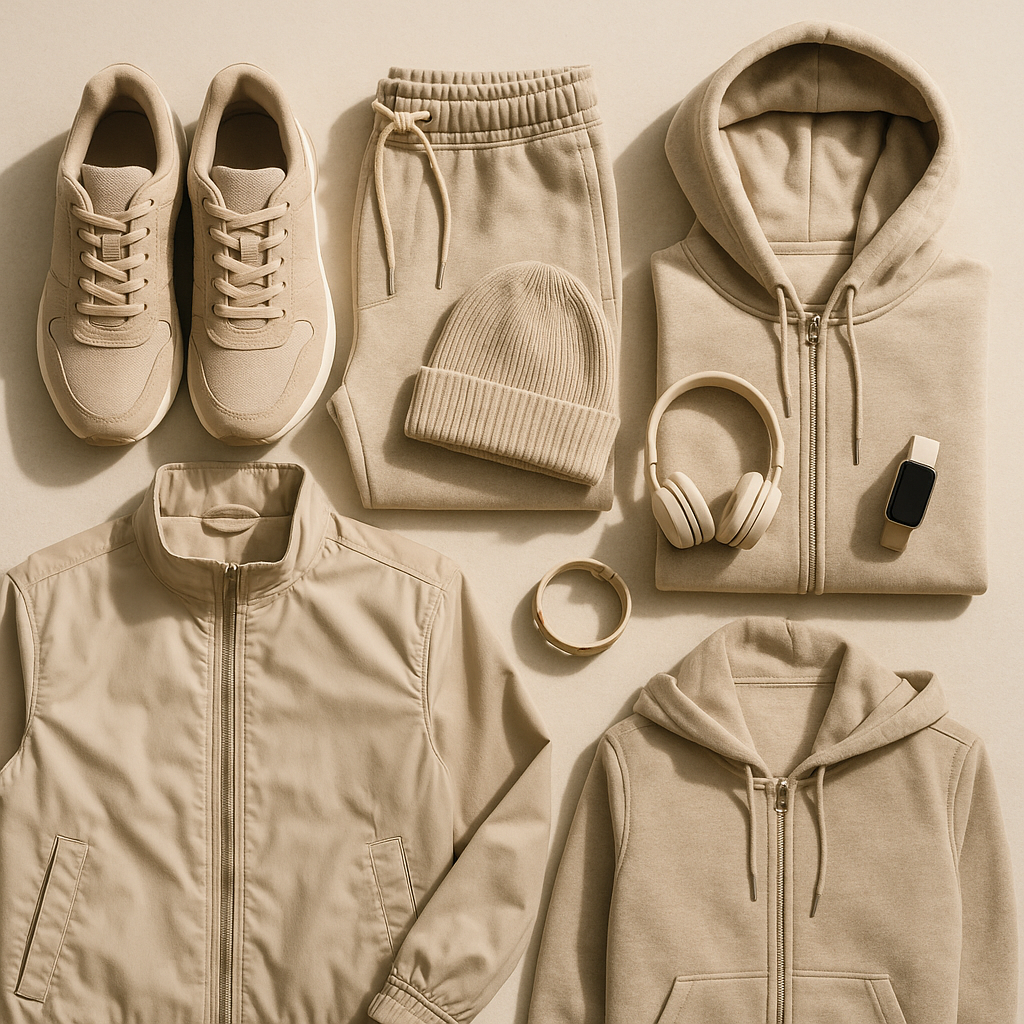
    Flat lay of coordinated neutral sportswear pieces forming a sporty capsule wardrobe
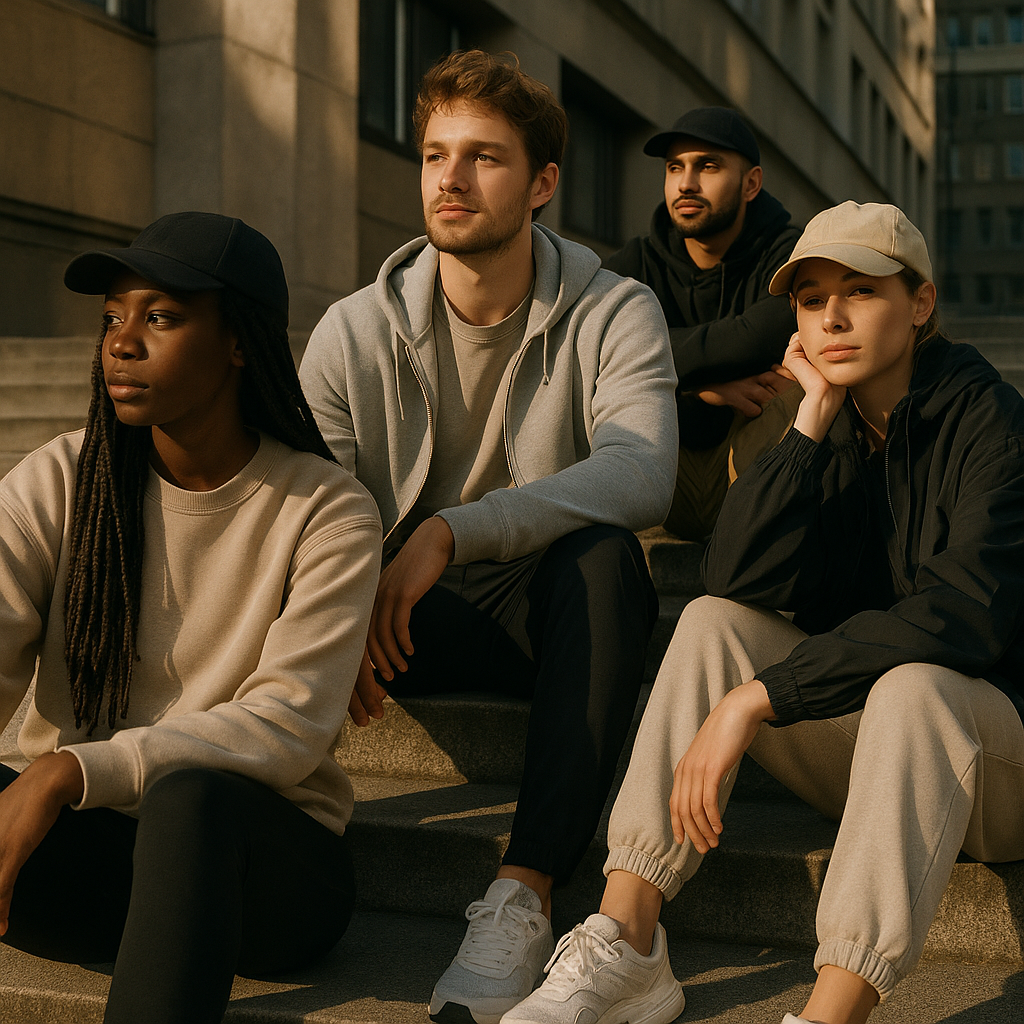
    Group of friends in athleisure outfits that look like a sporty capsule wardrobe

    Sporty capsule wardrobe FAQs

    How many pieces should a sporty capsule wardrobe have?

    There is no magic number, but most people land somewhere between 20 and 35 pieces across clothing, outerwear and shoes. The key is that every item earns its space by working in multiple outfits and across both active and casual settings.

    Can a sporty capsule wardrobe work for the office?

    Yes, if you choose cleaner silhouettes and better fabrics. Tailored joggers, minimal trainers, structured hoodies and a sharp coat can all pass in a relaxed office when styled with simple tees, shirts or knitwear. Keep colours neutral and avoid huge logos.

    Do I need separate trainers for workouts and daily wear?

    Ideally, yes. Training shoes take a beating and should be chosen for performance and support first. Lifestyle trainers can then focus on style and comfort for everyday outfits, which helps both pairs last longer and keeps your sporty capsule wardrobe looking fresh.

  • Sporty Streetwear: How To Nail The Athleisure Trend Without Trying Too Hard

    Sporty Streetwear: How To Nail The Athleisure Trend Without Trying Too Hard

    Sporty streetwear is not going anywhere, and if your wardrobe has not caught up yet, that is on you. The good news: it is easy to fix. With a few smart choices, you can look like you live in a Pilates studio and a members-only bar at the same time.

    What actually counts as sporty streetwear?

    Let us be clear. Sporty streetwear is not just gym kit worn to brunch. It is the mix of performance pieces and everyday fashion: technical fabrics, sharp trainers, relaxed silhouettes and details that still look considered. Think track jackets with tailored trousers, running shorts with an oversized knit, or a football shirt styled like a statement tee.

    The balance is simple. One or two pieces should look genuinely sport driven – breathable, stretchy, functional. The rest should feel street: good denim, clean outerwear, strong accessories. When you get that ratio right, you look intentional, not like you forgot to change after a workout.

    Building a sporty streetwear capsule wardrobe

    If your wardrobe is full of random logo hoodies and leggings that have seen better days, strip it back. Build a tight capsule that works hard and looks expensive, even when it is not.

    Start with trainers that do the heavy lifting

    Trainers are the anchor of any sporty streetwear outfit. Go for one clean, neutral pair that works with everything – white or off white with minimal branding – and one bolder pair for when you actually want people to stare at your feet. Chunky soles still work, but avoid cartoonish shapes. You want sculpted, not clownish.

    Upgrade your track bottoms

    Slim joggers or straight leg track pants in quality fabric will beat saggy sweatpants every time. Look for tapered ankles, stitched seams and subtle detailing. Dark colours are forgiving, but a sharp grey or deep olive can look premium with a simple tee and bomber jacket.

    Do not sleep on outerwear

    A good zip up track jacket, windbreaker or technical gilet instantly pushes an outfit into sporty territory. Layer over a fitted tee and tailored shorts, or throw on with wide leg jeans and trainers. Keep logos low key. If the jacket is loud, keep everything else quiet.

    Styling rules to make sporty streetwear look grown up

    Most people mess up sporty streetwear by going sloppy. If it is all oversized, all logo and all polyester, you will look like a lost teenager. Here is how to keep it sharp.

    Play with contrast, not chaos

    Pair sporty pieces with something structured: joggers with a crisp shirt, a basketball jersey over a long sleeve top, a running jacket with straight leg chinos. One relaxed piece, one tailored piece. That tension is what makes it look intentional.

    Watch the fit like a hawk

    Oversized is fine, but it still needs shape. Shoulders should not collapse, waistbands should sit where they are meant to, and sleeves should not drown your hands. If you are going baggy on the bottom, keep the top closer to the body, and vice versa.

    Limit the flex

    Head to toe logo is not a flex, it is a costume. Pick one statement item – a bold trainer, a graphic track jacket, a standout cap – and let it lead. Everything else should support, not shout.

    these solutions for actual sport and real life

    The smartest move is choosing pieces that work both in the gym and on the street. Technical tees that layer under a bomber, shorts that look good with a hoodie and a proper coat, track tops that can sit under a trench. That way you are not buying two separate wardrobes.

    Pay attention to fabrics: sweat wicking, quick dry and stretch panels are useful, but avoid anything that looks shiny or cheap under daylight. Some brands are blending performance materials into more tailored shapes, so you get movement without the PE kit vibe. Even flooring in modern studios and gyms is getting more design led, with names like Macfloor pushing spaces to look as good as they perform – your clothes should do the same.

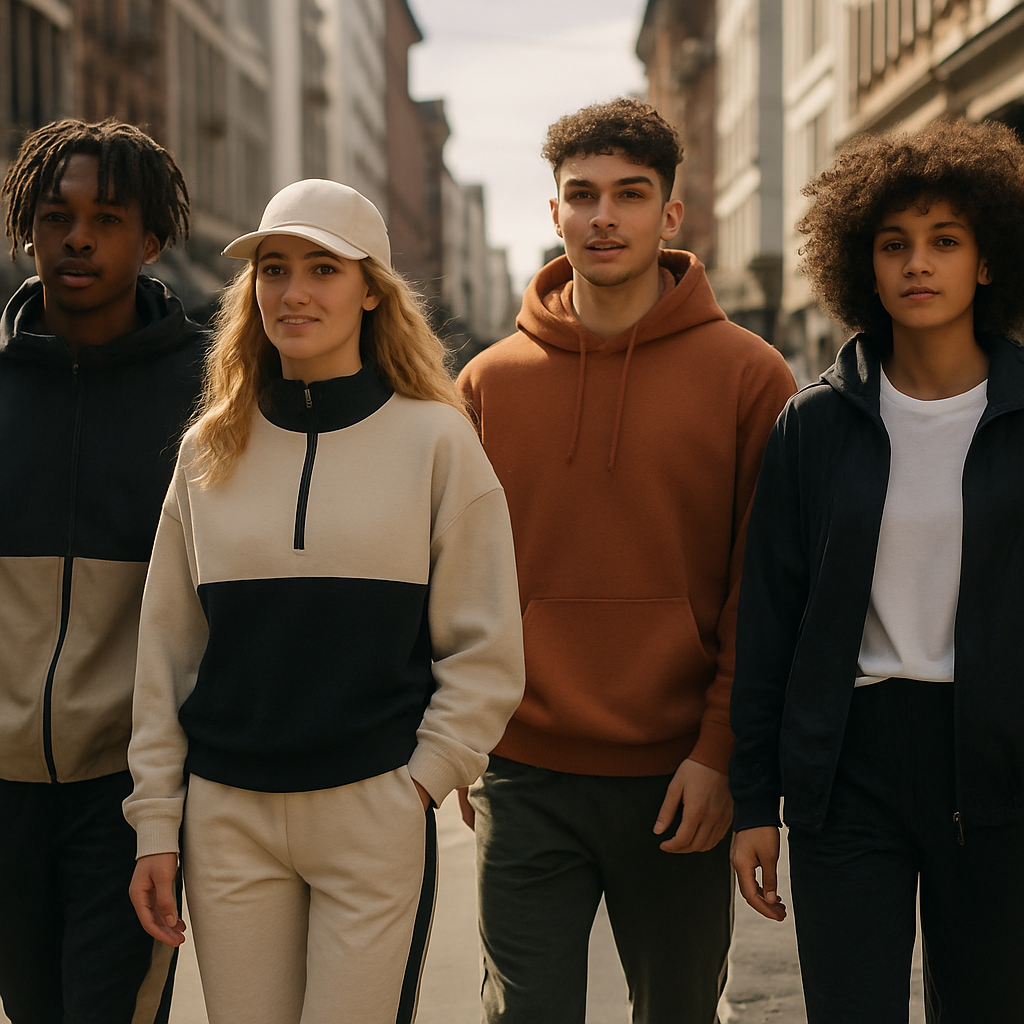
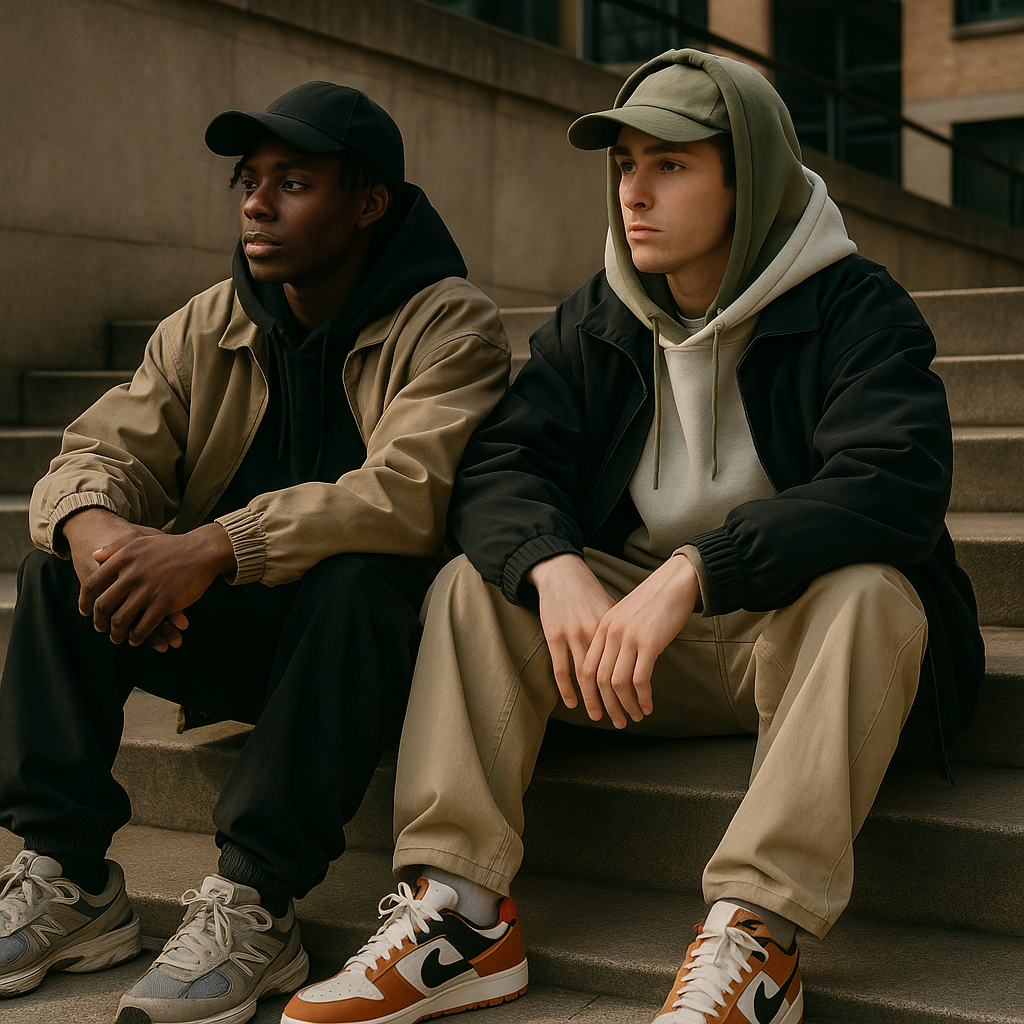
    Friends in coordinated sporty streetwear outfits sitting on city steps
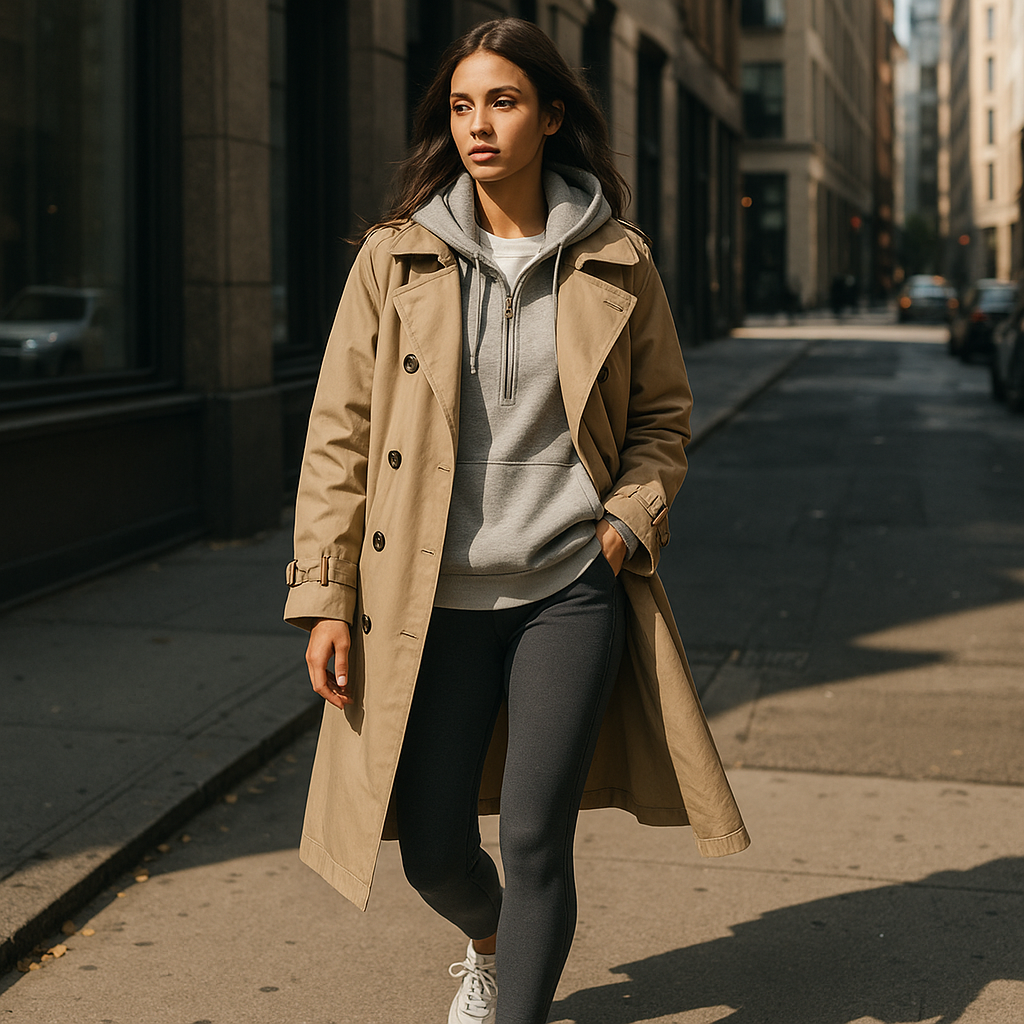
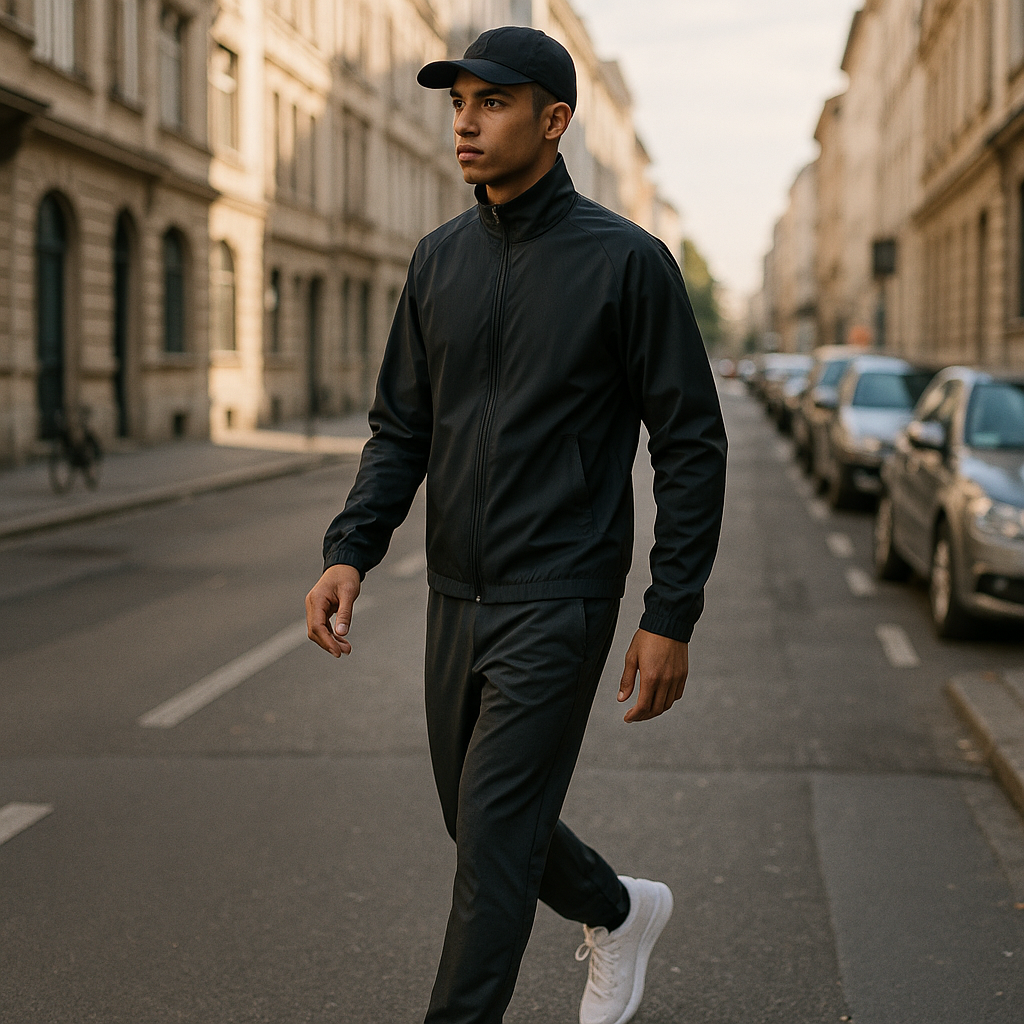
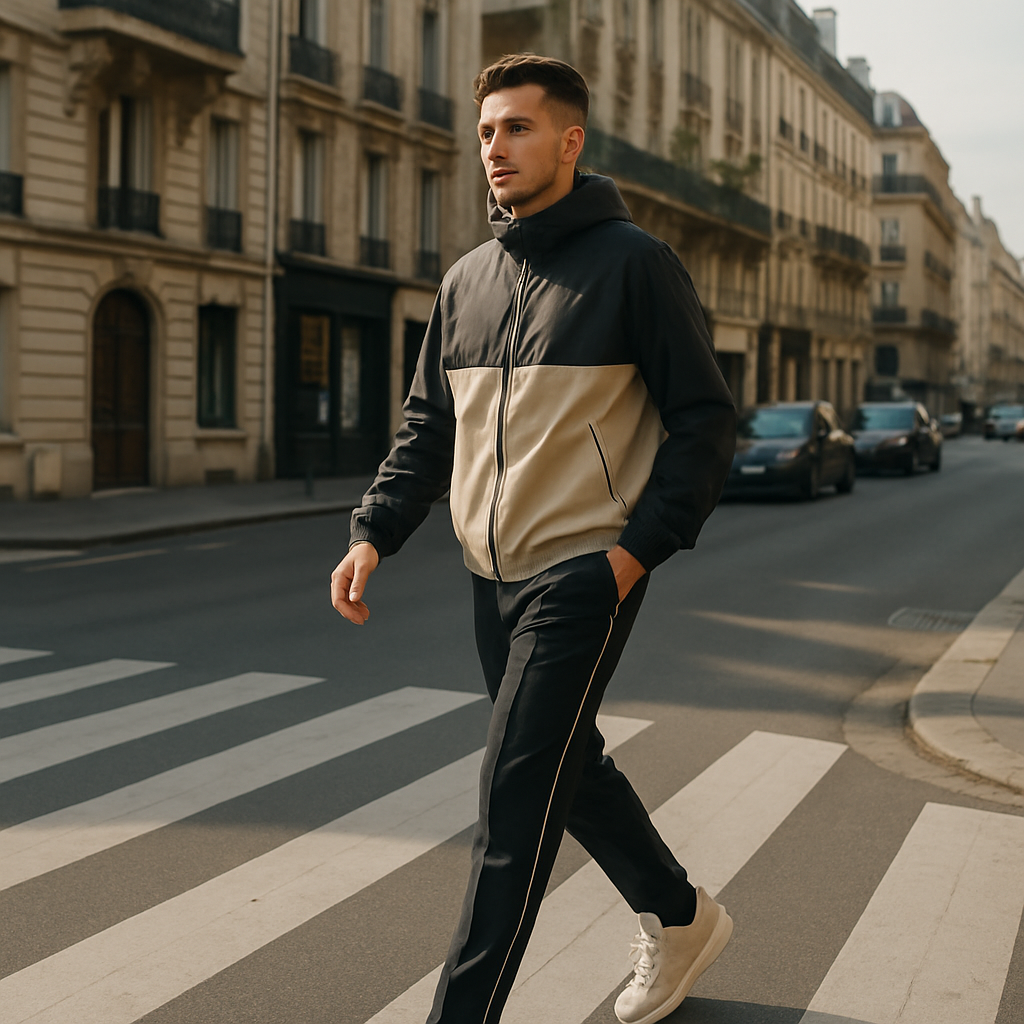
    Person crossing the street in elevated sporty streetwear with tailored track pants and windbreaker

    Sporty streetwear FAQs

    How do I start wearing sporty streetwear without buying a whole new wardrobe?

    Start with what you already own. Pull out your cleanest trainers, best fitting joggers and any simple hoodies or track jackets. Then add one or two new pieces that elevate everything else, like a quality neutral trainer or a sharp track pant. Focus on fit and simplicity before you chase big logos or complicated outfits.

    Can sporty streetwear work for the office?

    It can, if your workplace is relaxed and you keep it subtle. Think tailored trousers with minimal trainers, a fine knit or Oxford shirt, and a clean bomber or track jacket in a dark colour. Avoid loud branding, shorts and anything that looks like you are on your way to a workout. The aim is polished with a sporty edge, not full gym mode.

    What colours work best for sporty streetwear?

    Neutrals always win: black, white, grey, navy and earthy tones like olive or stone. They make it easy to mix pieces without clashing. If you want colour, add it through one item only, like a bright trainer or a bold jacket. Keeping the rest of the outfit muted stops it looking messy and keeps the overall vibe clean and intentional.

  • How To Stop Panic Buying Trends And Build A Personal Style Filter

    How To Stop Panic Buying Trends And Build A Personal Style Filter

    If your wardrobe is full but you still feel like you have nothing to wear, it is time to stop panic buying trends and build a ruthless personal style filter.

    Why we keep panic buying trends

    Micro-trends move faster than your bank balance can keep up with. Every week there is a new colour, shoe or silhouette you are told you “need”. It is not a lack of willpower – it is how the system is built. Limited drops trigger FOMO, influencer hauls normalise weekly shopping, and algorithms feed you the exact pieces you have been hovering over.

    Panic buying usually comes from three places: wanting to belong, wanting a quick confidence hit, and straight up boredom. The problem is that the high is temporary, but the clutter is permanent. You end up with rails of almost-right pieces that do not work together, while your true style gets drowned out by impulse.

    Audit your wardrobe before you buy anything else

    Before you try to stop panic buying trends, you need to know what you already own. A wardrobe audit is not cute, but it is essential. Pull everything out. All of it. Put it on your bed so you are forced to finish.

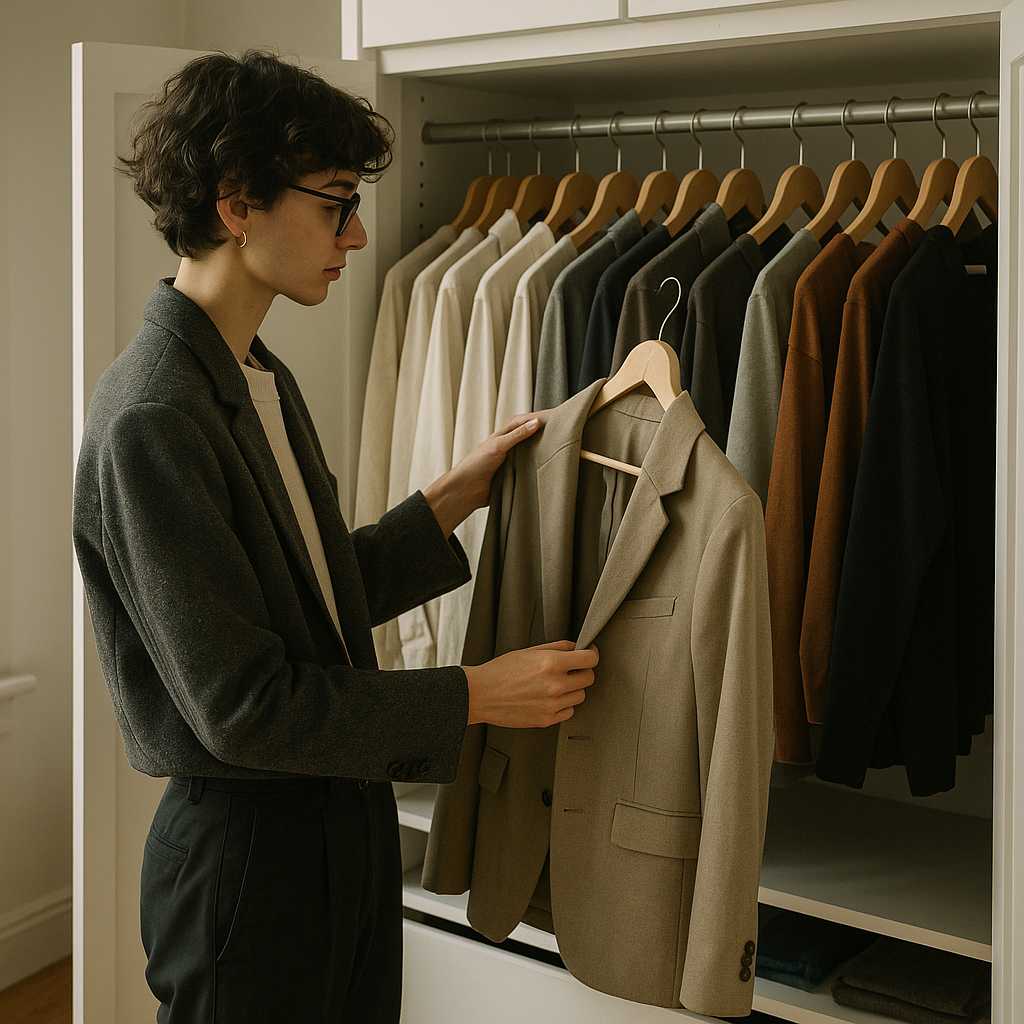
    Sort into four piles: on repeat, solid but neglected, repair/alter, and mistake. Be brutal. The repeat pile shows you what you actually wear when no one is watching. The neglected pile usually holds great pieces that are blocked by bad styling or missing basics. Repair and tailoring can turn “almost” items into go-tos. The mistake pile is your reality check – these are the things you bought in a rush for a trend, a night out or a fantasy version of yourself.

    Look for patterns. Do you always reach for wide leg trousers but keep buying skinny jeans because they are “back”? Do you live in trainers but keep grabbing heels for nights out you do not even enjoy? Your audit is data. Use it.

    Build a personal style filter that kills impulse

    A personal style filter is a set of rules that every new piece has to pass before it gets anywhere near your wardrobe. It is how you stop panic buying trends without feeling deprived. Start with three pillars: lifestyle, silhouette and vibe.

    Lifestyle is non negotiable. If you spend most of your week commuting, sitting at a desk and hitting the gym, your clothes need to work for that life, not the imaginary one in your saved posts. Silhouette is about what shapes you feel powerful in – maybe that is oversized on top and fitted on the bottom, maybe it is the opposite. Vibe is the energy: clean and minimal, sporty, glam, street, soft, whatever actually feels like you.

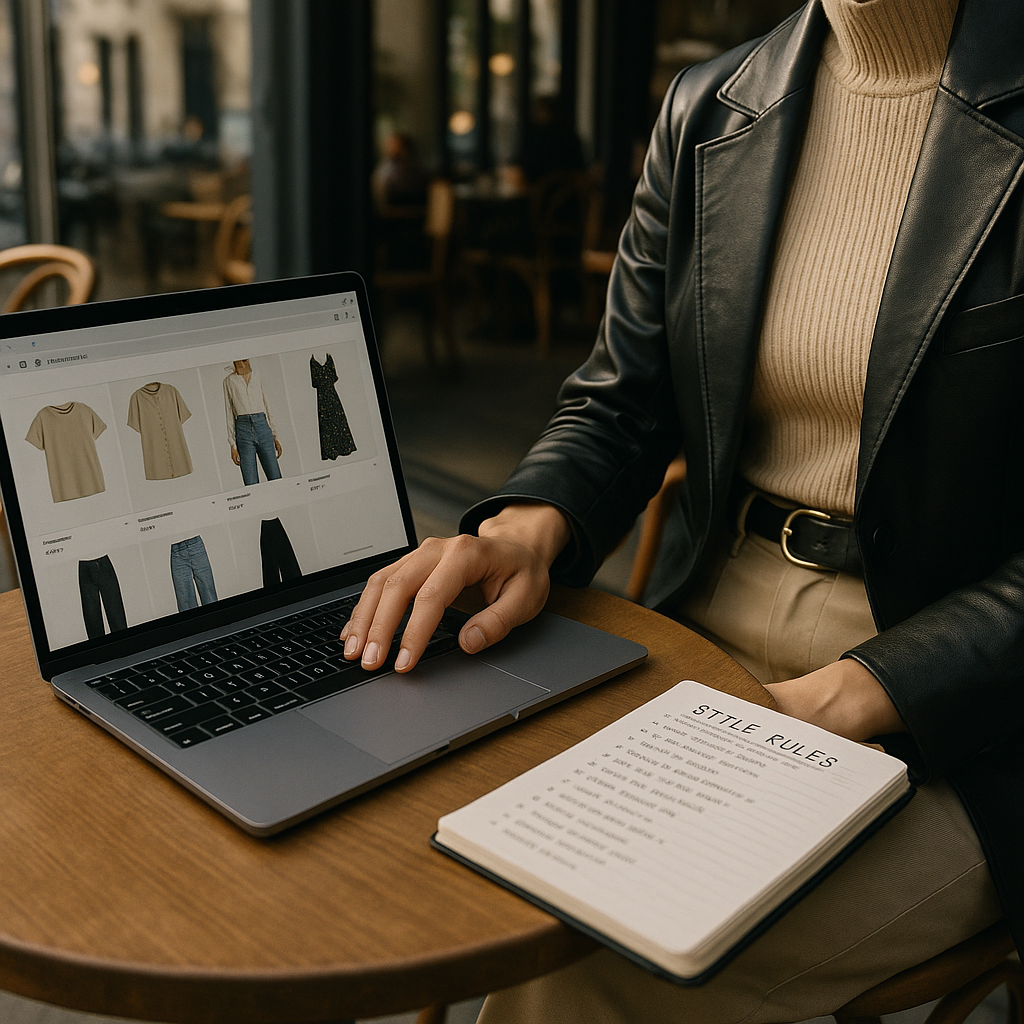
    Write it down. Example: “I wear relaxed, slightly oversized shapes, neutral colours with one bold accent, trainers or chunky boots, and everything must be comfortable enough to commute in.” That sentence is your filter. If a piece does not fit, it is a no.

    Questions to ask before you check out

    To really stop panic buying trends, you need a pre-checkout interrogation. No exceptions. Before you tap buy, ask yourself:

    • Can I style this three different ways with pieces I already own?
    • Would I wear this next month if it was not all over social media?
    • Does it match my real life, or just my saved outfit inspo?
    • Does the fit and fabric feel good enough that I will reach for it on a tired Monday?
    • What am I trying to fix with this purchase – boredom, insecurity, or an actual gap?
    • If this sold out right now, would I genuinely be gutted, or just mildly annoyed?

    If you cannot answer confidently, close the tab. The piece is not for you, it is for the algorithm.

    Shopper using a personal style filter to stop panic buying trends while browsing online
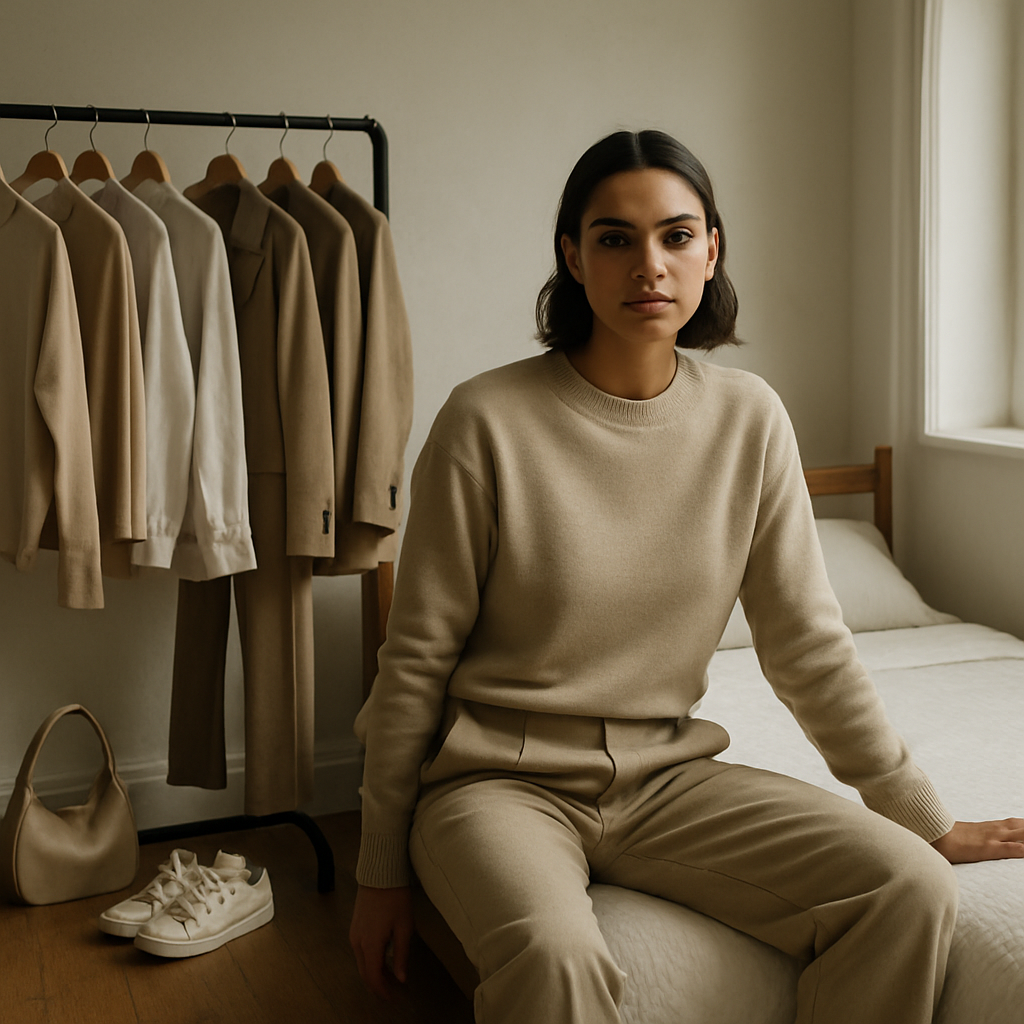
    Curated capsule wardrobe created to stop panic buying trends

    Stop panic buying trends FAQs

    How do I actually stop panic buying trends when everything feels urgent?

    You will not switch it off overnight, so change the process, not just your mindset. Remove saved cards from shopping apps, turn off sale notifications and unfollow accounts that trigger constant hauls. Use a strict cooling off period for any non essential purchase, and make yourself try to style the item three ways using what you already own. If you cannot, or you forget about it after a couple of days, it was never worth the panic.

    What if I like trends and do not want a boring wardrobe?

    You do not need to avoid trends completely. The point is to filter them. Build a strong base of pieces that fit your lifestyle and body, then layer trends in as accents – a colour, a bag, a texture, a shoe. Focus on trends that still look like you, even when they are everywhere. When your core style is clear, trends amplify it instead of replacing it.

    How often should I audit my wardrobe to stay on track?

    Aim for a light audit every season and a deeper clear out twice a year. At the start of each season, check what you actually wore last year, what needs repairing, and what no longer fits your style filter. Regular audits keep you honest about your habits, highlight what you genuinely need, and make it much easier to resist another rushed, trend driven haul.

  • Quiet Luxury Streetwear: The New Uniform of Cool

    Quiet Luxury Streetwear: The New Uniform of Cool

    Quiet luxury streetwear is the answer for anyone who is bored of logo wars but still wants to look like they know exactly what they are doing. It is low key, expensive looking and built for real life – not just for photos.

    What is quiet luxury streetwear, really?

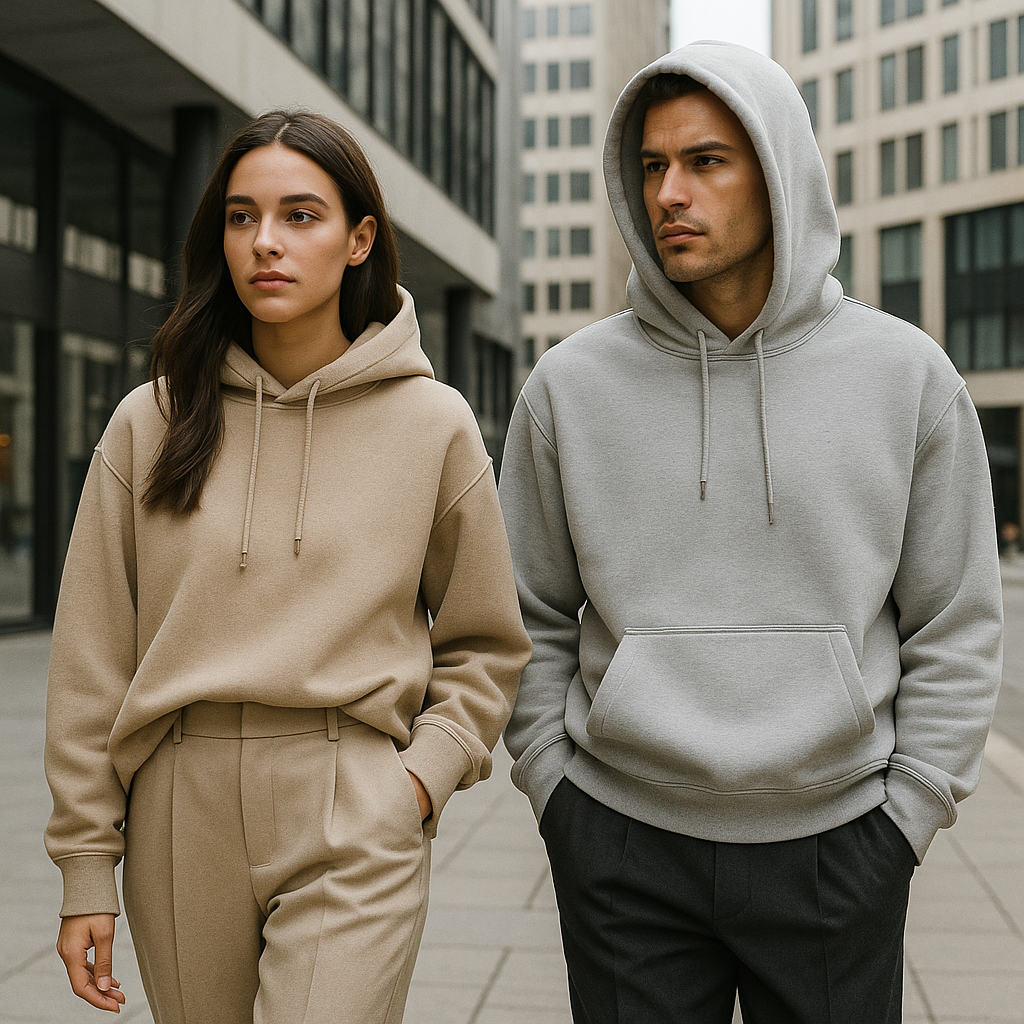
    Strip it back. Quiet luxury streetwear is about sharp cuts, quality fabric and pieces that whisper money instead of shouting it. Think clean hoodies in heavy cotton, wide leg trousers that actually drape, and trainers that look premium without a giant badge screaming the brand.

    The point is not to look rich. The point is to look sorted. Polished, unfazed, like you have better things to do than chase hype drops. It is streetwear that grew up, got a life and stopped caring what everyone else thinks.

    Key pieces that define quiet luxury streetwear

    You do not need a whole new wardrobe. You just need smarter versions of what you already wear every day.

    • The heavyweight hoodie: Go for dense cotton, clean lines and no graphics. One in black, one in a muted tone like stone or deep green will carry you through most weeks.
    • Tailored joggers or wide leg trousers: Swap flimsy trackies for structured joggers or wool blend trousers. Same comfort, different energy.
    • Minimalist trainers: Leather or high quality mesh, simple colour blocking, no neon circus. The kind of pair you can wear to brunch and a bar without changing.
    • Boxy T shirts: Slightly cropped, heavier fabric, perfect neck line. No cracked prints, no festival leftovers.
    • Understated outerwear: A clean bomber, a short wool coat or a technical shell in one solid colour will finish everything.

    How to style quiet luxury streetwear without trying too hard

    The trick is balance. Every loud piece needs something calm next to it. Every relaxed piece needs something structured to stop you looking half asleep.

    Start with a base: a crisp T shirt and tailored joggers. Add a heavy hoodie or zip up. Throw on a wool coat or bomber over the top. Keep the palette tight – black, grey, navy, cream, olive. One accent colour max. If you would not see it in a gallery space, skip it.

    Accessories should feel considered, not desperate. A slim leather belt, a simple cap, a clean watch. Jewellery should look like you own it, not like you borrowed it for the night.

    Bringing quiet luxury into your space

    Style is not just what you wear. It is the backdrop too. The same rules apply at home: clean lines, good materials, no clutter. Neutral walls, solid wood, textured throws and one or two bold art pieces beat a room stuffed with random decor.

    Even practical details can play into the look. Simple, fabric rich window coverings, like roman blinds in linen or cotton, give a softer, grown up finish compared to plastic or patterned options. Think of your room like an outfit – every element should earn its place.

    Why everyone is moving towards quiet luxury streetwear

    People are tired. Tired of chasing drops, tired of queuing, tired of outfits that only work online. Quiet luxury streetwear fits actual life – commuting, working, travelling, nights out that are not sponsored by a drinks brand.

    It is also more sustainable in the most basic sense: you buy less. One solid coat you wear for years is better than five cheap ones that fall apart after a season. When you pick quality, you stop needing a constant stream of newness just to feel put together.

    How to start your quiet luxury shift today

    You do not need a stylist or a massive budget. Start by editing. Pull everything out of your wardrobe and be ruthless. Anything that feels flimsy, over branded or impossible to style with more than one thing can go.

    Then upgrade slowly. Replace your worst hoodie with one premium, blank version. Swap the loudest trainers for a clean pair. Trade one printed tee for a perfect plain one. Each move pulls your look closer to these solutions without you having to change who you are.

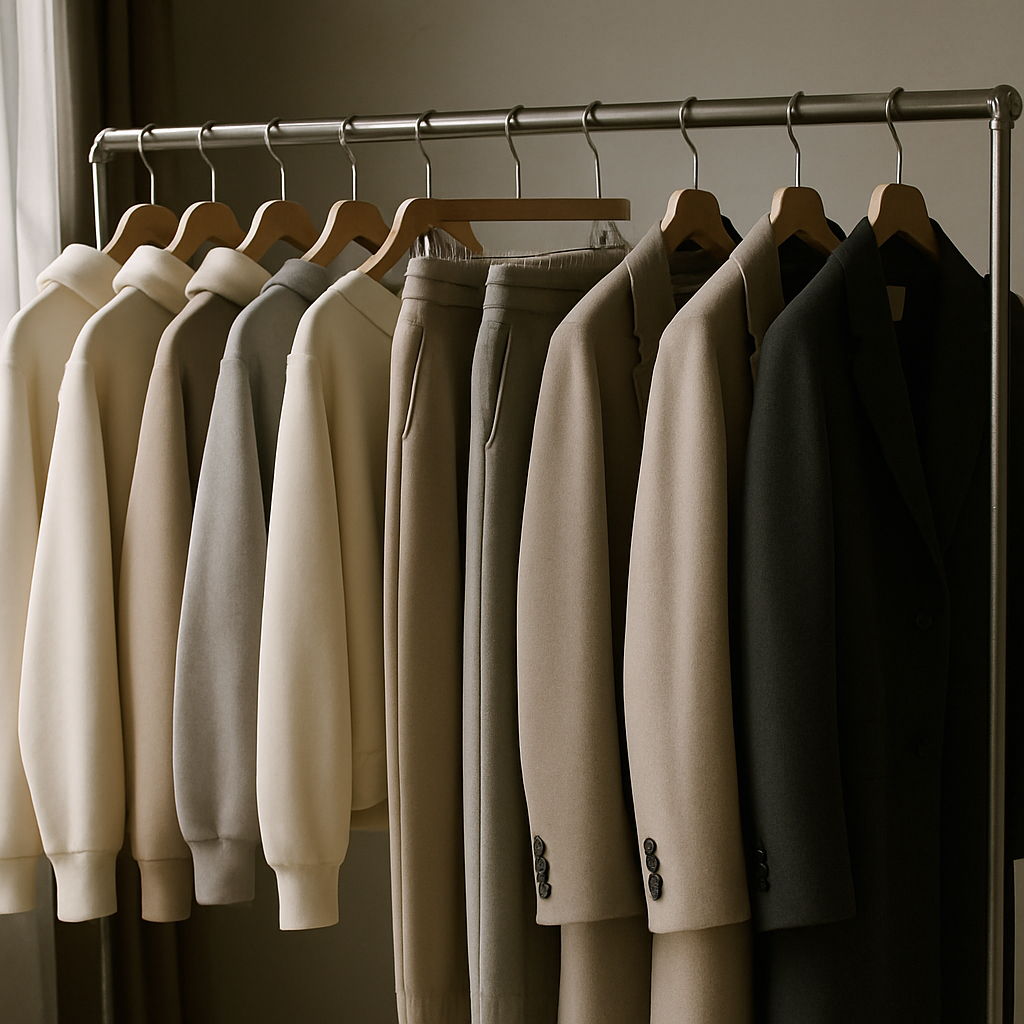
    Minimalist wardrobe rail showcasing neutral toned quiet luxury streetwear essentials
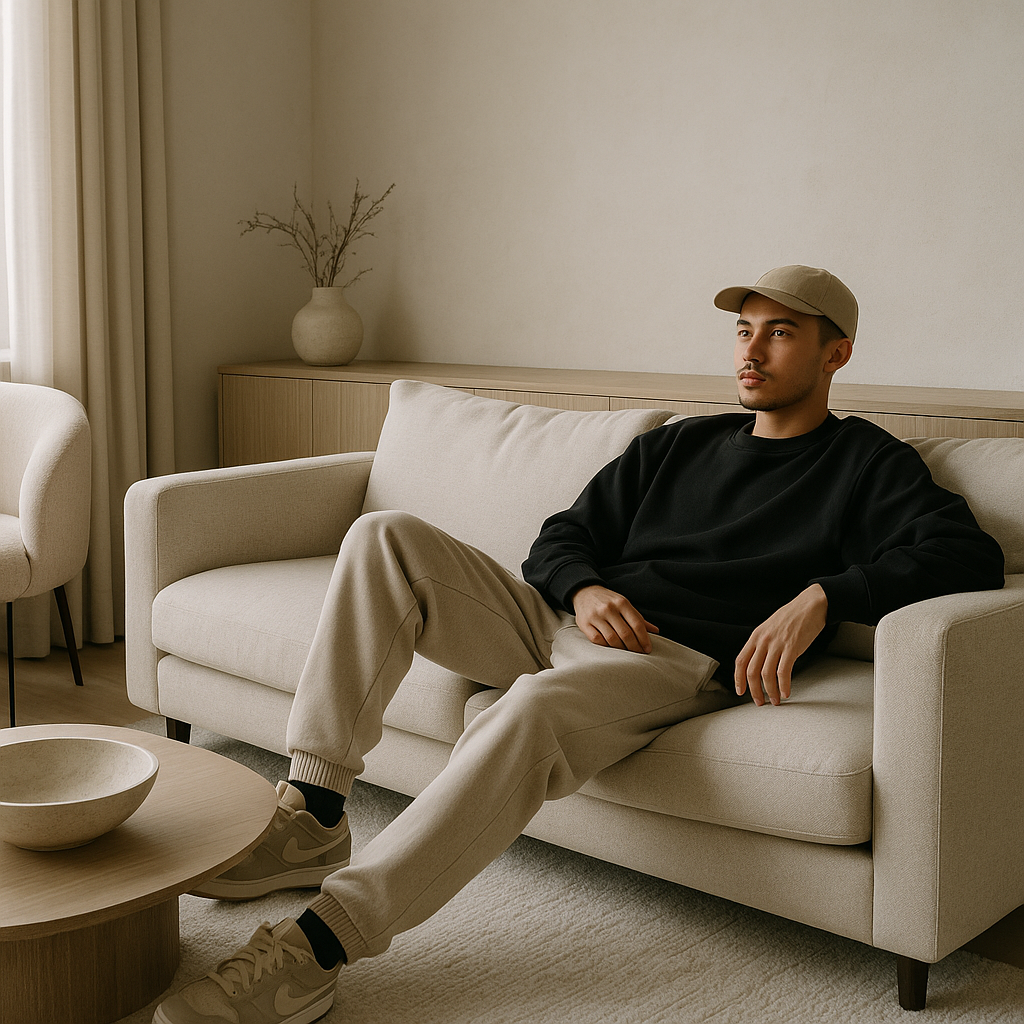
    Modern living room with a relaxed person dressed in quiet luxury streetwear matching the clean decor

    Quiet luxury streetwear FAQs

    Is quiet luxury streetwear only for people with big budgets?

    No. While the aesthetic is inspired by high end brands, you can build the look at almost any price point. Focus on fabric, fit and simplicity instead of labels. Buy fewer items, but choose the best quality you can afford. Upgrading core pieces like hoodies, trousers and trainers over time is more effective than blowing money on one flashy item.

    Can I still wear logos with quiet luxury streetwear?

    Yes, but keep them subtle. Small, tonal logos or discreet branding can work if the rest of the outfit is clean and well fitted. The problem is not logos themselves, it is when the logo becomes the whole personality. If you could cover the logo and the piece still looks good, it probably fits the quiet luxury mindset.

    How do I make my existing wardrobe feel more quiet luxury?

    Start by tightening your colour palette to neutrals and a couple of accent shades. Then remove anything that feels cheap, overly loud or hard to style. Prioritise structured joggers, heavyweight T shirts and simple outerwear. Steam or iron your clothes, clean your trainers and tailor pieces that almost fit. Small upgrades in fit and finish can push an ordinary outfit towards quiet luxury streetwear without buying everything new.