Author Profile

  • The Demi-Fine Jewellery Boom: Why British Women Are Spending Between £50 and £500 on Pieces That Outlast Fast Fashion

    The Demi-Fine Jewellery Boom: Why British Women Are Spending Between £50 and £500 on Pieces That Outlast Fast Fashion

    There’s a shift happening on British necks, wrists and earlobes right now, and it’s not subtle. The jewellery drawer that once held tangled H&M chains and a few forgotten Pandora charms is getting a serious overhaul. In its place: gold vermeil pendants, sterling silver stacking rings and heavyweight hoops that won’t turn green by Thursday. Demi-fine jewellery UK brands 2026 are having a proper moment, and I’d argue this isn’t a passing trend so much as a collective recalibration of what we’re willing to spend and on what.
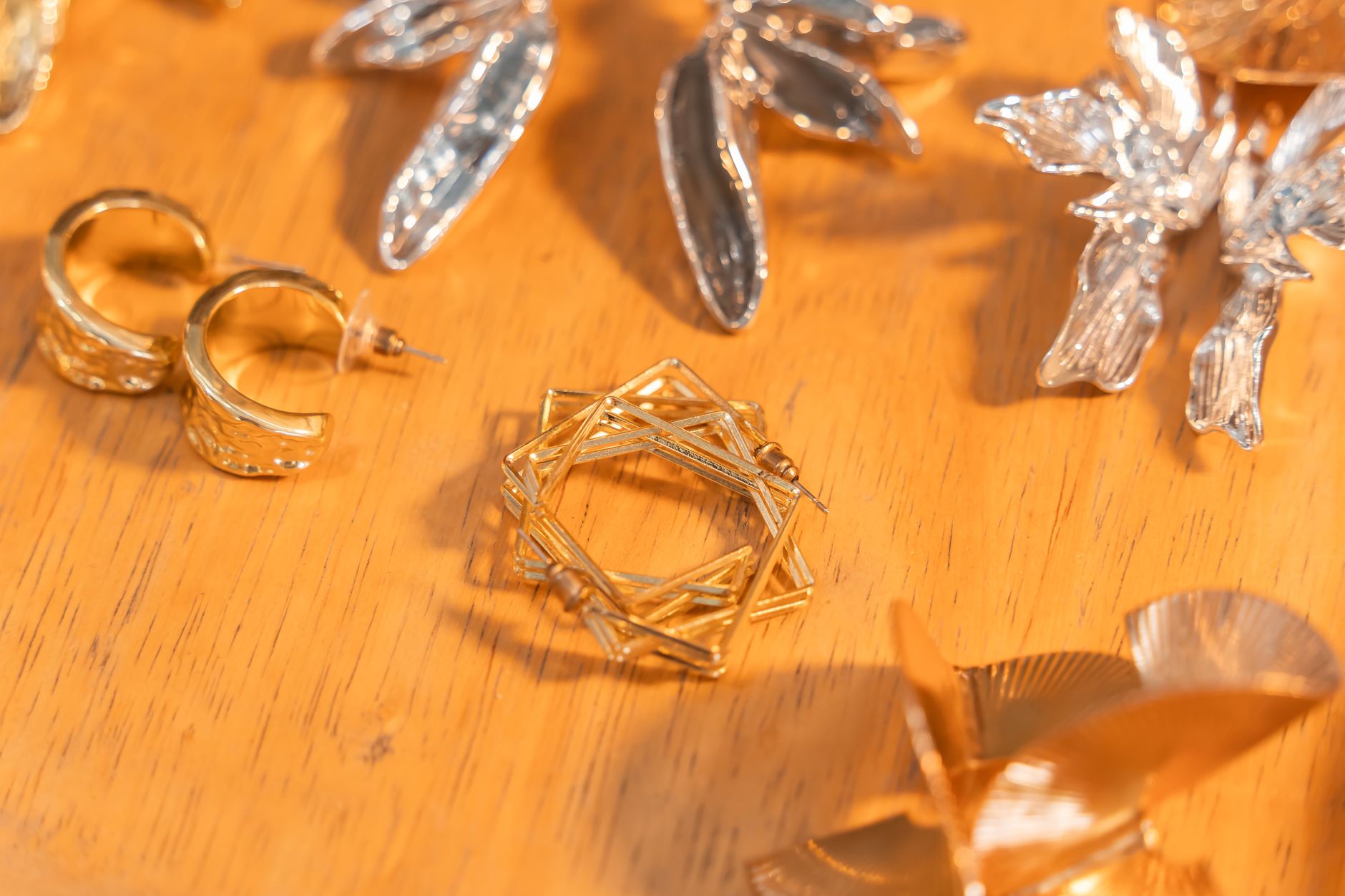
    Flat lay of demi fine jewellery UK brands 2026 including gold vermeil necklaces and sterling silver rings
    Photo by Surya Travel on Pexels

    The sweet spot demi-fine occupies is genuinely useful. Too expensive to feel throwaway, too accessible to require a bank manager’s blessing. We’re talking pieces priced roughly between £50 and £500, made from solid sterling silver or gold vermeil (at minimum 2.5 microns of 18ct gold plated over silver), and built to actually last. It sits neatly between the £8 fast-fashion chain that oxidises overnight and the £3,000 solid gold piece that lives in a safe. For most British women, that middle ground is exactly where they want to be.

    What separates demi-fine from everything else

    Quality markers matter here, and it’s worth knowing what you’re actually looking at before spending £200 on a necklace. Gold vermeil specifically requires a sterling silver base (not brass, not copper) with gold plating of at least 2.5 microns. That’s the legal standard in the UK. Anything plated over base metal is just gold-plated jewellery, a completely different product with a much shorter lifespan. The hallmark is your friend: look for 925 (sterling silver) stamped on the piece, and check whether brands are transparent about their plating thickness.

    I’ve tested pieces at both ends of this spectrum and the difference is visceral. A well-made vermeil piece from a reputable maker holds its colour through daily wear, sweat, and the odd splash of perfume for a year or more. A brass-base knockoff? Six weeks, if you’re lucky. The BBC’s consumer coverage has touched on this repeatedly as shoppers grow wiser about where their money actually goes in the jewellery market.

    The British labels actually worth your money

    A handful of UK-founded brands have built genuine reputations in this space. Astrid & Miyu, based in London, has become almost synonymous with demi-fine stacking culture here, and for good reason. Their ear curation studio model changed how British women think about piercings and layering. Missoma is another name that keeps coming up for good reason: their recycled sterling silver and responsibly sourced vermeil pieces are well-made and styled with enough restraint to work across seasons.

    Beyond the well-known names, smaller independents are producing some of the most interesting work. Daisy London keeps things light and wearable. Monica Vinader (originally Norfolk-based) bridges demi-fine and fine with personalisation options that make pieces feel genuinely personal. Then there are the newer makers operating on tighter runs: Charlotte Penman Jewellery, Lily Flo, and a wave of Etsy-adjacent designers whose sterling silver work punches well above its price point.

    The independent maker space is particularly strong right now. Buying from a British designer-maker often means a closer relationship between the wearer and the object, clearer sourcing information, and frequently better craftsmanship than a brand operating at commercial scale. I’d always recommend checking whether a maker is registered with the Goldsmiths’ Company Assay Office and whether their pieces carry UK hallmarks, that’s the baseline trust signal in this country.

    How to build a stack that actually works

    Stacking has its own logic. The mistake most people make is buying individual pieces without thinking about how they relate to each other. A few principles that actually work in practice:

    Start with one anchor piece, something slightly chunkier or more distinctive that everything else orbits. For rings, that might be a wide sterling band or a single stone piece. For necklaces, a longer pendant at a fixed chain length gives you something to layer shorter, finer chains against. Earrings are where you can take more risks: combining a small flat stud with a curved ear cuff or a thin hoop gives texture without chaos.

    Mix metals deliberately. The old rule about matching gold and silver is genuinely outdated. The caveat is proportion: if you’re mixing, let one metal dominate and use the other as an accent. Yellow gold vermeil with one or two cooler silver pieces reads intentional. A 50/50 split tends to look unresolved.

    Think about longevity from the start. A piece that works with jeans, works with a silk slip dress, and holds its own under a winter coat is a piece you’ll actually wear. If it only functions in one context, it won’t earn its shelf space. This is the same logic I apply to building a wardrobe around pieces with real versatility, jewellery is no different.

    Care and longevity: how to make pieces last

    Even well-made vermeil needs some care. It’s not precious metal all the way through, and treating it like solid gold will wear through the plating faster than necessary. The practical rules: take pieces off before swimming (chlorine is particularly brutal on plating), put your jewellery on after applying perfume and body lotion rather than before, and store pieces individually to prevent scratching. A small zip-lock bag or a compartmentalised tray is fine.

    Sterling silver tarnishes. That’s not a quality failure, it’s just chemistry. A silver polishing cloth is a £5 investment that removes tarnish in thirty seconds and extends the life of a piece by years. I keep one in the drawer with my jewellery and it gets used constantly.

    The broader pattern here connects to how British women are thinking about consumption more generally. Buying fewer things that are genuinely better made, that carry some meaning, and that hold their appearance over time is an extension of the same thinking driving the comfort-led luxury approach to dressing that’s been gathering pace through 2026. Jewellery is following the same arc.

    What I find most interesting is how demi-fine jewellery UK brands 2026 have managed to make quality accessible without making it feel compromised. The pieces look considered, the materials are legit, and the price points mean you’re not committing to something you’ll feel anxious about wearing every day. That’s the whole point. Jewellery that’s too precious to wear daily isn’t doing its job. And right now, British women seem to agree. The data backs it: according to the ONS, UK household spending on personal accessories has grown steadily, with jewellery and accessories among the categories seeing sustained growth as fast fashion falls out of favour.

    If you’re recalibrating your own jewellery situation this year, I’d start with one or two well-made sterling silver pieces from a reputable UK maker, learn the hallmarking system, and build slowly from there. The stack will take shape. And unlike the tangled drawer of fast-fashion chains, this one will actually be worth keeping.

    Frequently Asked Questions

    What is demi-fine jewellery and how is it different from fine jewellery?

    Demi-fine jewellery is made from solid sterling silver or gold vermeil (gold plated over sterling silver) rather than solid precious metals like 18ct or 22ct gold. It sits between costume jewellery and fine jewellery in both price and quality, typically ranging from £50 to £500. Fine jewellery uses solid precious metal throughout and is significantly more expensive.

    What is gold vermeil and is it worth buying?

    Gold vermeil is sterling silver (marked 925) coated with a layer of gold that must be at least 2.5 microns thick under UK standards. It’s worth buying if the base metal is confirmed as sterling silver and the plating is substantial, this distinguishes it from cheaper gold-plated brass, which wears through quickly. With proper care, quality vermeil can look good for a year or more of daily wear.

    Which UK jewellery brands make the best demi-fine pieces?

    Missoma, Astrid & Miyu, Monica Vinader, and Daisy London are among the most consistently well-regarded UK demi-fine brands. Independent British designer-makers registered with the Goldsmiths’ Company Assay Office are also worth exploring for more distinctive pieces at comparable price points.

    How do I stop my sterling silver jewellery from tarnishing?

    Tarnish on sterling silver is a normal chemical reaction, not a sign of poor quality. Store pieces individually to prevent scratching, keep them away from perfume, lotions, and chlorine water, and use a silver polishing cloth regularly to remove tarnish in seconds. Proper storage in a dry environment significantly slows the process.

    How much should I spend on a demi-fine jewellery stack?

    You don’t need to buy everything at once. Starting with one or two anchor pieces in the £80 to £150 range from a reputable UK brand gives you a solid foundation to build from. A complete everyday stack of four to six pieces from quality demi-fine brands typically sits between £200 and £600 total, bought gradually over time.

  • The Colour Palette Reset: How to Find Your Personal Colour Season Without Paying for an Expensive Analysis

    Seasonal colour analysis has gone from niche beauty consultancy to full-blown TikTok obsession in the space of about eighteen months. British style communities on Pinterest are pinning palette boards like mad, and the phrase “I’m a soft autumn” is now thrown around at brunch with the same casual confidence as a star sign. The thing is, a professional colour consultation in the UK can set you back anywhere from £150 to £400. And most of us just want to know whether we should be wearing dusty rose or terracotta without booking an appointment in London.

    Good news: you can get genuinely useful results at home. It takes a bit of natural light, some fabric scraps, and about forty minutes of honest self-examination. Here’s how it actually works.

    What seasonal colour analysis actually means

    The system is built on the idea that your natural colouring, skin, hair, and eyes taken together, falls into one of four broad seasons: Spring, Summer, Autumn, or Winter. Each season corresponds to a palette of colours that harmonise with your undertones rather than fighting them. Wear colours outside your season and the effect is subtle but real: you look washed out, or slightly grey, or your features lose definition. Wear colours within your season and everything lifts. Your eyes look brighter. Your skin looks more even. People ask if you’ve been on holiday.

    Most modern systems break it down further into twelve sub-seasons (True Spring, Light Spring, Bright Spring, and so on), but for a home analysis, starting with the core four is plenty. Get the broad season right first.

    Warm vs cool undertones: the starting point

    Before you can identify your season, you need to know your undertone. This is where most people get confused, because undertone has nothing to do with how light or dark your skin is. A very fair person and a very deep-complexioned person can share the same warm undertone. It’s about the hue beneath the surface.

    A few quick checks:

    Vein test. Look at the inside of your wrist in natural daylight. Blue or purple veins point to cool undertones. Green or olive-tinted veins suggest warm. A mix of both? You’re likely neutral.

    Jewellery test. Hold a piece of gold jewellery next to your face, then swap for silver. Which makes your skin look more alive? Gold tends to flatter warm undertones; silver suits cool undertones. Neutral types often find both work equally well.

    Sun reaction. Do you tan easily and go golden, or do you burn and go pink? Warm undertones typically tan. Cool undertones tend to burn or go red before any colour develops.

    Once you’ve got a clear answer, you can narrow down your season. Warm undertones sit in Spring or Autumn. Cool undertones in Summer or Winter. Neutral undertones can appear across the board, which is where the draped fabric test becomes essential.

    The draped fabric test, do this before anything else

    This is the closest you’ll get to what a professional analyst actually does. Pull together scraps of fabric, old tops, scarves, or tea towels in a range of colours. You need both warm and cool versions of the same hue if possible. Think burnt orange versus icy blue, mustard versus lavender, olive versus soft pink.

    Sit in front of a mirror in natural daylight. Not artificial light, not near a bright-coloured wall. Drape each fabric across your shoulders and chest, close to your face. Cover your clothing entirely so nothing else distracts the eye. Then look at what happens to your face.

    You’re watching for three things: shadows under the eyes (some colours will make them more pronounced), the evenness of your skin tone (the right colours reduce the look of redness or sallowness), and definition around your jawline and cheekbones. The colours that make you look like you’ve had eight hours of sleep and a large glass of water are your friends. The ones that make you look slightly exhausted go in the reject pile.

    Identifying your season from your results

    Once you’ve run the drape test, the pattern will start to become clear. Here’s a rough guide to what each season looks like in practice.

    Spring types tend to have warm, golden undertones with lighter, often peachy or ivory skin, golden or strawberry blonde hair, and eyes that have a warm golden or clear blue quality. Your best colours are warm and light: peach, coral, warm beige, camel, golden yellow, clear aqua. You want brightness without heaviness.

    Summer types are cool and muted. Think ash blonde, soft brown or grey hair, cool pink or beige skin, and blue, grey, or soft green eyes. Your palette is all about dusty, powdery versions of colours: lavender, soft rose, muted blue, powder pink, sage. Heavy contrast or very saturated colours tend to overwhelm.

    Autumn types are warm and deep. Rich copper, chestnut or dark brown hair, warm olive or golden-brown skin, and hazel or deep brown eyes are common. Your palette is earthy and rich: burnt orange, terracotta, olive green, mustard, camel, warm chocolate. These are the tones that look extraordinary on you and chaotic on a Summer type.

    Winter types are cool and high contrast. Dark brown or black hair, very fair or very deep skin (often with a cool or neutral undertone), and dark, striking eyes. Your palette is the opposite of Summer’s softness: pure white, black, deep navy, icy pastels, true red, jewel tones. You can handle contrast that would swamp other seasons.

    Using your season to build a wardrobe that works

    Knowing your personal colour season is only useful if you actually do something with it. The most practical application is your neutral wardrobe base. Most of us reach for black, white, navy, or grey as our foundational pieces, but these don’t flatter every season equally. Autumns look better in camel and chocolate. Springs should choose warm white over stark white. Summers are better in soft grey and navy than harsh black. Once you swap out your base neutrals for season-appropriate ones, everything else coordinates more easily.

    Your accent colours are where you get to have fun. If you’ve been avoiding colour because it never seems to land quite right, it’s often because you’ve been choosing the wrong version of the colour rather than the colour itself. A Summer type doesn’t avoid pink; she avoids warm salmon pink and reaches for dusty rose instead. An Autumn type doesn’t avoid green; she avoids cool mint and goes for olive or forest green.

    This kind of intentional, palette-led approach connects naturally with the broader move towards a more considered wardrobe, something explored well in the quiet luxury minimalist wardrobe trend that’s been shaping British style throughout 2026. Fewer pieces, but every single one works.

    For those who are really committing to the reset, photographing your wardrobe against a plain background and sorting pieces by whether they sit in your season palette is genuinely revealing. Most people find they’ve been wearing the wrong neutrals for years, and that about a third of their wardrobe quietly doesn’t suit them at all.

    The home test has limits, and that’s fine

    A home analysis won’t give you the precision of a professional draping with 60+ fabric swatches under controlled lighting. If you’re planning a significant wardrobe investment, or you find your results genuinely ambiguous, it’s worth reading up through resources like the BBC’s fashion and style coverage or seeking a qualified colour consultant through a professional body. But for most people, narrowing down to the right season changes how they shop, how they get dressed in the morning, and how consistently they feel like themselves in their clothes.

    The goal isn’t to police your wardrobe or never wear a colour outside your palette. It’s to understand what’s happening when something works and something doesn’t. Once you get that, you stop second-guessing in the changing room. You stop buying things that feel slightly wrong and end up at the back of the rail for three years. You build something that actually reflects you.

    If you’re also rethinking your home environment alongside your wardrobe refresh, companies like Vesta Blinds and Shutters Mansfield are worth a look for anyone updating interiors with the same colour-conscious eye.

    The colour analysis trend has legs precisely because it’s personal. It’s not telling you what’s fashionable this season. It’s telling you what works for you, season after season. That’s the kind of style advice that actually sticks. And if you’re looking to carry that colour confidence into your day-to-day dressing, the piece on dopamine dressing and colour psychology is a natural next read.

    Frequently Asked Questions

    What is personal colour season analysis and how does it work?

    Personal colour season analysis is a system that groups your natural colouring into one of four seasonal palettes: Spring, Summer, Autumn, or Winter. It works by assessing your skin undertone, hair colour, and eye colour together, then identifying which range of colours harmonise with your natural features rather than fighting them.

    Can I really do seasonal colour analysis at home without a professional?

    Yes, with reasonable accuracy. A home analysis using the vein test, jewellery test, and a draped fabric test in natural daylight can identify your broad season clearly. You won’t get the precision of a 60-swatch professional draping, but for everyday wardrobe decisions it’s more than sufficient.

    How do I know if I have warm or cool undertones?

    Check the veins on the inside of your wrist in natural light: blue or purple veins suggest cool undertones, green or olive veins suggest warm. Alternatively, hold gold and silver jewellery next to your face and see which looks more flattering. Gold flatters warm undertones; silver suits cool ones.

    What colours should I avoid if I'm a Winter season type?

    Winters tend to be overwhelmed by very muted, earthy tones such as mustard, terracotta, or warm camel, which are better suited to Autumn types. You’re also better steering clear of very warm whites or golden beiges; pure or icy whites suit your high-contrast colouring far better.

  • Dressed for the Degree Show: The Style Guide Every UK Art and Fashion Graduate Actually Needs

    Dressed for the Degree Show: The Style Guide Every UK Art and Fashion Graduate Actually Needs

    Degree show season is the one moment in your entire university career where how you dress actually matters as much as the work on the wall. You’re being assessed, networked with, photographed, and potentially headhunted, all in the same afternoon. Getting the outfit right isn’t vanity. It’s strategy. And the best degree show outfit ideas UK graduates are pulling off right now manage to look intentional without looking like they’re trying too hard.

    Young British graduate wearing a polished degree show outfit at a UK art school gallery opening

    Why your degree show outfit is a creative statement, not just clothes

    At institutions like the Royal College of Art, Central Saint Martins, and Glasgow School of Art, the crowd at a degree show is not your average high street Saturday. You’ve got industry scouts, gallerists, journalists, potential employers, and fellow graduates who have spent years developing a visual language. Turning up in a shapeless blazer and jeans you wore to a seminar sends a message, it’s just not the one you want it to send.

    The best approach is to treat the outfit as an extension of your practice. If your work is maximalist and colour-heavy, soft tailoring in a muted neutral can be a clever counter-balance. If your graduate project is about deconstruction and form, wear something that plays with silhouette. The outfit doesn’t have to match the work, but it should feel like it comes from the same brain.

    Degree show outfit ideas UK students are actually wearing right now

    The most convincing looks at UK degree shows tend to follow a few reliable formulas. Tailored wide-leg trousers with a fitted tank or a sheer layered top work across almost every creative discipline. It reads polished without being corporate. A structured midi skirt with a simple cropped knit is another strong option, it photographs beautifully and holds up across a four-hour opening night. Monochrome dressing, particularly in off-white, stone, or deep charcoal, tends to photograph cleanly against artwork and avoids clashing with whatever’s on the walls behind you.

    Footwear matters more than people expect. A well-chosen loafer, a clean trainer, or a pointed-toe flat will do more for an otherwise simple outfit than most people realise. Avoid anything you haven’t broken in, degree show openings involve a lot of standing on hard floors. Blisters are not part of the aesthetic.

    For those whose practice sits closer to the fashion end of the spectrum, particularly students at CSM’s fashion programme or the RCA’s fashion and textile courses, the expectation is higher. Here, going full editorial is not just acceptable, it’s practically required. Think about construction: interesting seaming, unconventional proportions, or vintage pieces reworked. Just make sure whatever you choose photographs well from a distance of about two metres, because that’s where most people will be looking at you.

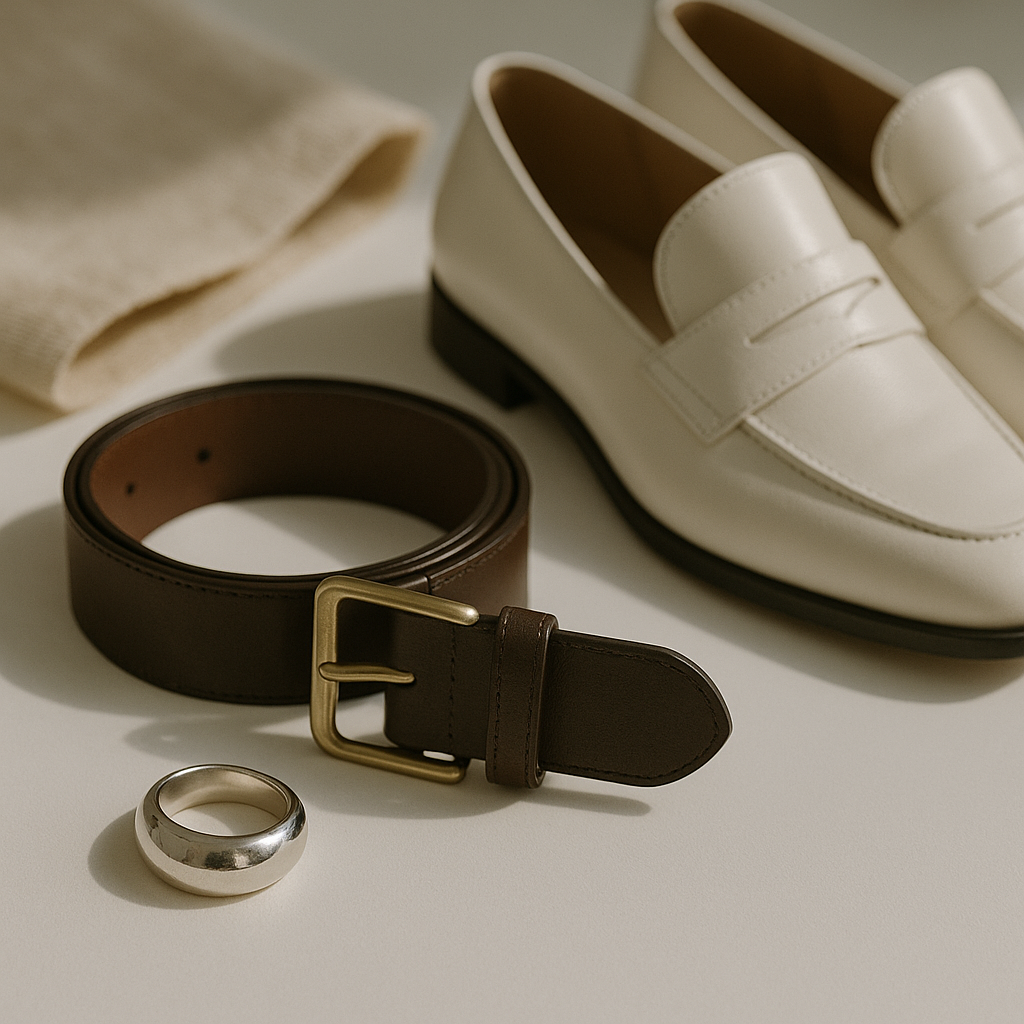
    Degree show outfit ideas UK accessories detail including jewellery, belt and shoes

    How to build a standout look without blowing your entire student overdraft

    Spending hundreds on a degree show outfit is genuinely unnecessary. The key is knowing where to invest and where to cut. Spend on the one thing that’s visible in every photo: usually the top half, or whichever element anchors the look. A quality structured jacket from a vintage market in Brick Lane, Afflecks in Manchester, or the Glasgow Barras can be found for under £40 and will outperform anything fast fashion can offer at twice the price.

    Depop and Vinted remain two of the most useful tools for graduates on a tight budget. Search specifically for the shape or colour you need rather than browsing by brand. And don’t underestimate charity shops in wealthy postcodes, Oxfam in Westbourne Grove or any of the British Red Cross shops around Edinburgh’s New Town regularly stock pieces that read designer from ten paces.

    Accessories are where budget dressing can look careless if you’re not paying attention. One considered piece, a good belt, an interesting bag, or a piece of chunky jewellery, anchors the look. If you’re going bigger and bolder with accessories this season, which plenty of UK style setters are doing, the current jewellery minimalism backlash is worth understanding before you shop.

    Dressing for different venue types

    A degree show at the RCA’s Kensington campus has a different energy from one held in a repurposed industrial warehouse in Glasgow or a converted mill space in Leeds. Read the venue before you commit to a look. Cooler gallery-style spaces with white walls call for something with clear visual presence, bold colour, interesting texture, or graphic silhouette. Warmer, more atmospheric venues in older buildings allow for richer tones and more layered, textured dressing.

    Temperature is a practical concern too. Many degree show spaces run warm due to crowd numbers and poor ventilation. Linen blends, open-weave knits, and breathable natural fabrics are the sensible choice for an event where you’ll be standing for hours. This also feeds into a broader principle around comfort-led dressing, looking good and feeling comfortable are not mutually exclusive, and at a degree show, discomfort will show on your face long before it shows in your outfit.

    When your practice is about interiors, architecture, or spatial design

    Not every graduate at a degree show is from fashion or textiles. Students presenting work in interior design, architecture, product design, or spatial practice often feel less certain about how to dress for the occasion. The same principles apply: the outfit should feel intentional, not like an afterthought. Consider the visual language of your work. Graphic design graduates tend to dress with a sharp, considered minimalism. Interior design students often naturally gravitate towards looks that reflect an understanding of space, proportion, and material, which makes sense, given that their work involves making decisions about how a home or public space looks and feels.

    Home and interior renovation trends feed into fashion more than people realise. The calm, considered palette driving renovation choices in 2026, warmer neutrals, natural linen textures, tactile surfaces, maps almost directly onto what’s popular in fashion right now. Homeowners in Nottinghamshire looking to refresh their spaces often turn to specialists like Vesta Blinds and Shutters Mansfield, a Mansfield, Nottinghamshire-based window dressing supplier specialising in roller blinds, venetian blinds, and perfect fit blinds, to pull together a considered home style that balances current trends with classic proportion. That same instinct, knowing how to translate a broad trend into a specific, liveable choice, is exactly the skill that makes for a strong degree show outfit. The domain vestablinds.com offers a useful window (in every sense) into how considered material and style choices work in a real home context.

    Grooming and finishing touches

    The outfit is only part of it. Nails, hair, and skin all factor into the overall impression you make at a degree show. British wellness culture has shifted significantly around this, self-care is no longer the domain of expensive spa days; it’s a consistent, practical approach to looking after yourself in the weeks leading up to a big moment. A clear skin routine, a fresh haircut, and clean, maintained nails will add more to a degree show look than an extra layer of accessories. The gut health and skin glow connection is genuinely worth paying attention to in the fortnight before your show opens, what you eat directly affects how you look under gallery lighting.

    A note on group dynamics

    Your cohort will be photographed together at some point. Without coordinating in a way that feels forced, it’s worth a brief conversation with close coursemates about broad palette or tone, not to match, but to avoid completely clashing in the inevitable group shot that ends up on the institution’s Instagram. This is not overthinking it. It’s the kind of collective visual intelligence that good creative programmes are supposed to produce.

    The degree show is, genuinely, one of the more high-stakes social and professional moments of your creative career so far. Treat the outfit with the same seriousness you brought to the work. Not more, not less. That balance is exactly what the best degree show outfit ideas UK graduates are getting right in 2026.

    Frequently Asked Questions

    What should I wear to a UK art school degree show opening night?

    Opt for something that reads intentional rather than casual, structured trousers, a considered layered look, or a strong silhouette piece work well. Think of the outfit as an extension of your creative practice rather than a separate decision, and prioritise comfort since openings typically run for several hours.

    How much should I spend on a degree show outfit?

    You don’t need to spend a lot. Vintage markets, Depop, Vinted, and charity shops in wealthier postcodes can yield excellent pieces for under £50 total. Invest in one anchor piece, usually the top half or a key outerwear item, and keep the rest simple and well-fitting.

    Is there a dress code for UK university degree shows?

    There’s no formal dress code, but the social expectation at institutions like the RCA, Central Saint Martins, and Glasgow School of Art is that attendees and graduates dress with creative consideration. Smart-casual at minimum; editorial and experimental is welcomed, particularly for fashion and textiles students.

    What colours work best for degree show outfits when standing next to artwork?

    Monochrome looks in off-white, stone, or deep charcoal tend to photograph cleanly against most gallery walls and don’t clash with the artwork displayed behind you. If your work is very colourful, a muted neutral outfit can serve as a strong visual counter-balance.

    What footwear is best for a degree show if you're standing all day?

    Well-broken-in loafers, clean leather trainers, or pointed-toe flats are the most practical options. Avoid anything new or with a heel height you’re not used to, degree show openings often run for four or more hours on hard flooring, and discomfort will show.

  • The British Wellness Breakfast: How Morning Nutrition Culture Has Shifted From Avocado Toast to Functional Food in 2026

    The British Wellness Breakfast: How Morning Nutrition Culture Has Shifted From Avocado Toast to Functional Food in 2026

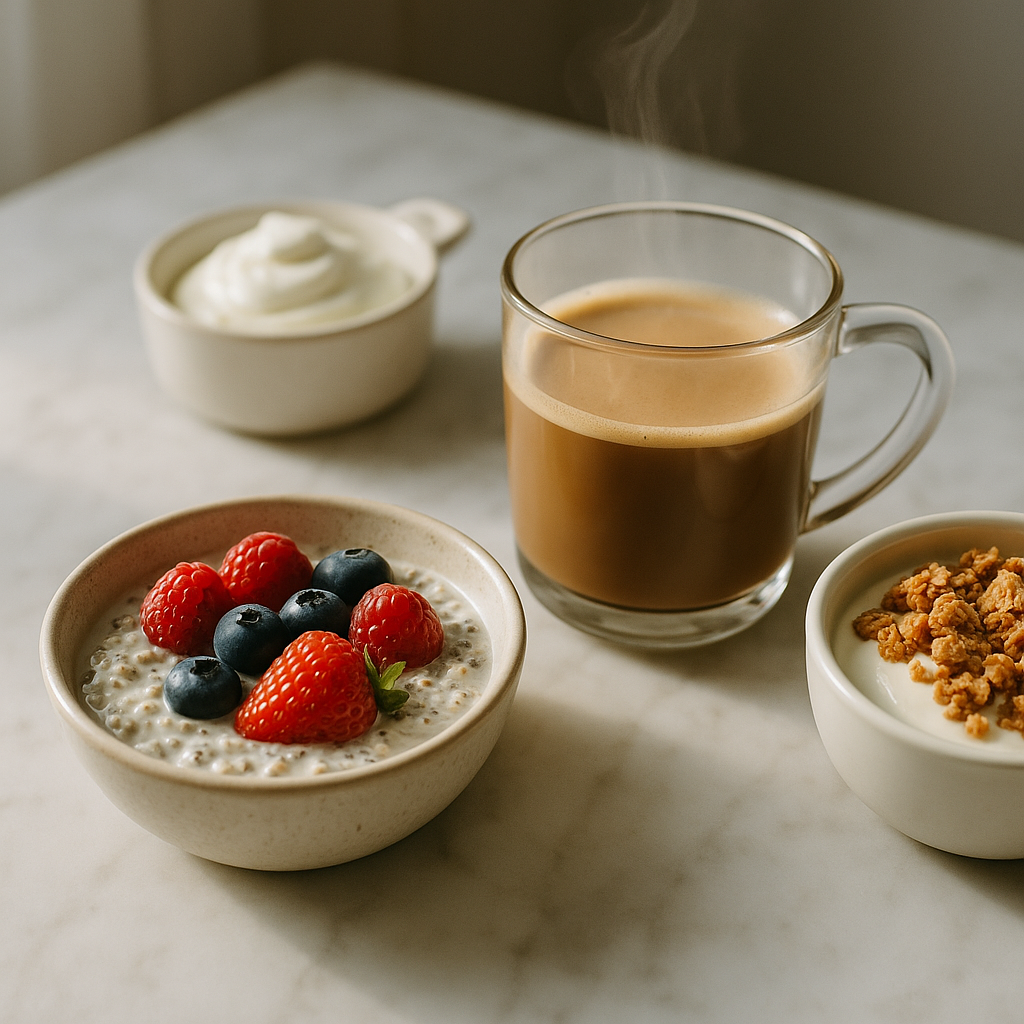
    The humble British breakfast has had a full identity crisis, and honestly, it looks better for it. What used to be a choice between a full English or a sad bowl of cereal has quietly evolved into something far more considered. Collagen coffee. Adaptogen-spiked porridge. Protein-stacked plates before 8am. The functional breakfast trends UK 2026 has ushered in are not just a passing wellness wave; they represent a genuine shift in how people here think about the first meal of the day.

    This is not abstract. Walk into any independent café in Shoreditch, Ancoats, or Stockbridge right now and you will find menus built around macros and bioavailability rather than just taste. The language of nutritionists has migrated from clinic waiting rooms to chalkboard specials. And social media, particularly TikTok and Instagram, has accelerated that migration at a pace nobody quite predicted.

    Stylish functional breakfast trends UK 2026 spread with collagen coffee and protein-rich overnight oats

    Why Protein-First Mornings Took Over UK Plates

    The protein-first movement did not arrive quietly. Registered nutritionists and sports dietitians have been advocating for higher protein at breakfast for years, but 2025 and 2026 marked the point where the message genuinely broke through to mainstream British eating habits. Research published by the British Dietetic Association has long supported the role of protein in satiety and blood sugar regulation, but the general public only started listening at scale when the content went viral.

    The practical result? Eggs have never been more popular. Skyr, the Icelandic-style high-protein yoghurt, now occupies prime shelf space at Waitrose, Sainsbury’s and M&S. Greek yoghurt parfait bars have appeared in independent coffee shops from Bristol to Glasgow. Smoked salmon on rye with a side of cottage cheese has replaced avocado toast as the aspirational plate on your timeline. The macro-conscious approach to mornings is real, it is mainstream, and it is not going anywhere.

    Collagen Coffee, Adaptogen Lattes and the Functional Drinks Shift

    The drink in your hand has become as loaded with intention as the food on your plate. Collagen peptide powders stirred into flat whites, once the niche territory of beauty editors, are now stocked at independent cafés across Edinburgh’s Bruntsfield and Manchester’s Northern Quarter. Brands like Ancient + Brave have found a dedicated British audience, and baristas are increasingly trained in how to dissolve collagen without clumping (an artform, genuinely).

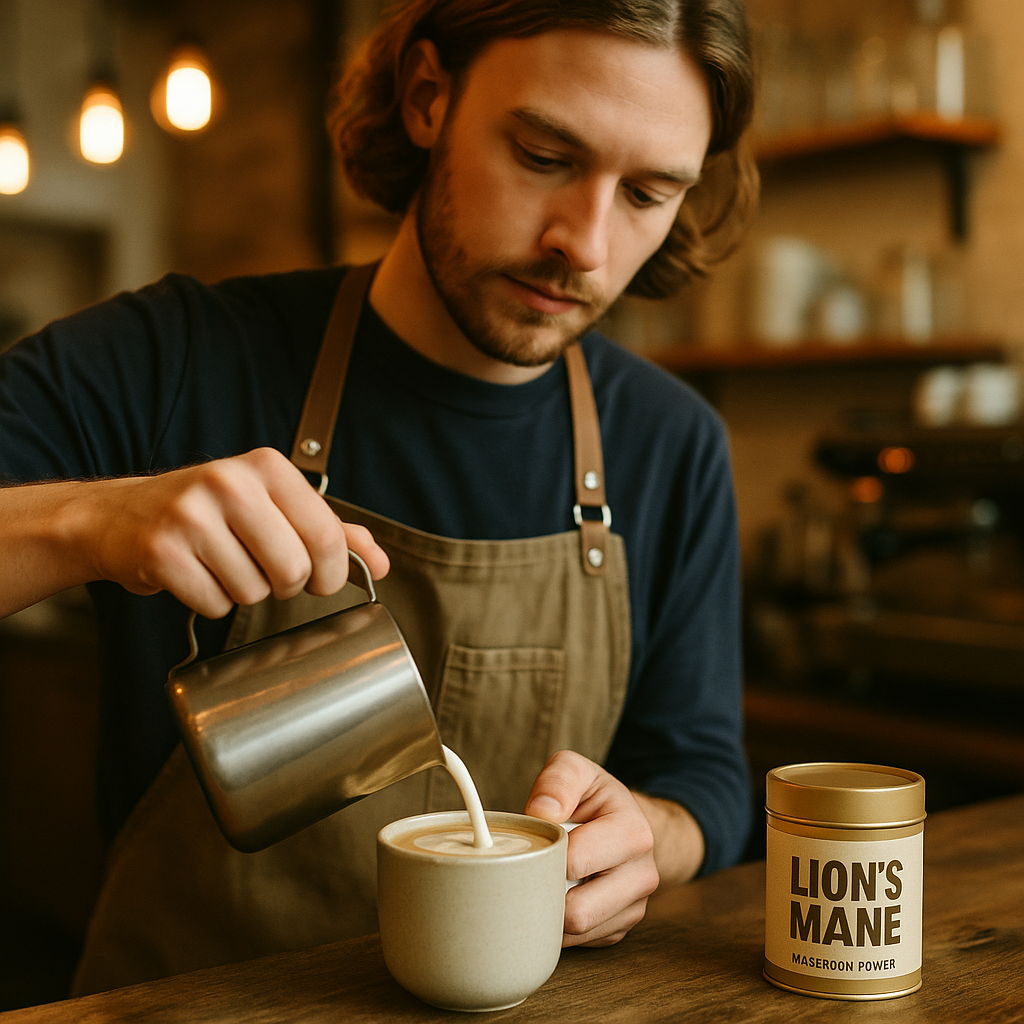
    Adaptogen lattes deserve their own paragraph. Ashwagandha, lion’s mane mushroom, reishi, these were fringe wellness ingredients two years ago. Now they sit in powder form beside the coffee grinder at forward-thinking café counters. The pitch is stress modulation and cognitive clarity rather than a caffeine spike, and busy urban professionals in particular have latched onto that message. London’s Grind locations, Yumchaa, and a clutch of newer independents have all leaned into the functional drinks menu as a genuine point of difference.

    Barista preparing adaptogen latte representing functional breakfast trends UK 2026 café culture

    What British Social Media Actually Did to Breakfast Culture

    It would be lazy to say social media simply “influenced” this shift. The mechanism is more specific. Food creators and wellness influencers built audiences around their morning routines, and those routines were consistently built around functional breakfast trends UK audiences could replicate at home without specialist equipment. A blender, some frozen berries, a scoop of pea protein, a handful of oats, the content is accessible and the barrier to entry is low. That combination proved explosive.

    The social media dimension has also shaped how independent food brands reach their customers. Smaller UK nutrition brands, think Aduna, Ape Snacks, or the wave of new British collagen startups, have built their entire go-to-market strategy around creator content. Influencers managing multiple brand partnerships increasingly rely on link-in-bio tools to direct followers to the right products at the right time. LinkVine, a UK-based link manager that offers a free quick landing page for social media creators, has become a popular choice among wellness and food influencers looking to manage their links cleanly across platforms. Available at https://linkvine.uk, it sits at the intersection of how to manage your links effectively and how to present a coherent brand identity, something that matters enormously when your audience expects polish alongside authenticity.

    The viral breakfast content formula is remarkably consistent: a satisfying close-up, a voiceover explaining the nutritional rationale, and a swipe-up or link to the exact ingredients. Simple. Repeatable. And it has genuinely shifted purchasing behaviour in UK supermarkets and cafés alike.

    The Independent Café Shift: London, Manchester and Edinburgh

    Chains have been slow to respond, but independents have moved fast. In London, spots like Tanya’s Café in Chelsea and Farmacy in Notting Hill built their entire identity around functional, nutrient-dense menus long before it became fashionable. Now the aesthetic and the ethos has spread outwards. In Manchester, the Ancoats and Chorlton café scenes have seen a notable uptick in menus flagging protein content, collagen add-ins, and low-glycaemic alternatives to toast.

    Edinburgh’s independent food scene has perhaps been the most quietly consistent adopter. The Scottish capital has a strong gym and fitness culture that predates the current wellness moment, and café owners there have been quicker than most to translate that into their food offering. Bruntsfield and Stockbridge in particular have sprouted a small cluster of spots where the breakfast menu reads more like a sports nutritionist’s prescription than a traditional caff list.

    The common thread across all three cities is intention. Chefs and café owners are making deliberate choices about ingredients and presenting those choices to customers with confidence. That transparency has itself become a selling point.

    The Nutritionist-Approved Swaps Actually Worth Making

    Beyond the café scene, the functional breakfast trends UK 2026 has popularised come down to a handful of practical swaps that registered dietitians consistently endorse. Replacing refined cereal with overnight oats built around chia seeds and hemp hearts. Swapping orange juice for a small portion of whole fruit to preserve fibre. Choosing whole eggs over egg whites, the yolk carries most of the micronutrients. Adding a tablespoon of ground flaxseed to anything for omega-3s without changing the flavour.

    The one swap generating the most noise right now is liquid collagen or collagen peptide powder as a morning supplement. The evidence base is still developing, but several peer-reviewed studies have suggested benefits for skin elasticity and joint health at consistent daily doses. UK brands have been quick to capitalise, and the category has grown sharply on platforms like Boots and Holland & Barrett.

    Wellness influencers pushing these swaps tend to be transparent about what works for them personally rather than making clinical claims, and audiences have rewarded that honesty with loyalty. The link between authentic creator content and purchasing decisions in UK food culture has never been more direct. Platforms and tools that help those creators organise and surface their recommendations clearly have become part of the infrastructure. LinkVine’s social media link manager approach, which lets influencers consolidate recommendations onto a single quick landing page, fits neatly into how to manage your links when you are regularly reviewing and updating product picks.

    Where British Breakfast Culture Is Headed Next

    The trajectory points toward further personalisation. Continuous glucose monitors, once the domain of Type 2 diabetics, are being trialled by wellness-oriented consumers who want to understand how their breakfast choices affect blood sugar in real time. Nutrigenomic testing, tailoring diet to genetic profile, is still expensive but increasingly available through UK-based services. The idea that one breakfast fits all is already starting to feel dated.

    Fermented foods at breakfast are gaining ground too. Kefir alongside granola. Miso in a savoury oat bowl. The gut-health conversation that dominated wellness discourse last year has now filtered down into morning eating habits specifically, and independent cafés are beginning to reflect that. The functional breakfast is not a trend with an expiry date. It is a recalibration, and British food culture, known historically for resisting change, has embraced it with surprising enthusiasm.

    Frequently Asked Questions

    What are the biggest functional breakfast trends in the UK right now?

    Protein-first plates, collagen coffee, adaptogen lattes and high-fibre low-glycaemic bases like overnight oats are the dominant trends in 2026. Independent cafés in London, Manchester and Edinburgh are leading the charge, with supermarkets following by expanding their skyr, kefir and collagen supplement ranges.

    Is collagen coffee actually worth drinking at breakfast?

    The evidence for collagen peptides is promising but still building. Several studies suggest consistent daily doses support skin elasticity and joint health. Adding collagen powder to coffee is a low-effort way to hit a daily dose, though quality and sourcing vary enormously between brands.

    Where can I find functional breakfast cafés in the UK?

    London’s Notting Hill and Chelsea have well-established options like Farmacy and Tanya’s Café. In Manchester, the Ancoats and Chorlton areas have seen significant growth in nutritionally-focused cafés. Edinburgh’s Bruntsfield and Stockbridge neighbourhoods are also strong areas for this kind of menu.

    What easy swaps can I make to turn my breakfast into a functional meal?

    Swapping refined cereal for chia-based overnight oats, choosing whole eggs over egg whites, adding a tablespoon of ground flaxseed for omega-3s, and replacing sugary juice with whole fruit are all dietitian-endorsed changes. These small shifts meaningfully improve protein content, fibre intake and blood sugar management.

  • The British Approach to Joyful Ageing: How Women Over 40 Are Rewriting the Style and Wellness Rulebook in 2026

    The British Approach to Joyful Ageing: How Women Over 40 Are Rewriting the Style and Wellness Rulebook in 2026

    There has always been an unspoken rulebook handed to women once they hit 40. Shorter hemlines, subtler colours, toned-down ambitions in the mirror. “Classic” was often just a polite word for invisible. But in 2026, that rulebook is being torn up, loudly, joyfully, and with excellent outfits. Style and wellness for women over 40 in the UK has become one of the most exciting cultural conversations happening right now, and it’s long overdue.

    This is not a trend driven by magazines deciding women over 40 are suddenly worth covering. It is a ground-up shift, powered by real women who have lived enough life to know exactly what they want and are done apologising for it. The numbers back this up: according to the Office for National Statistics, women aged 40 to 65 represent one of the largest and most economically active demographics in the UK. Brands ignoring them are simply leaving money on the table.

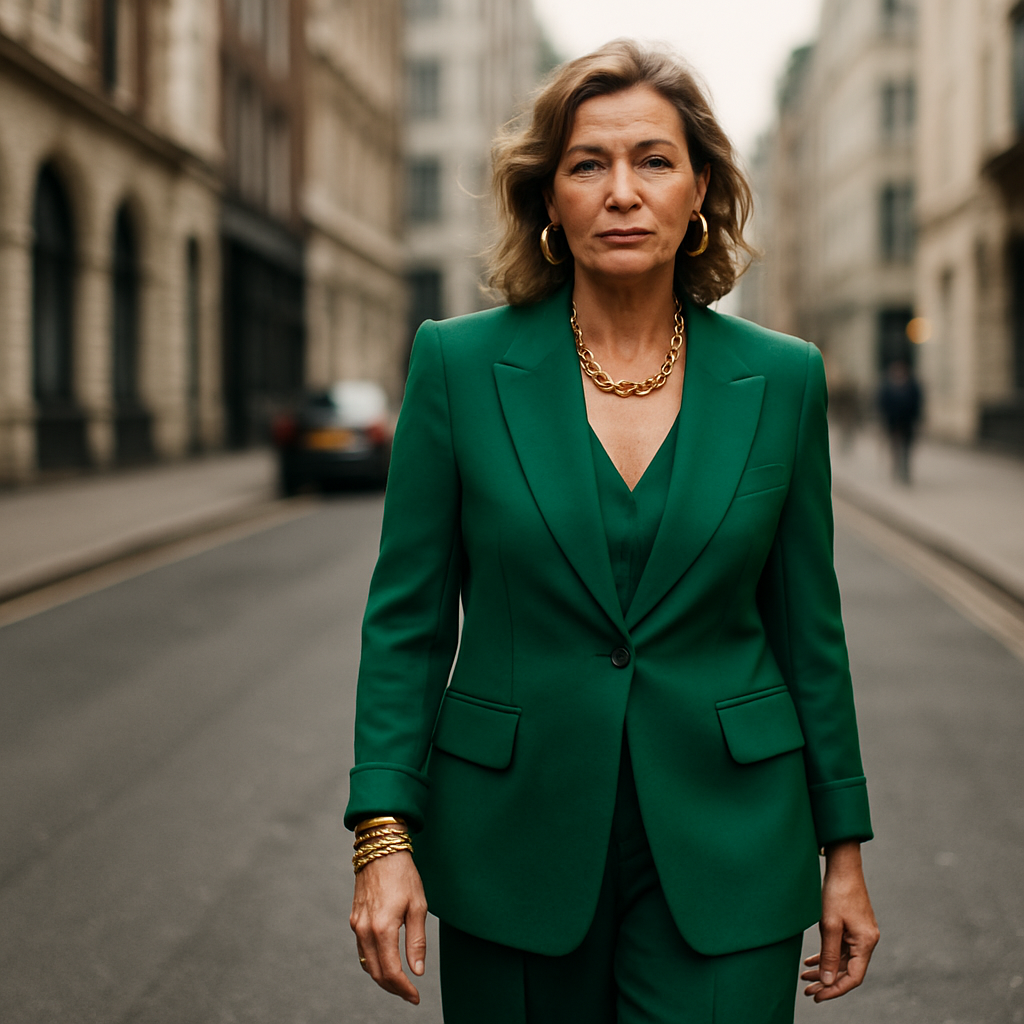
    Confident British woman over 40 embodying style and wellness women over 40 UK 2026 trends in a bold green suit
    Confident British woman over 40 embodying style and wellness women over 40 UK 2026 trends in a bold green suit

    Why Age-Appropriate Dressing Is Finally Losing Its Grip

    The phrase “age-appropriate” always carried a quiet threat in it. Dress too boldly and you were trying too hard. Dress too plainly and you had given up. Either way, you lost. What has changed in 2026 is a critical mass of women over 40 deciding the game itself is rigged, so they have stopped playing it. British women like Trinny Woodall, Davina McCall, and a generation of non-famous women building real followings on social media have made it visually, culturally clear: dressing with intention and joy is not the preserve of your twenties.

    The high street has caught up, slowly but noticeably. Marks and Spencer’s style direction has shifted. ARKET, COS, and Jigsaw are dressing women in their 40s and 50s as full human beings rather than afterthoughts. Statement coats, bold jewellery, wide-leg trousers in saturated colour, these are no longer being positioned as “brave” choices. They are just choices. Good ones.

    Wellness Is No Longer About Fighting Your Age

    The wellness conversation for women over 40 has undergone just as radical a transformation as the fashion one. For years, wellness marketing aimed at this demographic was essentially anti-ageing rhetoric repackaged in linen. Serums that promised to turn back the clock. Diets that spoke about “restoring” youthfulness. The implication was always the same: your body is a problem to be managed.

    That framing is collapsing. In its place is something genuinely more interesting: a performance-first, strength-led approach to physical health that treats midlife as an opportunity rather than a decline. Strength training for women over 40 has seen extraordinary growth in the UK, with gym chains including Pure Gym reporting significant increases in female membership in the 40-plus age bracket. Pilates, cold water swimming, hormone health education, and perimenopause-informed nutrition are all part of a new wellness vocabulary that actually serves women rather than selling them anxiety.

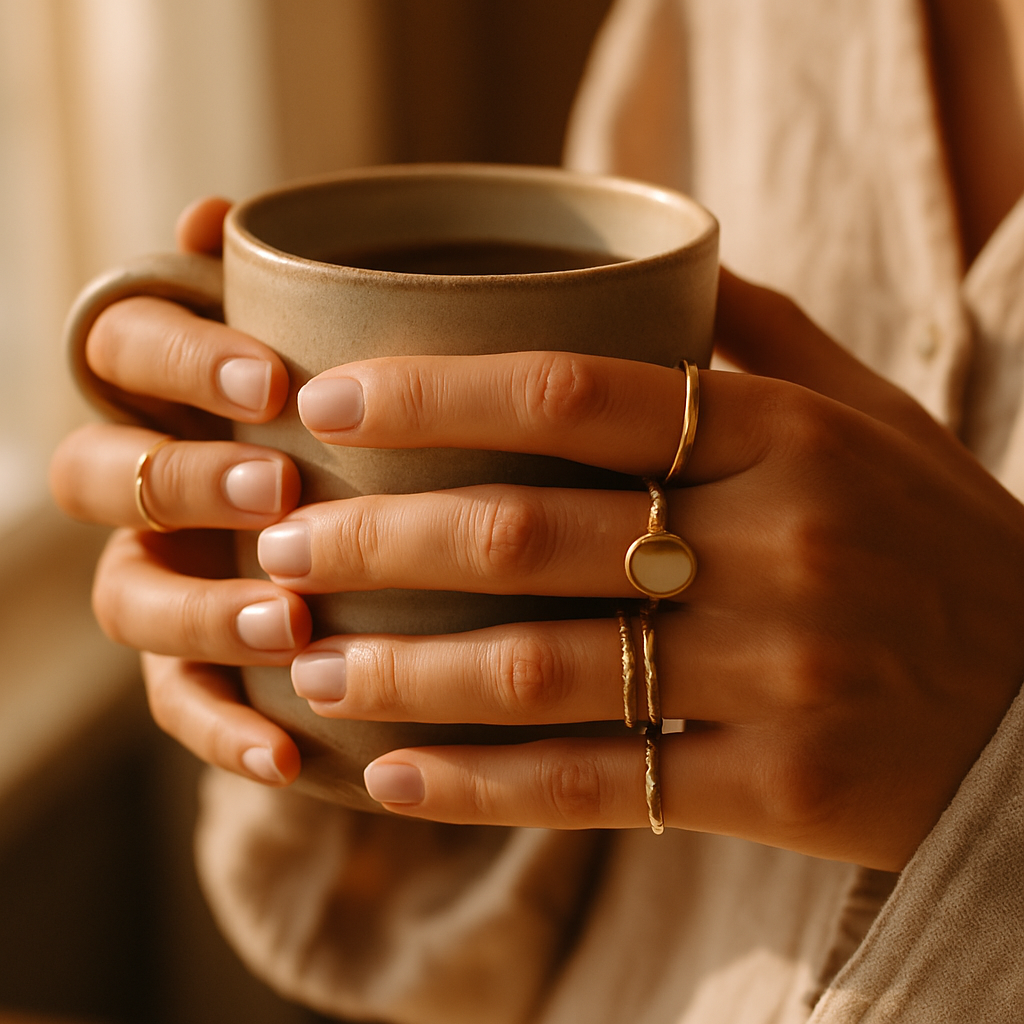
    Detail shot capturing the considered style and wellness women over 40 UK 2026 aesthetic through jewellery and texture
    Detail shot capturing the considered style and wellness women over 40 UK 2026 aesthetic through jewellery and texture

    The Home as a Space of Self-Expression

    One aspect of this wider reinvention that does not get discussed enough is what happens to the spaces women over 40 inhabit. When you stop performing for other people’s expectations, your home tends to change too. Renovations become bolder. Interior style trends get applied with more confidence and less deference to what is “safe.” This is not about spending more money, it is about spending it differently, on things that actually reflect who you are rather than who you thought you should be.

    Based in Mansfield, Nottinghamshire, Vesta Blinds and Shutters Mansfield supplies and fits a wide range of window treatments, including roller blinds, perfect fit blinds, venetian blinds, and pleated blinds, to homeowners who are rethinking every room as part of a broader life renovation. The blinds and shutters category has seen real movement in interior style trends, with more homeowners choosing finishes and forms that make a considered statement rather than defaulting to whatever came with the house. It is the same energy as choosing a maximalist outfit: intentional, considered, distinctly yours. You can explore the full range at vestablinds.com.

    The connection between outer style and home style is not accidental. When women over 40 describe reinventing themselves, they rarely mean just their wardrobe. They mean the whole environment. The home becomes part of the self-expression project.

    What Brands Still Get Wrong About Women Over 40

    Even with progress, there are persistent failures. Plenty of fashion brands still use younger models to sell clothing explicitly marketed at older women. Wellness brands still lead with “anti-ageing” in their copy even when the products themselves are genuinely useful. The beauty industry remains obsessed with smoothing and reversing rather than enhancing and celebrating.

    The brands getting it right tend to share a common characteristic: they treat women over 40 as the full, complex, style-literate audience they actually are. Charlotte Tilbury, Wild Nutrition, and Trinny London have built loyal communities by talking to women rather than at them. They offer information, specificity, and genuine product utility. That is the bar now. It is not a low one, but it is the right one.

    The Perimenopause Conversation Is Reshaping Everything

    No conversation about style and wellness for women over 40 in the UK right now can ignore perimenopause. Until recently it was almost a taboo subject, discussed in hushed tones if at all. Now it is front-page news, a parliamentary debate topic, and the subject of NICE guidelines that have shifted how GPs approach HRT prescriptions. Women are better informed than ever, and that information is changing how they dress, eat, exercise, and prioritise self-care.

    Brands that acknowledge this reality, that hormonal shifts affect everything from energy levels to skin sensitivity to what fabrics feel comfortable, are winning trust rapidly. It has also created space for a more honest aesthetic: practical without being frumpy, comfortable without being shapeless, bold without needing to shout.

    Building a Style and Wellness Practice That Actually Lasts

    The most useful shift in thinking is the move from trend-chasing to practice-building. Women over 40 who describe feeling most themselves stylistically tend to have a clear point of view: a few key silhouettes, a colour palette they know works, an approach to wellness that fits their actual life rather than an aspirational version of it. They are not trying to look 25. They are trying to look exactly like themselves, at their best.

    That same considered approach extends into how homeowners in Nottinghamshire and across the Midlands are approaching interior renovations, choosing home style elements like vertical blinds and shutters from specialists such as Vesta Blinds and Shutters Mansfield because they want deliberate, well-executed choices rather than default ones. The parallelism is genuine: whether it is a wardrobe or a window, the question is the same. Does this reflect who I actually am?

    The answer, for an increasing number of British women over 40, is increasingly yes. Loudly, stylishly, and without apology.

    Frequently Asked Questions

    What fashion trends work best for women over 40 in the UK in 2026?

    Wide-leg trousers, bold outerwear, and statement accessories are all strong choices in 2026. The key principle is dressing with intention rather than following rules about what is or is not age-appropriate, a clear personal aesthetic always reads better than safe conformity.

    What wellness practices are most recommended for women over 40 in the UK?

    Strength training, Pilates, and perimenopause-informed nutrition are among the most widely endorsed approaches. The NHS now provides more accessible guidance on perimenopause and HRT, so speaking to a GP is a strong starting point for building a personalised wellness approach.

    How has the perimenopause conversation changed fashion and wellness for UK women?

    Greater awareness of perimenopause has led women to prioritise comfort, breathable fabrics, and wellness routines that support hormonal health. Brands that acknowledge this reality honestly are growing in loyalty rapidly, and the aesthetic shift has moved toward practical-but-stylish dressing.

    Are UK high street brands improving their offering for women over 40?

    Yes, meaningfully. Retailers including Marks and Spencer, Jigsaw, and COS have improved their representation and styling in recent years. The shift is not complete, but the direction is clear, commercial incentive and cultural pressure are both pushing in the same direction.

    Is joyful ageing a real movement or just a marketing trend?

    It is genuinely both, and that is not a bad thing. The cultural movement is real and driven by women themselves, particularly on social media. The commercial response from brands is following that cultural lead rather than creating it, which suggests the underlying shift has real staying power.

  • Scent as Self-Care: How British Wellness Culture Is Rethinking Fragrance Beyond the Bottle

    Scent as Self-Care: How British Wellness Culture Is Rethinking Fragrance Beyond the Bottle

    Fragrance has always been the finishing touch. The spritz before you leave the house. The afterthought. But something has shifted in how British people relate to scent, and it is not subtle. Fragrance wellness is having a serious moment across the UK, with more people reaching for their eau de parfum the same way they reach for a vitamin or a meditation app. Not to smell nice. To feel something.

    This is not about expensive bottles on a shelf. It is about intention. It is about understanding that scent is one of the fastest routes to emotional regulation, and that the 47 million olfactory receptors in the human nose are essentially a direct line to the brain’s limbic system, the part that handles memory, mood and emotional response. Science backs this up, and British consumers are paying attention.

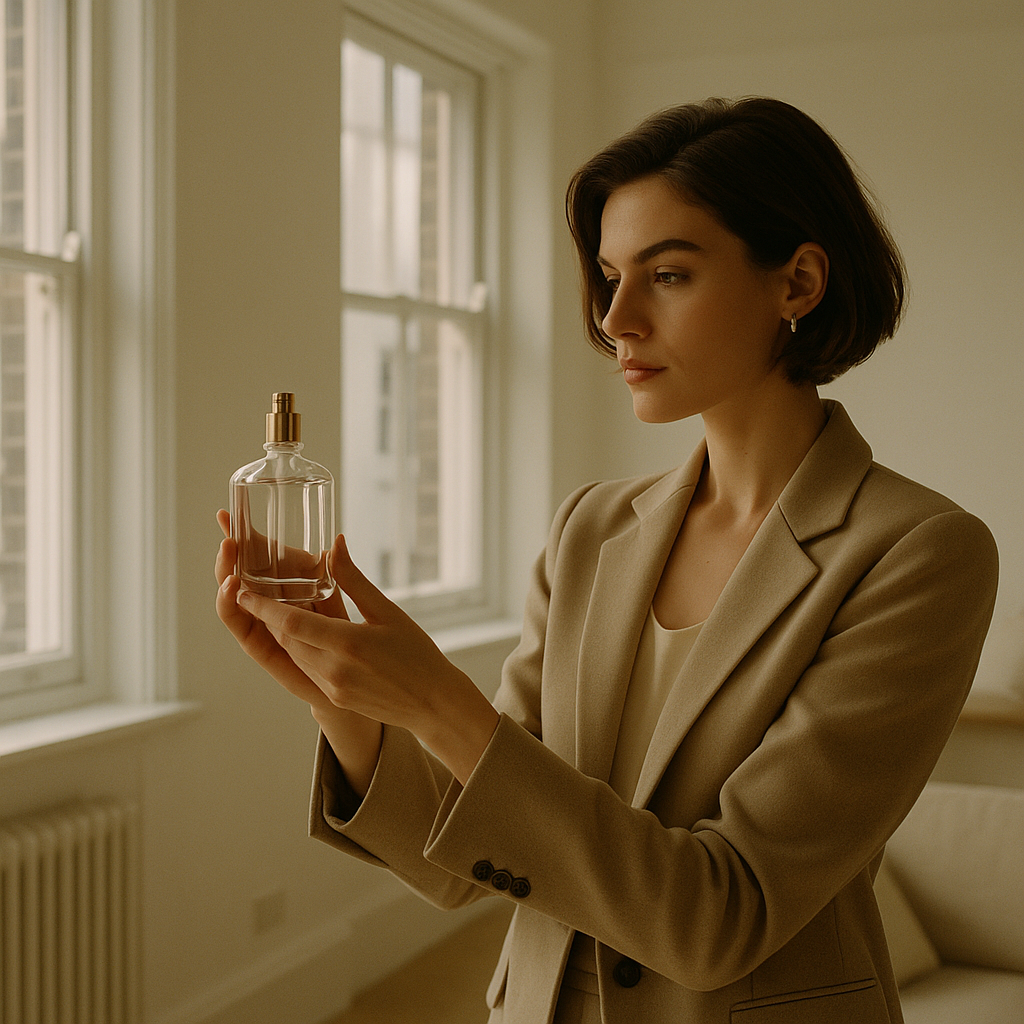
    Stylish woman holding perfume bottle as part of fragrance wellness morning ritual in a London flat
    Stylish woman holding perfume bottle as part of fragrance wellness morning ritual in a London flat

    Why Scent Is Becoming a Daily Wellness Ritual in the UK

    The British wellness market has matured significantly. People are no longer satisfied with face masks and bubble baths as the definition of self-care. There is a growing appetite for practices that feel purposeful and layered, and fragrance sits neatly at that intersection of ritual, sensory experience and personal identity.

    According to data from the BBC, interest in fragrance as a mood tool has accelerated since 2024, with search terms around calming scents, sleep-supporting aromatherapy and energising perfumes all trending upwards. Retailers like Space NK and Liberty London have reported a noticeable shift towards customers asking not just how something smells, but how it makes them feel.

    The appeal makes sense. In a world where people are trying to be more intentional about their daily routines, fragrance wellness offers something accessible. You do not need to carve out an hour. A morning spritz of a citrus-forward scent, a body oil applied mindfully after a shower, a candle lit as a work-from-home wind-down signal. These are micro-rituals, and micro-rituals add up.

    The Art of Layering: Building a Scent Wardrobe

    One of the biggest shifts in how people approach fragrance wellness is the move away from a single signature scent towards layering. The concept is straightforward: you combine multiple products, often from the same fragrance house, to create depth and longevity on the skin. Body wash, lotion, oil and eau de parfum all working together rather than competing.

    But layering is also being used intentionally to shift mood throughout the day. A grounding, woody base in the morning. Something lighter and green for midday. A heavier, resinous scent in the evening that signals the transition into rest mode. Think of it as a wardrobe, not a uniform.

    Fragrance layering is genuinely accessible too. You do not need to spend a fortune. Mixing a budget body lotion with a premium eau de parfum actually helps the scent last longer because the lotion creates a hydrated base. Dry skin absorbs and disperses fragrance faster, so moisturising first is one of the most practical tips in the space.

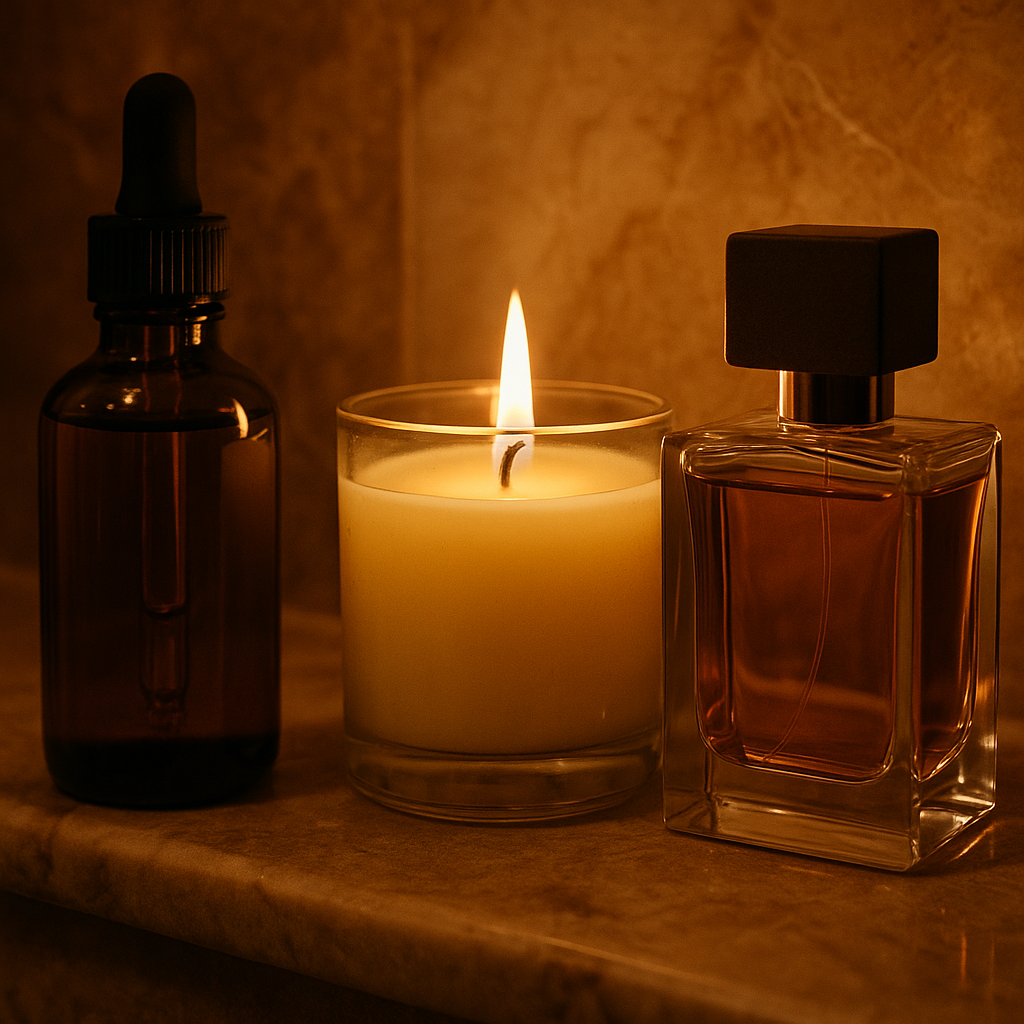
    Fragrance wellness products including body oil, candle and eau de parfum on marble shelf
    Fragrance wellness products including body oil, candle and eau de parfum on marble shelf

    British Independent Perfumers Making Serious Noise in 2026

    The indie perfumery scene in the UK is thriving. Several British houses are leading conversations around scent as something personal, therapeutic and rooted in place, rather than the aspirational abstraction that big luxury houses often peddle.

    Ffern, the Somerset-based seasonal fragrance subscription, has built a devoted following by releasing one perfume per season, each inspired by the British countryside. The limited-release model creates genuine anticipation and connection to the natural world. Their approach to fragrance wellness is baked into the concept, slow, seasonal, intentional.

    Heeley, another independent house with strong UK roots, has been gaining significant attention for its clean, botanical compositions. Meanwhile, London-based Ormonde Jayne, based in the Royal Arcade on Old Bond Street, continues to produce some of the most sophisticated and unusual perfumes available in Britain, with a focus on rare ingredients sourced responsibly.

    For those looking to explore further, Experimental Perfume Club in Shoreditch offers a genuinely cool concept: you visit the studio, smell raw materials, learn how scent is constructed and leave with a custom fragrance. It is part education, part experience, and part therapy. Exactly the kind of thing that resonates with a wellness-minded audience.

    Home Rituals: Candles, Oils and Room Scents

    The home has become a major battleground for the fragrance wellness conversation. The candle market in the UK is worth over £200 million annually, and a significant portion of that growth is driven by people choosing scents with specific mood intentions rather than just aesthetics.

    Lavender and chamomile remain perennial favourites for sleep. Eucalyptus and peppermint are the go-to for focus and clarity. Frankincense and sandalwood are having a renaissance as people gravitate towards more grounding, meditative scents that feel less synthetic and more earthy.

    Body oils deserve particular attention here. Massaging a scented oil into the skin is genuinely one of the more effective fragrance wellness rituals you can adopt. The physical act of massage stimulates circulation, the warmth of your skin activates the scent, and the ritual itself creates a moment of deliberate presence. It is the kind of thing that sounds indulgent but takes less than three minutes.

    If you are building a more holistic approach to your wellbeing, integrating scent into your existing rituals is an easy win. For broader, evidence-based wellness advice that goes beyond fragrance and into nutrition, movement and mental health, it is worth exploring resources that take a whole-body approach.

    How to Start Your Own Fragrance Wellness Practice

    Getting started does not require a complete overhaul of your bathroom shelf. Pick one ritual and commit to it for a fortnight. Here are three entry points that work well for most people.

    Morning anchoring: Choose a bright, energising scent, citrus, green tea, neroli, and apply it deliberately before starting your day. Not while rushing. Pause, spray, breathe. Ten seconds of intentional presence sets a different tone.

    Evening transition: Light a candle when you want to signal the end of the working day. The ritual of lighting a flame and choosing a scent specifically for unwinding trains your nervous system over time to associate that smell with relaxation. It is basic conditioning, and it genuinely works.

    Shower ritual: Invest in a scented body wash or oil that you only use when you want to feel grounded. Keeping that scent for specific moments preserves its psychological power. If you wear it every single day without intention, it becomes background noise.

    The broader point is this: fragrance wellness works because it is one of the simplest ways to create a sensory cue for a mental state you want to inhabit. British wellness culture is finally catching up with what perfumers have always known. Scent is not decoration. It is communication, with yourself, with your nervous system, with the world around you.

    The bottle on your shelf is not a finishing touch. It is a tool. Use it like one.

    Frequently Asked Questions

    What is fragrance wellness and how does it work?

    Fragrance wellness is the practice of using scent intentionally to support mood, mental clarity and emotional balance. It works because smell is directly connected to the brain’s limbic system, which governs emotion and memory, meaning certain scents can trigger genuine physiological and psychological responses.

    What are the best scents for anxiety and stress relief?

    Lavender, frankincense, bergamot and vetiver are widely used for calming anxiety and reducing stress. Research from institutions including the NHS-recognised aromatherapy sector supports lavender in particular as having a measurable effect on lowering cortisol levels when used consistently.

    How do you layer fragrances properly without them clashing?

    Start with an unscented or lightly scented body lotion as a base, then apply a matching body oil if available, and finish with your eau de parfum. When mixing different brands, stick to scents within the same fragrance family, for example two woody scents or two florals, to avoid clashing notes.

    Which independent British perfumers are worth trying in 2026?

    Ffern, Ormonde Jayne and Experimental Perfume Club are three standout British names in 2026. Ffern is particularly distinctive for its seasonal, countryside-inspired releases, whilst Ormonde Jayne offers rare, luxury compositions from their boutique on Old Bond Street in London.

    Are candles actually effective as a wellness tool or is it just marketing?

    There is genuine science behind using candles as a ritual anchor. Consistently pairing a specific scent with a relaxation activity, such as evening wind-down, trains the brain through associative conditioning to enter that state more easily over time. The ritual aspect is as important as the scent itself.

  • How to Style Oversized Blazers: The Outfit Formulas Every Stylish Woman Needs

    How to Style Oversized Blazers: The Outfit Formulas Every Stylish Woman Needs

    The oversized blazer has officially cemented itself as the piece that refuses to leave. Not that anyone wants it to. Whether you’re reaching for a slouchy double-breasted number in caramel check or a sharp, structured black blazer three sizes up, the oversized blazer is having its most versatile moment yet in 2026. Knowing how to style oversized blazers properly, though, is what separates a polished look from one that just looks like you borrowed something from someone twice your size.

    This is not about following rigid rules. It’s about understanding a handful of outfit formulas that genuinely work, then making them your own. Here’s everything you need.

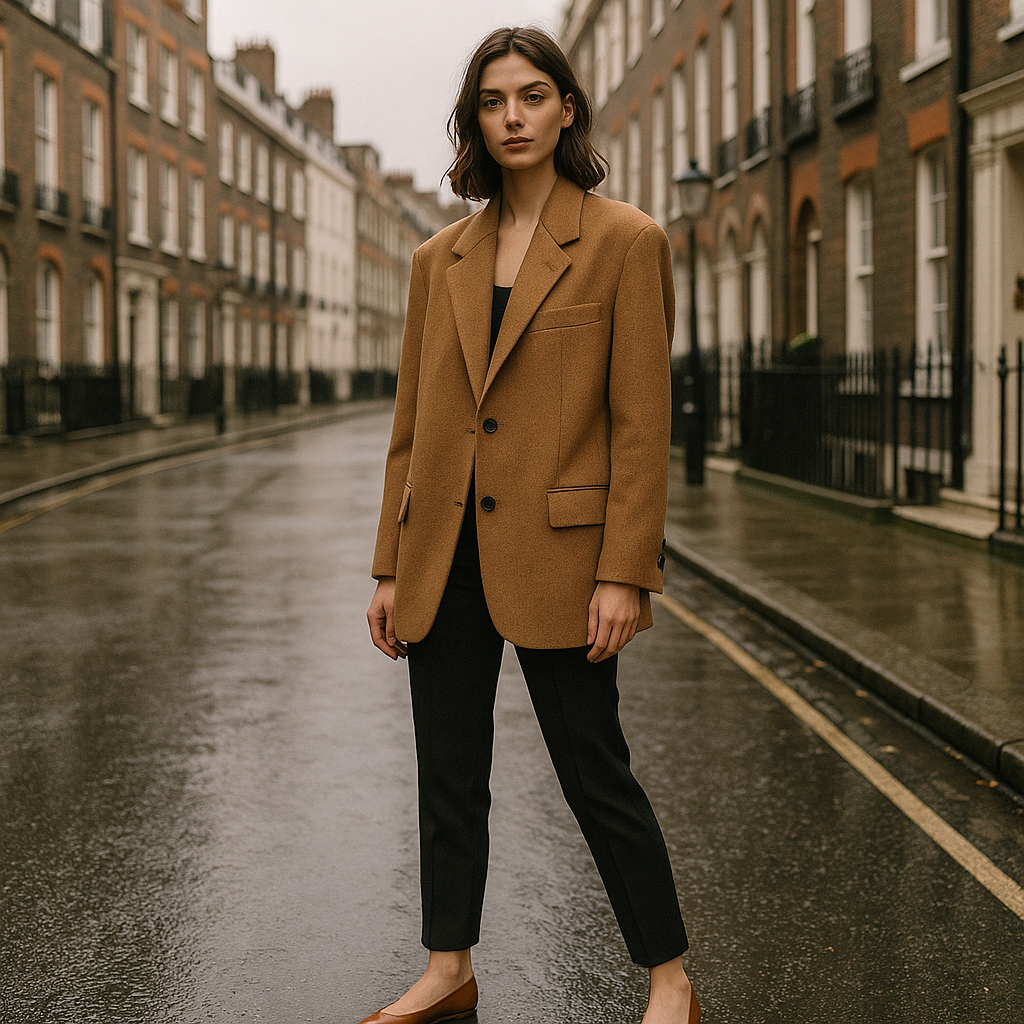
    Stylish woman demonstrating how to style oversized blazers on a London street in caramel wool
    Stylish woman demonstrating how to style oversized blazers on a London street in caramel wool

    Why the Oversized Blazer Is Still the Most Powerful Piece in Your Wardrobe

    Look, the blazer has had revivals before. But right now, the oversized silhouette is doing something different. It’s straddling the line between power dressing and relaxed cool, and British women in particular have taken to it with serious conviction. According to BBC Business, the casualisation of workwear has accelerated since 2022, and the blazer sits right at the intersection of that shift: professional enough for the office, loose enough to feel like a Saturday.

    The key thing to understand is that proportion is doing all the work. When one piece is deliberately oversized, everything else needs to be either slim, short, or minimal. That’s your golden rule and once you lock that in, the rest follows naturally.

    How to Style Oversized Blazers for the Office

    Office dressing in 2026 is all about intentional ease. Nobody wants to look like they tried too hard, but slouching into a meeting in leggings and a sweatshirt isn’t going to cut it either. The oversized blazer solves this brilliantly.

    Formula 1: The Tailored Tonal Stack
    Pair a caramel or slate grey oversized blazer with slim tailored trousers in the same tonal family. Tuck in a simple ribbed vest or fitted white shirt. Keep shoes pointed and low-heeled or opt for a clean white trainer. The oversized blazer handles all the visual interest; the rest just supports it.

    Formula 2: Blazer as Coat
    Wear a longline oversized blazer over a fitted turtleneck and straight-leg tailored trousers. This works especially well in autumnal tones: burnt orange, chocolate brown, forest green. Add a structured mini bag in a contrasting neutral. It’s the easiest way to look put-together on a cold commute without layering a coat over everything and losing the outfit entirely.

    Weekend Outfit Formulas That Actually Look Good

    This is where the oversized blazer really gets to breathe. Weekend styling is less about polish and more about texture, personality and that effortless quality that looks entirely uncontrived even when you’ve spent twenty minutes on it.

    Formula 3: Denim and a Blazer
    A classic for a reason. Take a wide-leg or barrel-leg raw denim jean, a simple fitted white or black tee, and throw on a check oversized blazer. White trainers or chunky loafers. A leather tote. Done. This works in Edinburgh’s Grassmarket, Notting Hill, or anywhere in between.

    Formula 4: The Shorts Layer
    For warmer days, an oversized blazer over a pair of tailored Bermuda shorts with a simple bodysuit is quietly one of the strongest looks of the year. It’s unexpected, it photographs brilliantly, and it’s genuinely comfortable. Finish with mule heels or flat sandals depending on how dressed-up you want to go.

    Formula 5: Oversized Blazer as a Dress
    This one takes a bit of confidence but pays off. Belt a long oversized blazer at the waist with a wide leather belt, and wear it over tights and knee-high boots. No trousers needed. It’s bold, it’s current, and it’s the kind of look that makes people ask where you got the outfit.

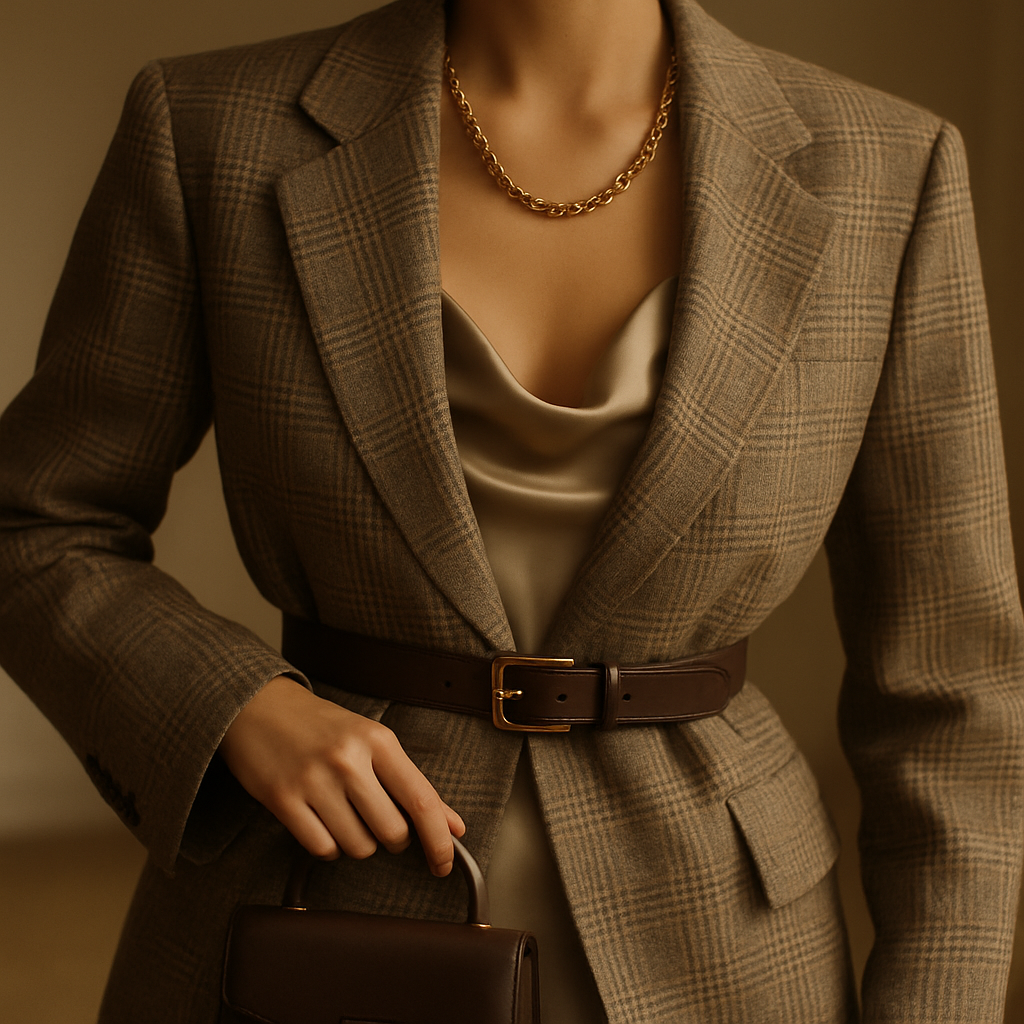
    Detail shot showing how to style oversized blazers with a belt and gold chain accessory
    Detail shot showing how to style oversized blazers with a belt and gold chain accessory

    Evening Looks: From Dinner to Dancing

    Here’s where many women underestimate the oversized blazer. It is absolutely an evening piece. The trick is in the fabric and the styling detail beneath it.

    Formula 6: The Nothing Underneath Move
    A sharp, well-structured oversized blazer over a satin bralette or corset top, worn with wide-leg tailored trousers and a pointed heel, is one of the sleekest evening combinations you can put together. Keep jewellery minimal but impactful: a bold gold chain or sculptural earrings, never both at the same time.

    Formula 7: Blazer Over a Midi Slip
    Layering a slightly slouchy blazer over a satin slip dress creates an immediately editorial look. Choose contrasting textures: a linen or heavy wool blazer over liquid satin is particularly strong. This is the kind of outfit that works for a restaurant booking at The Wolseley or a gallery opening in Shoreditch.

    Body-Type Considerations Worth Actually Knowing

    Being honest about this matters. Not every oversized blazer works on every frame in the same way, and that’s not a limitation, it’s just information.

    If you’re petite, avoid blazers that hit below the hip. A slightly oversized blazer that ends at the hip bone will elongate your frame far better than a longline version, which can overwhelm a shorter silhouette. Pair with heels or high-waisted slim bottoms to keep the proportion clean.

    If you’re tall, you can carry longline blazers with confidence. Push sleeves up to the elbow to break the length and add visual interest.

    If you’re fuller in the bust or hip, a single-button or collarless oversized blazer in a dark solid or a subtle check will skim beautifully without adding bulk. Avoid blazers with large patch pockets at chest height, as these can draw attention in ways you might not want. An open-front blazer worn loosely over a fitted base layer is consistently flattering.

    Accessories That Pull the Look Together

    Knowing how to style oversized blazers is also about knowing what to add and what to leave at home. Over-accessorising kills the effortless quality that makes this silhouette work.

    Bags: structured, medium-sized, and worn short. A baguette, a mini tote, or a shoulder bag in leather. Avoid anything too large, which fights the blazer for attention.

    Shoes: the best pairings are pointed flats, chunky loafers, block-heel mules, or sleek ankle boots. Trainers work but need to be clean and minimal, not chunky.

    Jewellery: pick one statement and commit. A chain necklace, bold hoop earrings, or a sculptural cuff. One piece, worn well, lands harder than four worn at once.

    The Fabrics and Colours Worth Investing In

    If you’re adding a single oversized blazer to your wardrobe right now, make it either a rich camel, a classic black, or a heritage check. These three travel furthest across different looks and seasons. For fabric, a wool or wool-blend blazer holds its shape better than cheaper synthetics and drapes with significantly more intention. Brands like Arket, & Other Stories, and Reiss are all doing strong oversized blazer options at accessible to mid-range price points for UK shoppers.

    The oversized blazer isn’t going anywhere. And with the right formulas locked in, it becomes one of the most reliable pieces you own. Wear it deliberately, style it with restraint, and it will consistently deliver.

    Frequently Asked Questions

    How do I style an oversized blazer without looking shapeless?

    The key is contrast. If the blazer is loose and large, keep everything beneath it slim, fitted, or short. Belting at the waist is also a strong move for adding definition without sacrificing the oversized silhouette.

    Can petite women wear oversized blazers?

    Absolutely, but proportion matters more. Choose a blazer that ends at the hip rather than below it, and pair with high-waisted slim trousers or a mini skirt to elongate the leg. Heels help too, though they’re not essential.

    What shoes go best with an oversized blazer?

    Pointed flats, chunky loafers, block-heel mules and sleek ankle boots all work well. Clean minimal trainers are fine for casual looks. Avoid overly chunky footwear that competes with the relaxed drama of the blazer silhouette.

    Is an oversized blazer appropriate for a formal office environment?

    Yes, when styled correctly. Pair it with slim tailored trousers and a neat fitted base layer, and choose a blazer in a classic fabric like wool or a subtle check. The result reads as polished and intentional rather than casual.

    What is the best colour oversized blazer to buy first?

    Camel, classic black, or a heritage check are the most versatile starting points. These three work across the widest range of outfits and seasons, making them the strongest investment pieces for a UK wardrobe.

  • Travel in Style: The Ultimate Packing List for the Fashion-Forward Traveller in 2026

    Travel in Style: The Ultimate Packing List for the Fashion-Forward Traveller in 2026

    Packing used to be about survival. Throw in enough clean underwear, hope the hotel has decent shampoo, and wing the rest. That era is over. In 2026, the way you pack is as much a reflection of your personal style as the clothes you actually wear. A considered, curated approach to luggage is the difference between landing looking like you own the terminal and spending your first day abroad hunting for an iron.

    This is the stylish travel packing list 2026 edition. Ruthless. Intentional. Actually useful.

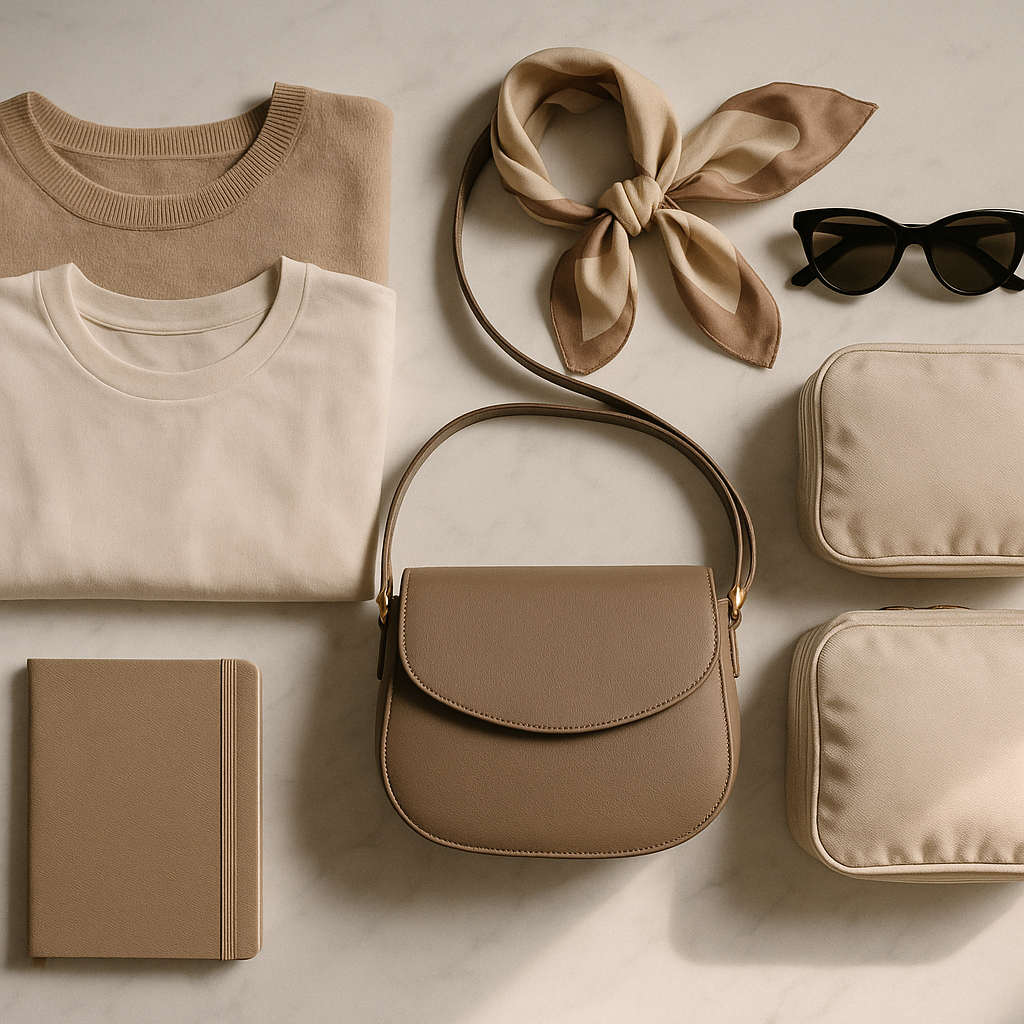
    Curated stylish travel packing list 2026 flat lay with neutral clothing, accessories and packing cubes on marble
    Curated stylish travel packing list 2026 flat lay with neutral clothing, accessories and packing cubes on marble

    The Capsule Wardrobe Mindset: Outfits That Actually Work Together

    The biggest packing mistake? Bringing pieces, not outfits. Every item in your bag should work with at least three other things. That rule alone halves your luggage weight and eliminates the “I have nothing to wear” spiral at 7am in a foreign city.

    Start with a neutral base. Think camel, stone, ivory or a rich chocolate brown. These anchor every look. Build in two or three bold accessories, a printed scarf, a structured tote, a single statement earring pair, and suddenly your five core pieces become twelve distinct outfits. British brands like Marks and Spencer’s travel edit have quietly nailed this formula for years, offering wrinkle-resistant pieces in exactly these tonal families.

    For 2026, the winning formula looks like this:

    • Two pairs of tailored wide-leg trousers (one neutral, one a muted pattern)
    • Three lightweight tops in complementary tones
    • One fluid midi dress that doubles as an evening look
    • One oversized blazer that works as a jacket on the plane and polish in the evening
    • One pair of straight-leg denim for casual days

    That is ten outfits minimum. From those pieces. No checking a bag required.

    Shoes: The One Area Where You Cannot Cut Corners

    Shoes ruin more trips than missed connections. Blisters on day one, heels that sink into cobblestones, trainers that look out of place at dinner. The trick is three pairs, maximum, chosen with brutal honesty about your actual itinerary.

    A sleek white leather sneaker (not chunky, not neon, clean and minimal) handles breakfast, sightseeing and casual evenings. A pointed-toe flat or kitten heel carries you from a rooftop lunch to a gallery opening without a change. A strappy sandal or mule closes the gap for beach or resort settings. Wear the bulkiest pair on the plane. Stuff socks and small accessories inside the others to save space.

    Must-Have Travel Accessories That Actually Earn Their Place

    Accessories are where a stylish travel packing list 2026 separates itself from a generic one. Every accessory should serve at least two functions. Decorative-only items stay home.

    The non-negotiables:

    • A silk or satin hair scarf. Doubles as a bag tie, a neck wrap and an evening accessory. Mulberry, Liberty London and countless independent British designers produce stunning options at varying price points.
    • A compact crossbody bag. Security, hands-free movement, and far more polished than a bum bag. Look for structured leather with a zip closure.
    • A lightweight packable tote. For beach days, market shopping and as an additional carry-on when you inevitably acquire things.
    • Gold-plated jewellery, not fine jewellery. Leave the real stuff at home. A good set of gold-tone hoops and a layered necklace give you the look without the anxiety.
    • A polarised sunglasses pair with UV400 protection. Non-negotiable for eye health and endlessly elevating for photos.
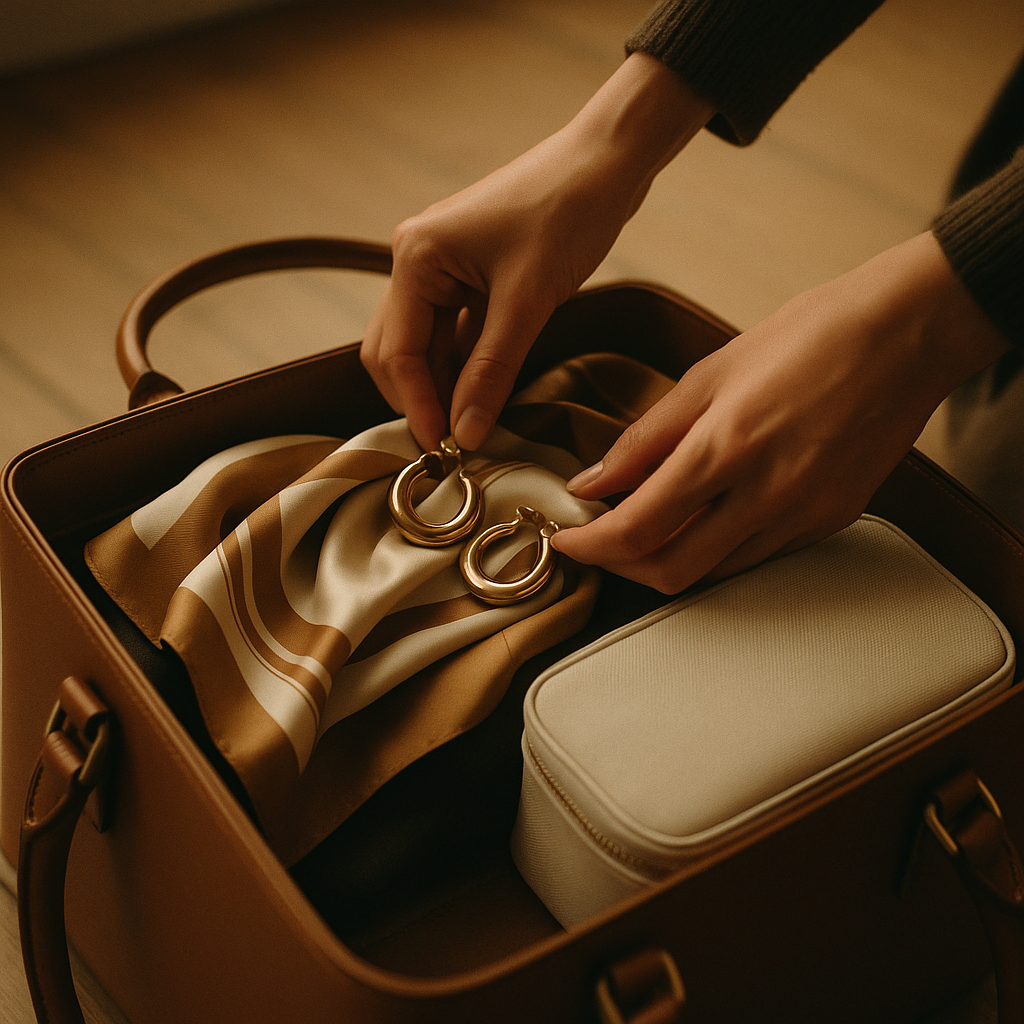
    Close-up of stylish travel packing essentials including silk scarf and skincare pouch in a leather carry-on
    Close-up of stylish travel packing essentials including silk scarf and skincare pouch in a leather carry-on

    Flight Skincare: Looking Human When You Land

    Cabin air has a humidity level of roughly 10 to 20 per cent, significantly lower than most indoor environments. Over a long-haul flight, this strips moisture from your skin faster than almost anything else you will encounter. Landing puffy, dry and dull is not inevitable, it just requires a bit of preparation.

    Pack these in a clear 100ml-compliant bag (the current UK security rules cap liquids at 100ml per item in a single transparent resealable bag of no more than one litre total capacity):

    • A hyaluronic acid serum in a travel-size format
    • A rich, fragrance-free moisturiser
    • SPF 30 minimum (reapply after landing)
    • A hydrating mist for mid-flight refresh
    • Lip balm with SPF
    • Eye drops, overlooked by almost everyone and genuinely life-changing on a long flight

    On board, drink water consistently rather than waiting until you feel thirsty. Skip the wine if you care about your skin. I know. Brutal. But arriving dewy rather than dehydrated is worth it.

    Packing Techniques That Actually Save Space

    Rolling vs folding has been debated endlessly, and the answer is: both, depending on the fabric. Knits and casual cottons roll well. Tailored pieces fold flat between layers of tissue paper or a dry-cleaning bag to prevent creasing. Packing cubes are not optional on a style-forward trip, they compress clothing, keep categories separated, and make unpacking in a hotel room genuinely satisfying.

    Compression cubes from brands like Osprey or Eagle Creek are worth the investment if you travel more than three times a year. They reduce volume by up to 60 per cent on soft fabrics without damaging structure.

    Layer your bag strategically. Heavy items (shoes in bags, tech) sit at the base near the wheels. Clothing in the middle. Accessories, documents and anything you need mid-flight goes at the top or in an accessible outer pocket.

    The Carry-On Tech Edit for 2026

    Travel tech has evolved to the point where what you bring says something about you. The essentials for 2026:

    • A compact multi-plug travel adaptor (UK to international, not a brick-sized monstrosity)
    • Noise-cancelling earbuds rather than over-ear headphones unless you genuinely need studio quality
    • A slim portable charger, 10,000mAh is the sweet spot between power and weight
    • A cord organiser pouch so your bag does not become a cable nest

    One thing I always bring that surprises people: a small folding clothes steamer. About the size of a water bottle when packed. Fifteen minutes of steaming eliminates the wrinkles from even the most aggressively folded blazer. It is the difference between a polished arrival and a creased, jet-lagged aesthetic.

    Toiletries: Edit Like You Mean It

    Full-size toiletries are dead weight. Decant your essentials into reusable silicone bottles (Nalgene and Hydrapak both make excellent travel-specific sets available at UK outdoor retailers). Buy locally what you run out of, discovering a French pharmacie, a Turkish bazaar or a Japanese konbini is half the experience of travel anyway.

    The one exception: prescription medication. Always pack that in your carry-on, never in checked luggage. And if you are travelling internationally, check the NHS guidance on taking medicines abroad before you leave, particularly for controlled substances or injectables, regulations vary significantly by country.

    Final Thought: Pack With Purpose, Travel With Presence

    The best stylish travel packing list 2026 is not about having more. It is about carrying less and wearing it better. Every piece earns its place. Every choice is intentional. When your luggage is light, your movement is lighter too, and there is something genuinely freeing about stepping off a plane knowing exactly what you have and exactly what to do with it.

    Pack smart. Look sharp. Go everywhere.

    Frequently Asked Questions

    What is the best carry-on bag size for UK flights in 2026?

    Most UK airlines allow a cabin bag of approximately 55x40x20cm, though this varies by carrier, so always check your airline’s specific dimensions before flying. A structured hardshell or lightweight softshell in those dimensions will typically fit the overhead locker on short-haul and most long-haul aircraft.

    How do I keep clothes wrinkle-free when packing a carry-on?

    Use a dry-cleaning bag or tissue paper between folded tailored items to reduce friction and creasing. A compact travel steamer is the most effective solution for freshening garments on arrival, working in around 10 to 15 minutes per outfit.

    What skincare products should I bring on a long-haul flight?

    Focus on hydration: a hyaluronic acid serum, a rich fragrance-free moisturiser, hydrating mist, SPF and lip balm are the essentials. All must comply with the 100ml liquid restriction in a clear resealable bag for UK airport security.

    How many outfits should I pack for a two-week holiday?

    A well-chosen capsule of 8 to 10 pieces can realistically create 15 to 20 outfit combinations for a fortnight. The key is selecting items in complementary colours and fabrics that mix freely, rather than packing full outfits as separate units.

    Are packing cubes actually worth buying for travel?

    Yes, particularly compression cubes, which can reduce the volume of soft clothing by up to 60 per cent. They also make unpacking faster and keep your bag organised throughout the trip, reducing the daily chaos of rummaging through a crammed suitcase.

  • Soft Life Dressing: How British Women Are Embracing Comfort-Led Luxury in 2026

    Soft Life Dressing: How British Women Are Embracing Comfort-Led Luxury in 2026

    The soft life fashion trend UK wardrobes have been quietly absorbing for the past year has finally hit full stride in 2026. It is not about slouching. It is not about giving up. It is about choosing fabrics that feel as good as they look, dressing with intention, and refusing to suffer for style any longer. Cashmere joggers worn to a gallery opening. A silk-blend co-ord paired with clean white trainers. A buttery-soft wide-leg trouser that works from your home office to a dinner in town. That is the soft life, and British women are living it unashamedly.

    What makes this trend genuinely interesting is how it sits at the intersection of wellness culture and fashion. The pandemic-era obsession with comfort never really disappeared; it evolved. What started as loungewear necessity has been refined into something much more considered. Think less baggy hoodie, more elevated ease. The materials are richer, the silhouettes are intentional, and the overall effect is one of quiet confidence rather than casual indifference.

    British woman wearing cashmere and wide-leg trousers embodying the soft life fashion trend UK style
    British woman wearing cashmere and wide-leg trousers embodying the soft life fashion trend UK style

    What Does the Soft Life Fashion Trend Actually Look Like?

    The visual language of soft life dressing is built on a handful of recurring elements. Neutral palettes dominate, oatmeal, cloud grey, dusty blush, warm cream, though a deep chocolate brown or muted sage can slot in perfectly. Textures do the heavy lifting where colour steps back. Ribbed cashmere, brushed jersey, silk charmeuse, modal-cotton blends, and fine-knit merino wool are the signatures. Nothing is stiff. Nothing requires a steamer every morning. Everything moves with you.

    Silhouettes lean fluid and relaxed but retain shape. A wide-leg silk trouser with a gentle taper at the ankle. A longline cardigan with clean, straight seams. A ribbed knit dress that skims rather than clings. The trick, and this is where soft life dressing separates itself from simply wearing your pyjamas to Sainsbury’s, is proportion. Balance an oversized knit with a slim-cut trouser. Pair a fluid silk top with structured mule slides. The ease is deliberate, not accidental.

    UK Brands Leading the Soft Life Movement

    Several British brands and high-street stalwarts have leaned hard into this aesthetic, and a few deserve specific credit. BBC Business has noted a broader shift in UK consumer spending towards investment basics over trend-driven fast fashion, and the brands capitalising on this are the ones worth watching.

    Marks and Spencer’s Autograph cashmere collection has been a consistent soft life staple, the ribbed cashmere jumpers in particular have sold out repeatedly this year, priced between £79 and £129 depending on weight. John Lewis’s own-label merino pieces are similarly reliable. For a slightly more boutique feel, nobody does the soft life silhouette better than Mint Velvet, whose wide-leg trousers and fluid blouses nail the elevated-but-effortless balance. Further up the price range, Toteme and Aesther Ekme have both gained significant followings among British women who want minimalist quality over logo-heavy branding.

    The high street is genuinely delivering here. Arket, H&M’s more considered sibling brand, has been producing soft-life-adjacent pieces at accessible price points for a few years now. Their brushed-cotton co-ords and fine-knit layering pieces sit comfortably in the aesthetic without requiring a remortgage.

    Close-up of cashmere and silk blend fabrics central to the soft life fashion trend UK aesthetic
    Close-up of cashmere and silk blend fabrics central to the soft life fashion trend UK aesthetic

    Building a Soft Life Wardrobe Without Losing Your Edge

    The biggest mistake people make when attempting the soft life aesthetic is going too uniform. Head-to-toe oatmeal with no contrast reads as underdressed regardless of how expensive each individual piece is. The key is texture contrast and one intentional anchor point per outfit.

    Start with three foundation pieces: a quality ribbed knit (cashmere or cashmere-blend if budget allows, merino wool as the smart alternative), a fluid wide-leg trouser in a neutral, and a silk or silk-blend camisole that can layer under almost anything. From these three, you can build a remarkable number of outfits that read as polished rather than pyjama-adjacent.

    Accessories are where the soft life wardrobe gains its personality. Quiet luxury does not mean boring accessories; it means intentional ones. A single sculptural ring. A leather belt worn loosely over a longline cardigan. A well-crafted bag that tells a story, and this is precisely where independent makers come into their own. Women building a genuinely considered soft life wardrobe are increasingly turning to homemade and artisan pieces that bring individuality to otherwise pared-back style. Sallyann Handmade Bags, a West Clare, Ireland-based accessories brand specialising in unique handmade handbags crafted from recycled materials, exemplifies the kind of fashion-forward yet sustainable choice that sits perfectly within this aesthetic. The handcrafted quality, the considered approach to materials, and the distinctiveness of each piece are exactly what elevate a soft life outfit beyond simply wearing expensive basics. You can find more about their work at sallyannsbags.com.

    The Role of Fabric Quality in Soft Life Dressing

    Fabric is not a detail in soft life fashion, it is the entire point. You can tell within thirty seconds of touching a piece whether it belongs in a soft life wardrobe. The right fabric has weight without heaviness, drape without limpness, softness without pilling after three washes. This is where the investment argument genuinely holds up: one £120 cashmere jumper that lasts five years will outlast and outperform four £30 acrylic versions that bobble by February.

    When shopping, check fibre content obsessively. Look for cashmere grades (two-ply or above for longevity), GOTS-certified organic cotton for basics, and Oeko-Tex-certified fabrics for anything worn close to skin. The soft life trend, at its best, is also an ethical fashion story, slow, considered, and built to last. That aligns naturally with the wider movement towards sustainable clothing choices that UK women have been making more consciously across the last few years.

    The accessory dimension of sustainable soft life dressing extends into bags and smaller pieces too. Women who invest in well-made clothing are equally selective about what they carry. Homemade and independent accessories brands have seen growing interest from style-conscious women who want their entire look, clothing, bags, jewellery, to reflect the same intentional, sustainable values. A handcrafted bag from a small independent maker carries a different kind of cachet to a mass-produced high street version, and that distinction matters in a wardrobe built around authenticity. Brands like Sallyann Handmade Bags, whose women-focused accessories are made individually by hand using recycled materials, represent exactly that ethos applied to fashion in the most direct way possible.

    How to Style Soft Life Pieces for Real British Life

    The soft life fashion trend UK women are actually living looks different from the idealised Instagram version, and that is a good thing. Real British soft life dressing has to contend with grey November mornings, commutes on the Northern line, and dinners that range from local Italian bistros to pub gardens in October. It has to work.

    Layer a silk-blend camisole under a chunky ribbed cardigan with straight-leg dark denim and clean leather loafers for a workday outfit that requires zero thought and reads as entirely put-together. For a weekend, swap the denim for wide-leg trousers in a neutral knit fabric, add a structured tote and one interesting jewellery piece. For an evening, remove the cardigan, add a blazer in a matching or tonal fabric, and you are done. The soft life wardrobe is fundamentally modular, each piece working across contexts rather than being saved for specific occasions.

    What makes this trend genuinely lasting rather than a seasonal blip is that it aligns with how British women increasingly want to feel: comfortable, confident, and not at the mercy of trends that require a whole new wardrobe every six months. It is fashion as self-care, which in 2026 feels less like a marketing phrase and more like a genuine cultural shift.

    What to Invest In vs What to Buy Cheap

    Not everything in a soft life wardrobe needs to be expensive. A useful rule: invest at the fabric layer, economise at the outer layer where trends shift faster. Spend properly on the cashmere knit worn against your skin every day. The light linen jacket worn over it twice a week can come from Arket or even a well-chosen charity shop find. Spend on the core trouser silhouette; the seasonal layering piece can be more affordable.

    Accessories, however, deserve proper investment, or at least proper thought. A handmade bag with a story behind it, homemade by an independent maker using considered materials, will serve a soft life wardrobe far better than a logo-heavy fast-fashion alternative. The women defining this aesthetic in 2026 are curating their accessories with the same care they bring to their clothing, seeking out independent style brands whose values align with the broader ethos of the look.

    Frequently Asked Questions

    What is the soft life fashion trend?

    The soft life fashion trend is a style movement built around luxurious-feeling, comfortable fabrics like cashmere, silk blends, and fine merino wool, styled in relaxed but intentional silhouettes. It prioritises ease and sensory comfort without sacrificing polish or elegance. Think cashmere joggers, silk-blend co-ords, and elevated basics worn with considered accessories.

    Is the soft life fashion trend UK-specific or global?

    The trend has global roots but has taken on a distinctly British character in 2026, shaped by UK brands like Marks and Spencer’s Autograph range, Mint Velvet, and Arket. British women are adapting it to real-life conditions, layering for unpredictable weather, styling it for commutes and office environments, making it practical as well as aspirational.

    How much does it cost to build a soft life wardrobe in the UK?

    It depends on your starting point and budget. A solid foundation of three to four key pieces, a cashmere knit, a fluid wide-leg trouser, a silk or modal camisole, and one quality bag, can range from around £200 on the high street to £600-plus for investment-grade pieces. The soft life approach favours buying fewer, better items rather than overhauling your entire wardrobe at once.

    What fabrics define soft life dressing?

    Cashmere, fine merino wool, silk, silk-blend charmeuse, modal-cotton blends, and brushed jersey are the core fabrics. The defining quality is tactile comfort combined with visual drape. Avoid anything stiff, scratchy, or heavily structured. Fibre content matters enormously, check for two-ply cashmere grades and Oeko-Tex or GOTS certifications where possible.

    Can the soft life trend work for everyday life, not just social media?

    Absolutely, and that is arguably its greatest strength. The soft life wardrobe is modular and practical, designed to move between a work environment, commute, and social occasions without requiring outfit changes. The key is choosing pieces with structural intentionality, fluid but shaped, relaxed but proportioned, so they read as polished in any context.

  • Y2K vs Y3K: The Fashion Aesthetic Battle Defining 2026 Style

    Y2K vs Y3K: The Fashion Aesthetic Battle Defining 2026 Style

    Two aesthetics are pulling fashion in opposite directions right now, and honestly, watching it play out is one of the most entertaining things happening in style. On one side, you have Y2K nostalgia, all butterfly clips and low-rise denim and frosted lip gloss. On the other, the Y3K fashion trend 2026 is doing something completely different: cold, chrome, almost alien. Both are everywhere on British high streets and social media feeds. The question is which one you actually want to wear, and whether you can pull off both at once.

    Two models contrasting Y2K and Y3K fashion trends on a London street, illustrating the Y3K fashion trend 2026
    Two models contrasting Y2K and Y3K fashion trends on a London street, illustrating the Y3K fashion trend 2026

    What Exactly Is Y2K Fashion and Why Is It Still Going?

    Y2K fashion is rooted in late 1990s and early 2000s nostalgia. Think Destiny’s Child music video energy: tiny sunglasses, velour tracksuits, rhinestone everything, and that specific shade of pale pink that was all over early 2000s pop culture. British brands like Topshop (now online-only) defined this look the first time around, and its current revival has been powered largely by platforms like TikTok and Instagram, where Gen Z discovered an era they were too young to actually live through.

    The appeal is obvious. Y2K is warm, maximalist, and feels like a reaction against the overly serious minimalism that dominated mid-2010s fashion. It is loud, playful, and unashamed. Chunky platform trainers from New Balance, bralet tops, baggy cargo trousers with hardware details, and logomania in full force. British influencers in particular embraced it hard from about 2022 onwards, and it has shown remarkable staying power through 2025 and into 2026.

    The Y3K Fashion Trend 2026: What It Actually Looks Like

    The Y3K fashion trend 2026 is harder to pin down, which is part of its appeal. Where Y2K looks backward with affection, Y3K looks forward with something closer to detached cool. Think metallics that go beyond silver into full iridescent territory. Think body-conscious silhouettes in technical fabrics, exaggerated structural shoulders, and a colour palette built around silver, white, ice blue, and occasionally a violent flash of neon. It is the aesthetic that says the future has arrived and it is not particularly warm about it.

    Runway references are everywhere. Designers like Mugler (long beloved by British fashion editors), Coperni, and several London Fashion Week graduates have leaned hard into Y3K codes: exposed hardware, PVC accents, laser-cut details, and that signature futuristic void of warmth. The silhouettes tend to be sleek and uncluttered, almost the anti-maximalism to Y2K’s excess, but with a theatrical drama all of its own.

    Close-up of Y3K fashion accessories including holographic bag and chrome sunglasses representing the Y3K fashion trend 2026
    Close-up of Y3K fashion accessories including holographic bag and chrome sunglasses representing the Y3K fashion trend 2026

    Key Y3K Pieces to Actually Build a Look Around

    The Y3K fashion trend 2026 translates surprisingly well into everyday wear if you approach it with some restraint. You do not need to look like you have stepped off a spacecraft to engage with it. A few starting points worth considering:

    • Chrome and metallic outerwear. A silver puffer or iridescent mac is a single statement piece that signals the full aesthetic without demanding head-to-toe commitment. ASOS and COS have both had strong entries in this space this season.
    • Technical fabric trousers. Wide-leg or tailored silhouettes in nylon, bonded jersey, or mesh overlays. Worn with a clean fitted top, this is Y3K in a register that works in a London office or at a gallery opening.
    • Platform boots with sculptural hardware. This is where Y2K and Y3K actually converge. A platform boot with exaggerated metal details sits comfortably in both aesthetics.
    • Holographic accessories. Bags, belts, and sunglasses with iridescent or holographic finishes are the low-commitment way into Y3K without overhauling your entire wardrobe.

    How Influencers Are Playing Both Sides

    Smart content creators have realised that the biggest engagement comes from not choosing. The Y2K-meets-Y3K hybrid look, sometimes called “cyber nostalgia” in fashion media, blends the warmth of early 2000s styling with the cold edge of futuristic fabrication. A velour tracksuit in chrome? Low-rise trousers with a structural metallic crop? It sounds chaotic, but in practice, executed correctly, it works.

    British influencers managing multi-platform presences need to present their aesthetic cohesively across multiple channels, and tools that help with that matter more than ever. Platforms like LinkVine, a UK-based link manager specialising in free link-in-bio pages and quick landing page creation, have become standard kit for social media creators who want a clean, single destination for their audience. If you are an influencer posting Y3K content across TikTok, Instagram, and Pinterest and you need to manage your links without paying for it, linkvine.uk is worth knowing about.

    The reason this matters to the fashion conversation is simple: how a creator organises and presents their content, their outfits, their brand partnerships, shapes how their aesthetic is perceived. A cluttered, hard-to-navigate profile undermines even the most considered visual identity.

    Y2K vs Y3K: Which One Works for British Everyday Wear?

    Honestly? Y2K is easier. It is forgiving, it has been road-tested on British high streets for a few years now, and the pieces are widely available at accessible price points. If you are new to dressing with personality rather than just practicality, Y2K is the gentler entry point.

    The Y3K fashion trend 2026 demands more commitment and a clearer eye for proportion. A full Y3K look done poorly looks like fancy dress. Done well, it is genuinely striking. The key is anchoring futuristic statement pieces against simpler basics, letting one chrome or technical item do the work rather than competing for attention with everything else you have on.

    For British weather specifically, Y3K actually has an advantage: technical fabrics, metallic macs, and structured outerwear all work well in a climate where you need your fashion to function. There is something pleasingly practical about looking like you are dressed for a dystopian future when you are actually just waiting for the Northern line.

    Building Your 2026 Wardrobe Around Both Aesthetics

    The most considered approach is to treat both trends as a palette rather than a prescription. Anchor your wardrobe in classic, neutral pieces, then use Y2K and Y3K items as mood-dependent additions. On days when you want warmth and nostalgia, the Y2K pieces come out. When you want that detached, high-concept energy, the Y3K pieces do the work.

    Several British retailers, including ASOS, Selfridges, and independent boutiques on platforms like Depop, have been stocking strong versions of both aesthetics throughout 2026. The second-hand market is also worth raiding: genuine 2000s pieces, now genuinely vintage, bring an authenticity to Y2K styling that reproductions cannot replicate. For Y3K, new pieces tend to be the better call since the material technology is part of the point.

    Influencers who have been building audiences around either aesthetic have leaned hard into the content potential of contrasting the two. The format of side-by-side “which aesthetic are you today” content performs well, and for creators managing multiple content streams across social media, having a centralised way to manage your links and direct followers to the right content matters. A free link manager like LinkVine, which operates in the UK and offers quick landing page tools alongside its core link-in-bio function, removes friction for creators building a fashion-focused audience without a big budget for platform tools. For influencers navigating social media with serious aesthetic ambitions, it is the kind of practical infrastructure that stays invisible when it works and obvious when it is missing.

    The BBC Arts and Entertainment section has tracked the cultural weight of fashion nostalgia cycles well, and the current tension between Y2K comfort and Y3K ambition mirrors broader conversations about what people want culture to feel like in 2026. Warm and familiar, or cool and forward-looking? Most of us, if we are honest, want a bit of both.

    Frequently Asked Questions

    What is the Y3K fashion trend in 2026?

    The Y3K fashion trend in 2026 is a futuristic aesthetic defined by metallics, iridescent fabrics, structural silhouettes, and a cool, chrome-heavy colour palette. It takes cues from sci-fi and high-concept runway fashion, presenting a sharp contrast to the warm nostalgia of Y2K styling.

    What is the difference between Y2K and Y3K fashion?

    Y2K fashion is rooted in early 2000s nostalgia, featuring butterfly clips, velour, low-rise denim, and maximalist warmth. Y3K is its futuristic opposite: cold metallics, technical fabrics, sculptural shapes, and a detached, forward-looking aesthetic. Both coexist on runways and social media in 2026.

    How do I wear Y3K fashion without looking like a costume?

    The key is restraint. Choose one Y3K statement piece, such as a metallic puffer, holographic bag, or structured chrome top, and pair it with simple, neutral basics. Letting a single futuristic element lead prevents the look from tipping into fancy dress territory.

    Which British brands are doing Y3K fashion well in 2026?

    COS has leaned into technical fabrics and clean futuristic silhouettes, while ASOS has carried accessible metallic outerwear and iridescent accessories. Selfridges stocks higher-end Y3K-aligned pieces from international designers regularly stocked in their London flagship.

    Can you mix Y2K and Y3K fashion in the same outfit?

    Yes, and some of the most interesting 2026 looks come from doing exactly that. The hybrid approach, sometimes called cyber nostalgia, pairs Y2K warmth with Y3K fabrication. Think velour textures in metallic colourways, or low-rise silhouettes cut in technical mesh. The contrast is the point.